
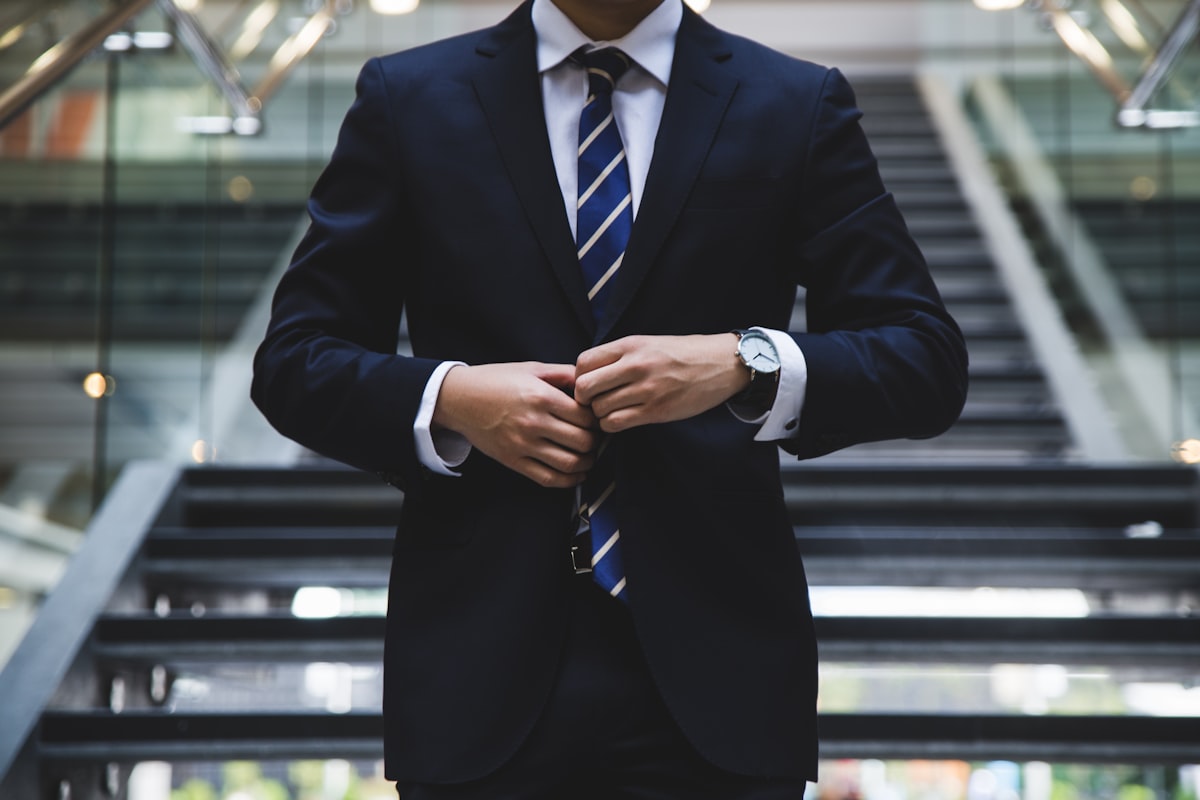
The new language of power dressing
In India's corporate capitals, the tie is no longer the automatic punctuation mark of authority. In its place, a more distinctly Indian vocabulary of power dressing is emerging: the bandhgala cut with architectural precision, handloom shirts in subdued earth tones, and jackets that borrow from tailoring traditions while speaking fluently to contemporary boardroom expectations. In New Delhi this season, the shift is visible not only in business districts but at investor meetings, product launches and annual general meetings, where executives are increasingly choosing garments that signal discipline without dependence on Western formality.
The change is subtle rather than theatrical. A midnight wool bandhgala worn over a crisp white cotton shirt communicates the same control once projected by a silk tie and dark suit, but with a different cultural register. The silhouette is cleaner at the neck, more upright through the torso and often eased slightly at the shoulder to accommodate long working hours and India's varied climate. It is a form of dressing that reads as polished, modern and rooted, without appearing performative.
"The boardroom is becoming less about imitation and more about authorship," says Delhi-based menswear consultant Raghav Mehta. "Executives want to look international, but they also want the clothes to belong to where they are."
From imported codes to indigenous tailoring
For decades, India Inc adopted the grammar of Anglo-American corporate dressing with near-universal fidelity: navy suits, starched collars, conservative ties and polished Oxfords. That formula remains intact in some sectors, particularly finance and global consulting. Yet even there, dress codes are loosening at the edges. The pandemic accelerated a broader reconsideration of what formality looks like in Indian offices, and the answer has increasingly been found in local tailoring traditions.
The bandhgala, once associated with aristocratic occasion wear and ceremonial statecraft, has been recast as a boardroom staple. Designers are refining it with slimmer lapels, concealed plackets, lighter shoulder construction and side vents that improve mobility. In place of heavy brocades and ornate embroidery, the new versions favour superfine wool, silk blends, linen-wool mixes and tropical suiting fabrics that hold structure without stiffness. The result is less costume than corporate armour.
Handloom shirts are equally central to the shift. Woven in cotton, khadi, linen and cotton-silk blends from clusters in Bengal, Tamil Nadu, Karnataka and Maharashtra, these shirts bring texture and breathability into a space long dominated by synthetic polish. Their appeal lies in restraint: muted stripes, chalky neutrals, indigo, stone, tobacco and soft olive. The collar is often softened, the cuffs slightly elongated, the fit tailored but not tight. Worn beneath a bandhgala or with sharply tailored trousers, they suggest discernment without excess.
Fabrics, silhouette and the climate of confidence
The rise of indigenous boardroom dressing is also practical. India's corporate geography spans humid coastal cities, dry northern winters and air-conditioned interiors that can turn a conventional suit into a burden. Tailored bandhgalas and handloom shirts answer this reality with greater intelligence than the imported suit ever did. They allow executives to dress formally while remaining physically at ease, an increasingly important consideration in a work culture that prizes long hours and frequent travel.
Silhouette is central to the appeal. The contemporary bandhgala is cut to create a vertical line through the body, often with a slightly higher collar that frames the face and eliminates the visual clutter of a tie knot. The jacket's front is clean and uninterrupted, allowing the cloth itself to carry the authority. When paired with tapered trousers and polished leather loafers or monk straps, the effect is disciplined and understated. For younger executives, the look is often softened with a handloom shirt left unadorned, or with jackets in textured weaves that catch the light without shouting.
Luxury brands and Indian labels alike have recognised the opportunity. Heritage houses are expanding their made-to-measure offerings in bandhgalas and occasion tailoring, while newer brands are marketing handwoven shirts as weekday essentials rather than ethnic alternatives. The commercial significance is notable: what was once a niche ceremonial category is becoming a mainstream luxury segment, supported by clients who value provenance, fit and cultural specificity.
"There is a premium now on garments that are both elegant and legible in India," says a Bengaluru-based retail executive who outfits senior leadership teams. "A well-cut bandhgala can do the work of a suit, but it says something more current about who we are."
What the shift means for India Inc
The retreat of the tie does not signal a collapse of professionalism. Rather, it marks a recalibration of what professionalism looks like in a country whose economic confidence has deepened and whose cultural self-assurance is more visible than at any point in recent memory. In a boardroom in New Delhi, a tailored bandhgala can now stand in for the old corporate uniform not as a rejection of global business norms, but as an assertion that India's traditions are fully capable of carrying modern authority.
There is also an intergenerational dimension. Younger leaders, especially in technology, consumer goods and design-led businesses, are less attached to inherited Western dress codes than their predecessors. Many see handloom shirts and bandhgalas as cleaner, more meaningful expressions of leadership. Older executives, meanwhile, are discovering that these garments offer dignity without the rigidity of a full suit. The shift is not universal, nor should it be overstated. But it is unmistakable.
In India Inc, the most persuasive style statement of 2026 may be the one that does away with the tie entirely. In its place stands a wardrobe that is sharper, more climate-aware and more culturally fluent - one that treats Indian craft not as embellishment, but as the main event.