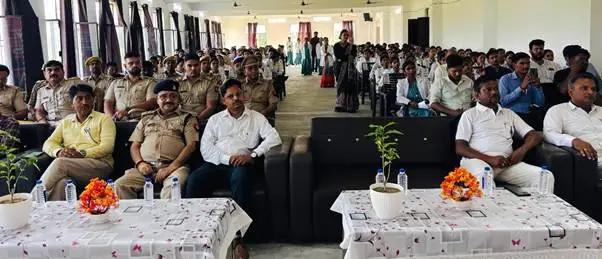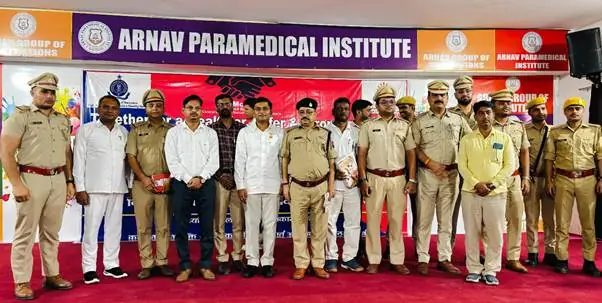
In Barabanki, a joint awareness campaign under Operation Jagriti has placed substance abuse squarely within the frame of public governance, community health, and social responsibility. The program, organized by Brahma Kumaris in coordination with the District Coordination Office, sought to alert residents to the physical, psychological, and social harms associated with drug use and addiction, while encouraging families and local institutions to take a more active role in prevention.
Community Prevention Push
The campaign underscores a shift in how local authorities and civil society groups are approaching narcotics-related harm: not only as a law-and-order issue, but as a wider developmental challenge that affects households, youth, productivity, and public wellbeing. By taking the message directly into the community, organizers aimed to strengthen awareness at the earliest possible stage, before experimentation turns into dependency.
Such initiatives are increasingly important in districts across India where substance abuse is often underreported, normalized, or addressed only after serious damage has occurred. Public health experts have long argued that awareness drives, particularly those involving schools, families, faith-based organizations, and district administration, can help reduce stigma and improve early intervention. The Barabanki program fits that model by combining institutional credibility with grassroots outreach.
Governance Through Awareness
Operation Jagriti, as reflected in this campaign, appears to be designed around vigilance, prevention, and civic participation. The involvement of the District Coordination Office signals that the issue is being treated as part of the district's broader governance agenda rather than as a standalone social event. That matters because addiction rarely exists in isolation; it intersects with unemployment, school dropout rates, mental health stress, domestic conflict, and criminal vulnerability.
For district administrations, awareness campaigns are a relatively low-cost but potentially high-impact tool. They can reinforce official messaging, create channels for reporting and support, and build public confidence that the state is attentive to emerging social risks. In a setting like Barabanki, where local outreach can determine whether prevention messages reach vulnerable groups, the partnership with Brahma Kumaris adds a moral and community-based dimension to the policy response.
The emphasis on addiction also reflects a broader national concern. India has seen repeated warnings from public health and enforcement agencies about the spread of narcotics and the rising burden of substance dependence among young people. While enforcement remains essential, officials increasingly recognize that policing alone cannot solve the problem. Prevention, counselling, family engagement, and social reinforcement are now central to any credible response.
Youth And Family Focus
The most consequential audience for campaigns of this kind is often young people, who are more exposed to peer pressure, misinformation, and experimentation. Awareness efforts that explain the long-term consequences of drug use can be especially effective when they are delivered in accessible language and backed by trusted local voices. Equally important is the role of parents and guardians, who are often the first to notice behavioral changes but may lack the information or confidence to intervene.
Brahma Kumaris' participation is notable because faith-based and value-oriented organizations can sometimes reach audiences that formal government messaging does not. Their involvement can help normalize conversations about addiction, reduce shame, and encourage individuals to seek help earlier. In a policy environment where public health communication must compete with social silence and denial, that is a meaningful advantage.
The Barabanki initiative also highlights the importance of coordinated messaging. When district offices and civil society groups speak in one voice, the public is more likely to view the issue as urgent and legitimate. That can improve the effectiveness of future interventions, from school-based education to counseling referrals and community monitoring.
Ultimately, the campaign in Barabanki is a reminder that the fight against substance abuse begins well before enforcement action. It begins with awareness, social trust, and the willingness of institutions to treat addiction as a preventable public concern. Operation Jagriti, in this context, is less about a single event than about building a durable culture of vigilance around one of the country's most persistent social and health challenges.