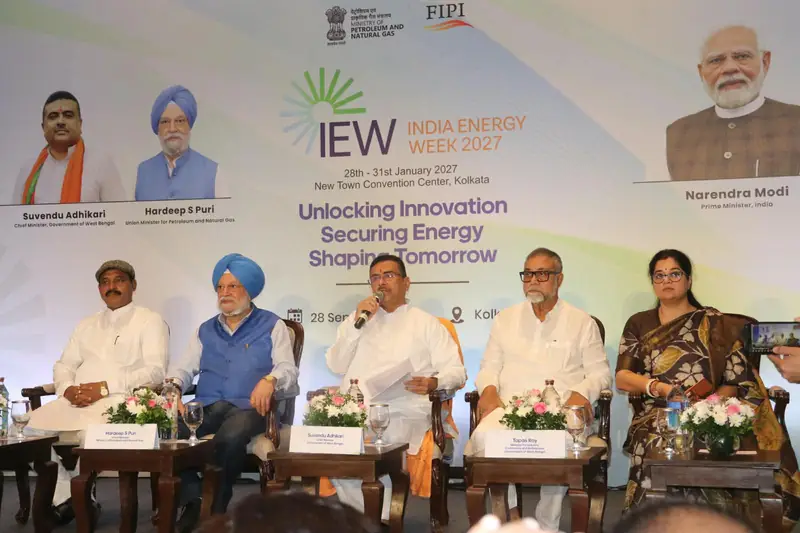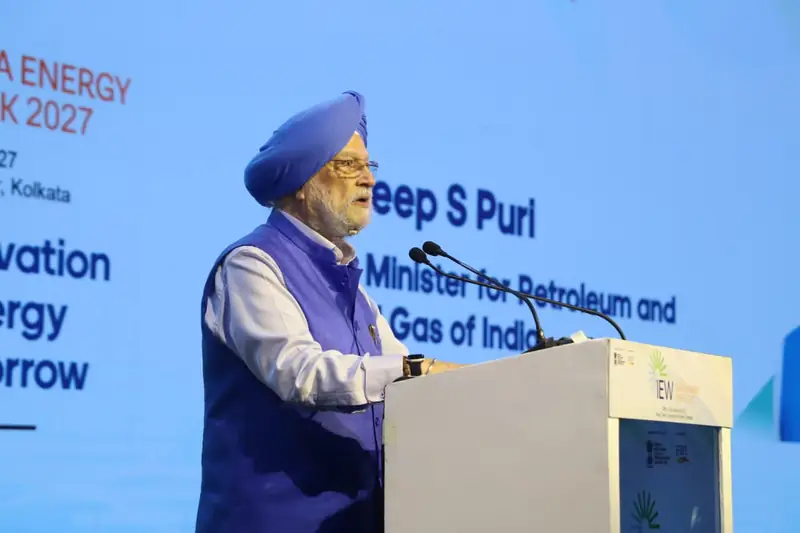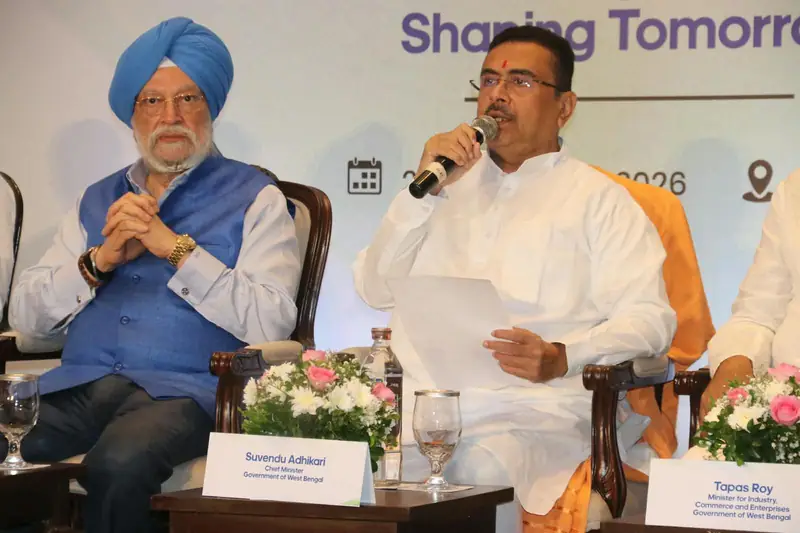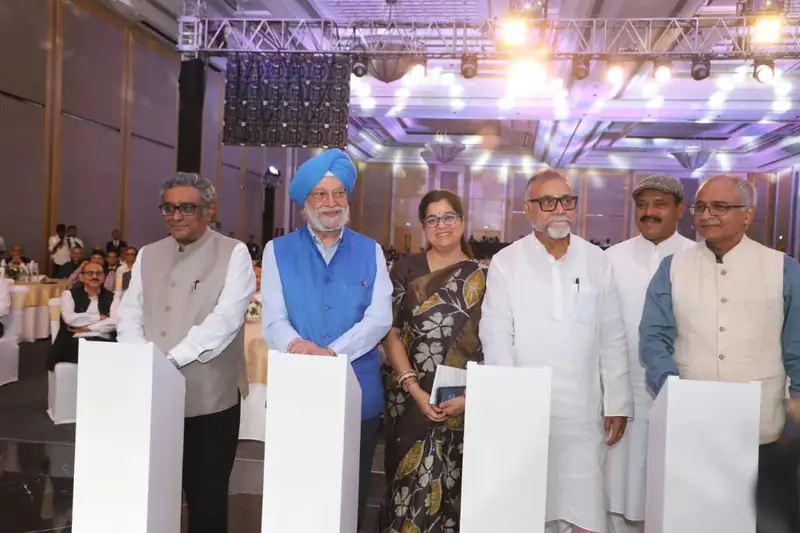
India is preparing to use Kolkata as a platform for a broader global conversation on energy policy, investment and transition strategy through India Energy Week 2027, underscoring the city's growing role in the country's economic and strategic architecture. The event, expected to draw participants from across the energy value chain, comes as New Delhi seeks to project itself not only as a large consumer market but also as a convening power in debates over supply security, affordability and decarbonisation.
The choice of Kolkata carries both symbolic and practical weight. As one of India's major eastern metros with deep industrial roots, port access and a legacy of commercial exchange, the city offers a setting that connects domestic energy demand with regional trade routes and international engagement. For policymakers, hosting a major energy forum there signals an effort to broaden the geography of national policy conversations beyond the usual centres of Delhi, Mumbai and Bengaluru.
Strategic Energy Platform
India Energy Week has emerged in recent years as one of the country's most visible industry-policy interfaces, bringing together government officials, global energy companies, investors and technology providers. A 2027 edition in Kolkata would likely be framed around the same core tensions shaping the sector today: how to secure reliable supplies of oil, gas and power while accelerating the shift toward lower-carbon systems and cleaner industrial processes.
That balance remains central to India's energy strategy. The country is still heavily dependent on imported hydrocarbons, even as electricity demand rises and renewable capacity expands. Any large-scale energy forum hosted in India therefore tends to serve a dual purpose: it is both a marketplace for commercial deals and a venue for signalling policy direction. Kolkata's selection suggests an intent to widen the conversation to include eastern India's industrial corridors, logistics networks and urban energy needs.
The timing is also notable. By 2027, India is expected to be navigating a more complex global energy environment shaped by volatile commodity prices, supply chain realignments, climate commitments and competition for capital. A high-profile event in Kolkata could help India showcase its policy stability and its ambition to remain a central player in global energy planning, even as the sector undergoes rapid change.
Policy And Investment Signal
Beyond the optics, the event would likely be watched closely for what it says about India's investment climate. Energy conferences of this scale often function as informal barometers of confidence, especially for foreign investors assessing regulatory clarity, infrastructure readiness and long-term demand prospects. If Kolkata is successfully positioned as a host city, it could strengthen the perception that India is willing to distribute major economic events across a wider set of urban centres.
For the central government, the broader message is one of continuity and ambition. India has repeatedly argued that its energy transition must be "just" and development-oriented, allowing room for growth in manufacturing, transport and urbanisation while expanding cleaner energy sources. A forum like India Energy Week 2027 would provide a stage to advance that narrative, particularly to international audiences seeking evidence that India can scale energy access without sacrificing economic momentum.
The event could also sharpen attention on eastern India's role in the national energy map. The region's industrial base, port connectivity and proximity to cross-border trade routes make it strategically relevant for fuel logistics, power transmission and future green-energy supply chains. A major global conference in Kolkata would therefore be more than a ceremonial gathering; it would be an assertion that the east can become a serious node in India's energy future.
Global Attention, Local Stakes
For Kolkata, the stakes extend well beyond conference tourism. Hosting a global energy event can trigger upgrades in logistics, hospitality, transport coordination and civic infrastructure, while also placing the city under international scrutiny. Such events often leave behind reputational gains that can influence future business travel, investment interest and policy engagement.
At the national level, India's effort to stage high-profile sectoral summits reflects a broader governance strategy: using major events to shape narrative, attract capital and reinforce policy credibility. In energy, where long-term contracts, regulatory frameworks and geopolitical relationships matter as much as technology, the venue itself can become part of the message.
If India Energy Week 2027 is indeed anchored in Kolkata, it will likely be read as a deliberate move to connect the country's energy transition with its federal geography, industrial ambitions and diplomatic outreach. The event would not just be about showcasing projects or announcing partnerships. It would be about defining India's place in a global energy order that is being rewritten in real time.