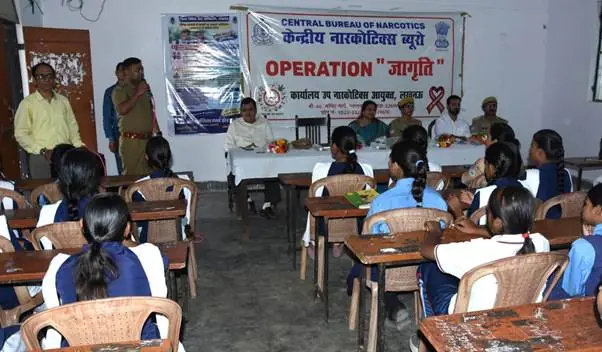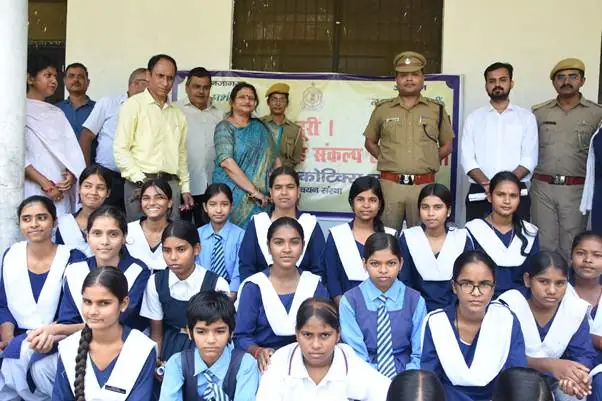
The Central Narcotics Bureau's DNC office in Lucknow has launched a focused awareness campaign under Operation Jagriti, placing drug abuse prevention at the center of a broader public-safety and governance message. The drive is aimed at sensitizing citizens, especially young people and vulnerable communities, to the dangers of narcotic consumption, dependence, and the social damage that follows addiction.
Prevention First
The campaign underscores a policy approach that has gained traction across India in recent years: enforcement alone cannot contain the narcotics challenge. Officials and public-health advocates increasingly argue that anti-drug strategy must combine interdiction with education, counseling, and community engagement. In that framework, Operation Jagriti is designed not merely as a warning exercise, but as a preventive intervention intended to reduce demand before it hardens into addiction.
Awareness initiatives of this kind are particularly significant in urban centers such as Lucknow, where changing lifestyles, peer pressure, and easy access to illicit substances can heighten risk among adolescents and young adults. By taking the message directly into the public domain, the bureau is seeking to make drug misuse a visible governance issue rather than a hidden social problem.
Public Health Lens
The campaign also reflects a growing recognition that narcotics abuse is not only a law-and-order concern but a public-health emergency with long-term consequences for families, workplaces, and communities. Addiction can lead to deteriorating mental health, reduced productivity, criminal vulnerability, and severe strain on household finances. For the state, the burden extends to healthcare systems, policing, and rehabilitation services.
Operation Jagriti's emphasis on awareness suggests an attempt to intervene earlier in the cycle of harm. Such drives typically aim to improve recognition of warning signs, encourage families to seek help sooner, and reduce the stigma that often prevents affected individuals from accessing treatment. In policy terms, this is important because stigma can be as damaging as the substance use itself, delaying recovery and deepening isolation.
The Lucknow initiative also fits into a wider national conversation on drug demand reduction. India's anti-narcotics framework has increasingly stressed the need for coordinated action across enforcement agencies, educational institutions, civil society groups, and local administrations. Campaigns like this are meant to reinforce that message at the ground level, where prevention is most effective.
Governance And Outreach
From a governance perspective, the campaign signals an effort to make anti-drug messaging more visible, routine, and locally grounded. Public awareness drives can be especially effective when they are sustained rather than symbolic, and when they are linked to concrete support systems such as helplines, counseling services, school outreach, and rehabilitation referrals. Without those follow-through mechanisms, awareness campaigns risk becoming one-off events with limited measurable impact.
The choice of Lucknow as a venue is also notable. As a major administrative and educational center, the city offers a broad audience for public messaging and can serve as a model for similar initiatives elsewhere in Uttar Pradesh and beyond. If replicated consistently, such campaigns can help normalize conversations about addiction, encourage early reporting, and strengthen community resistance to narcotics networks.
At a broader level, Operation Jagriti illustrates how Indian enforcement agencies are increasingly framing narcotics control as a shared civic responsibility. The message is not only that drug trafficking must be punished, but that drug use must be prevented through informed communities, alert institutions, and accessible support. In that sense, the Lucknow drive is less about a single event than about a policy direction: shifting the public response from reaction to prevention, and from silence to awareness.