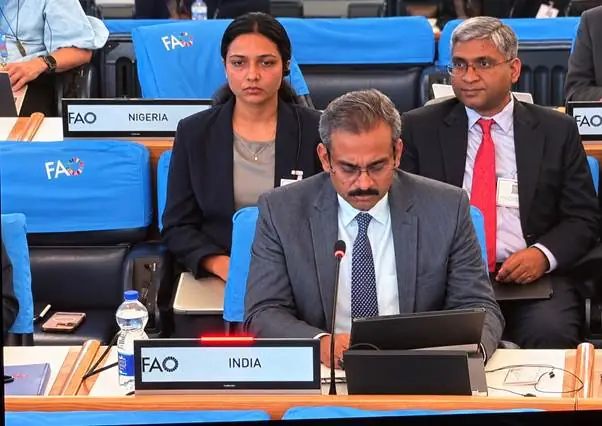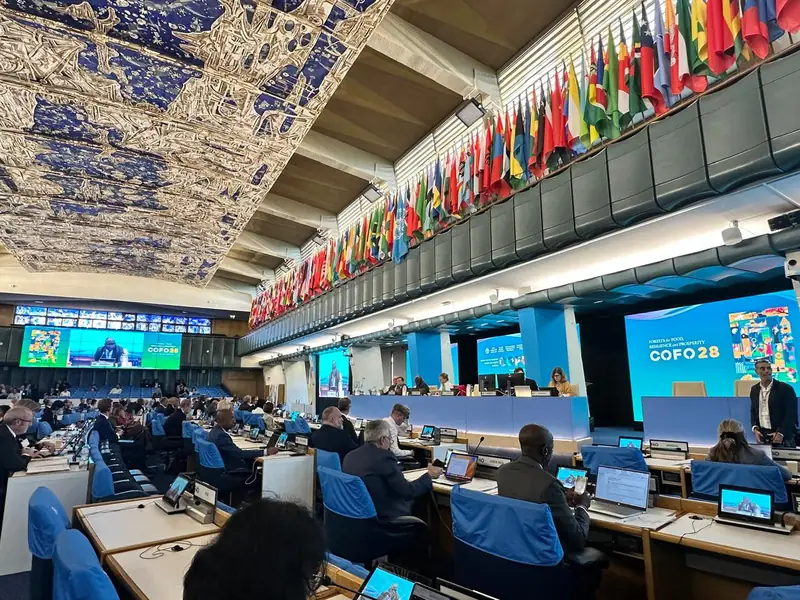
India's participation at the 28th Session of the Committee on Forestry, or COFO 28, in Rome placed forest and landscape restoration squarely within the country's international policy messaging on climate action and sustainable development. The presentation highlighted how India is framing restoration as a practical response to land degradation, ecosystem stress, and the mounting pressures of climate variability, while also linking it to rural livelihoods and resource security.
Restoration As Policy
India's message in Rome reflects a wider shift in how governments are approaching forests: not merely as protected natural assets, but as living systems that must be repaired, managed, and integrated into development planning. By showcasing forest and landscape restoration initiatives at a global forestry forum, India signaled that it wants to be seen as an active contributor to international land restoration efforts rather than a passive recipient of climate finance or technical assistance.
The emphasis on restoration is significant because it sits at the intersection of several policy agendas. It supports biodiversity conservation, helps stabilize degraded land, improves watershed health, and can strengthen carbon sinks. For a country facing intense pressure from urban expansion, agricultural demand, infrastructure growth, and climate stress, restoration is increasingly being treated as a strategic necessity rather than a narrow environmental programme.
India's presentation also fits into the broader diplomatic language of "nature-based solutions," a term now common in multilateral climate and forestry discussions. In practical terms, this means restoration is being presented as a cost-effective, scalable intervention that can deliver environmental and social returns at the same time. That framing is important in international forums because it allows India to align domestic action with global expectations on climate mitigation, adaptation, and biodiversity protection.
Global Forestry Forum
COFO 28, convened in Rome under the auspices of the Food and Agriculture Organization, is one of the key global platforms for forestry policy coordination. It brings together governments and experts to discuss forest governance, land restoration, sustainable management, and the role of forests in climate resilience. India's participation therefore carries both technical and diplomatic weight.
By using the forum to present its restoration initiatives, India is also reinforcing its claim that forest policy must be judged by outcomes on the ground. That includes degraded land brought back into productive ecological use, improved forest cover in vulnerable regions, and stronger community participation in conservation and regeneration efforts. The country's approach is likely intended to show that restoration can be embedded within national development priorities without being treated as a separate or symbolic environmental exercise.
The Rome platform also offers India an opportunity to shape the international conversation around implementation. Many countries have committed to restoration targets, but progress often depends on financing, local governance, land tenure clarity, and institutional coordination. India's experience is relevant because it must manage restoration across a vast and diverse landscape, with varying ecological conditions and administrative structures. That makes the country's policy model useful for comparison, even as the scale of the challenge remains substantial.
Governance And Scale
The deeper significance of India's presentation lies in governance. Forest and landscape restoration is not only about planting trees; it requires long-term planning, monitoring, community engagement, and coordination across ministries and levels of government. It also demands that restoration be aligned with livelihoods, especially in areas where people depend directly on forests, grazing land, and common resources.
In that sense, India's Rome showcase suggests a policy narrative built around balance: ecological repair without ignoring economic realities. That balance is central to the credibility of restoration programmes, because poorly designed interventions can fail to survive beyond initial funding cycles or can create tensions with local communities. A durable restoration strategy must therefore combine scientific planning with social legitimacy.
For India, the international stage matters because it helps translate domestic action into diplomatic capital. Demonstrating restoration initiatives at COFO 28 strengthens the country's standing in multilateral environmental negotiations and supports its broader image as a state that is trying to reconcile growth with sustainability. It also places pressure on implementation at home, since global visibility raises expectations of measurable progress.
The Rome presentation comes at a time when land degradation and ecosystem decline are increasingly treated as national security and economic resilience issues, not just environmental concerns. India's decision to foreground forest and landscape restoration at a major global forum indicates that it sees the agenda as central to its future policy architecture. The challenge now is to convert that international messaging into durable results across forests, watersheds, and degraded landscapes at home.