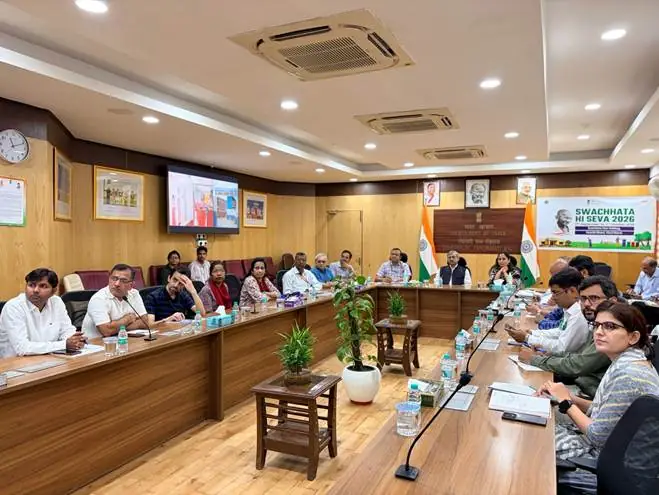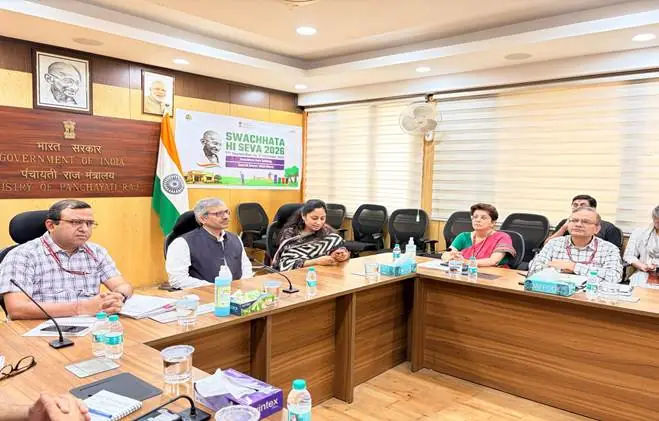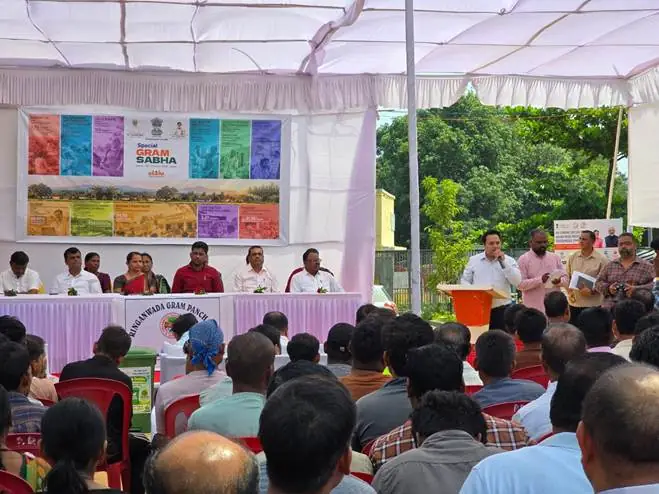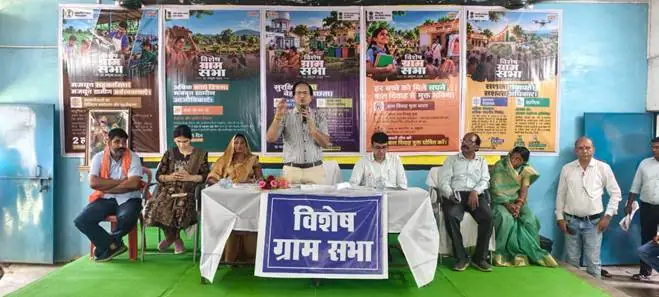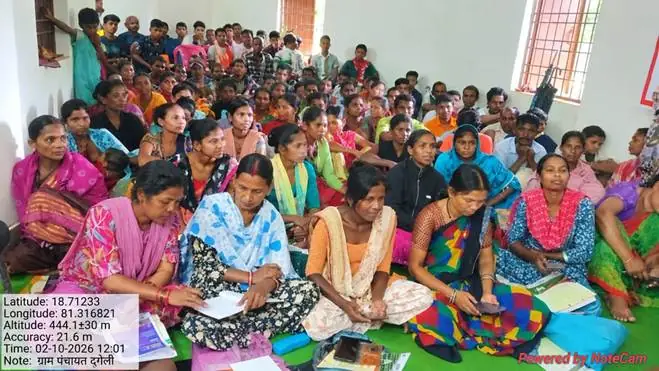
India's rural governance machinery was mobilized on Gandhi Jayanti as 2.42 lakh special gram sabhas convened across the country, turning the commemorative day into a nationwide exercise in participatory administration. The meetings, held at the village level, were designed to foreground people-centric initiatives and to bring local development priorities into direct public discussion, reflecting a broader policy emphasis on decentralization and community ownership of governance.
Village-Level Governance Push
The special gram sabhas were not merely ceremonial gatherings. They were intended to function as deliberative forums where residents could review local needs, assess ongoing welfare delivery, and shape development priorities in a more transparent manner. In a governance system where implementation gaps often emerge between policy design and last-mile delivery, the use of gram sabhas as a decision-support mechanism remains central to the rural development model.
The timing of the exercise on Gandhi Jayanti carried symbolic weight. The day, observed nationally in memory of Mahatma Gandhi, has long been associated with village self-rule, social inclusion, and the moral legitimacy of local participation in public affairs. By aligning the special meetings with the anniversary, authorities sought to reinforce the idea that effective governance must be rooted in the village and informed by the people most affected by policy outcomes.
Officials have increasingly leaned on gram sabhas as a platform to strengthen accountability in schemes spanning sanitation, housing, livelihoods, drinking water, and social protection. The logic is straightforward: when communities are given a formal space to question, prioritize, and monitor, implementation becomes less opaque and more responsive. The scale of Thursday's exercise suggests that the government is trying to normalize this model not as an occasional consultation, but as a recurring governance habit.
Participation And Accountability
The breadth of participation matters as much as the number itself. A network of 2.42 lakh special gram sabhas indicates a large administrative effort to activate local institutions simultaneously across diverse geographies, from remote tribal belts to densely populated plains. Such coordination is significant in a federal democracy where rural local bodies often vary widely in capacity, political engagement, and administrative support.
At the policy level, the exercise also reflects a continuing attempt to bridge the gap between top-down welfare architecture and bottom-up demand articulation. National schemes can deliver scale, but village assemblies are where the practical questions emerge: who is excluded, which households remain unreached, whether assets are functional, and whether local priorities align with centrally designed programs. In that sense, gram sabhas serve as both a democratic forum and an implementation audit.
The emphasis on citizen-centric initiatives also fits a broader governance narrative that has taken hold in recent years, with greater stress on service delivery, digital monitoring, and outcome-based administration. Yet the gram sabha remains one of the few institutions that can translate abstract policy into visible local scrutiny. Its value lies not in rhetoric but in the possibility of direct public oversight.
Gandhi Jayanti Message
The choice of Gandhi Jayanti as the occasion for this nationwide outreach is politically and administratively deliberate. Gandhi's vision of gram swaraj placed the village at the center of India's democratic imagination, arguing that self-governing local communities were essential to social justice and durable development. Special gram sabhas on this day therefore serve a dual purpose: they honor a national icon while also testing whether the institutional promise of local self-government is being realized in practice.
For policymakers, the challenge is to ensure that such mass consultations do not become symbolic exercises detached from follow-up action. The credibility of the process will depend on whether issues raised in these meetings are recorded, tracked, and translated into measurable administrative responses. Without that loop, even a large-scale mobilization risks becoming a one-day ritual rather than a tool of governance reform.
Still, the sheer scale of the initiative signals that rural participation remains a core instrument in India's governance strategy. By placing people-centered concerns at the center of village discussions, the special gram sabhas on Gandhi Jayanti reinforced a simple but enduring proposition: development is most durable when it is debated, shaped, and monitored closest to the ground.