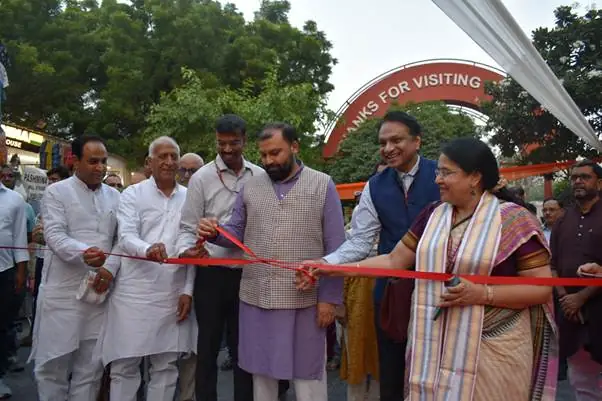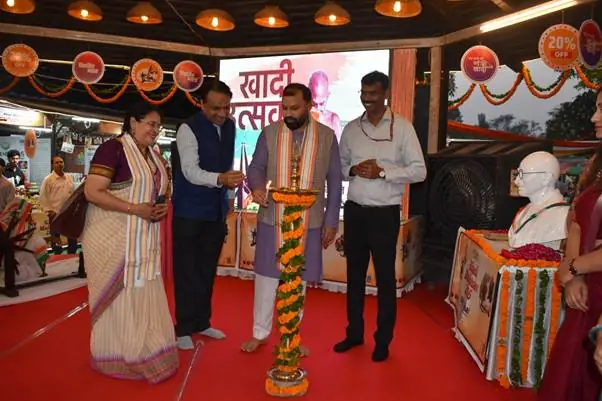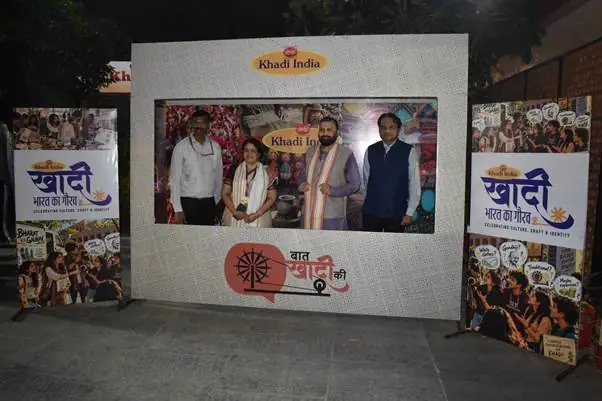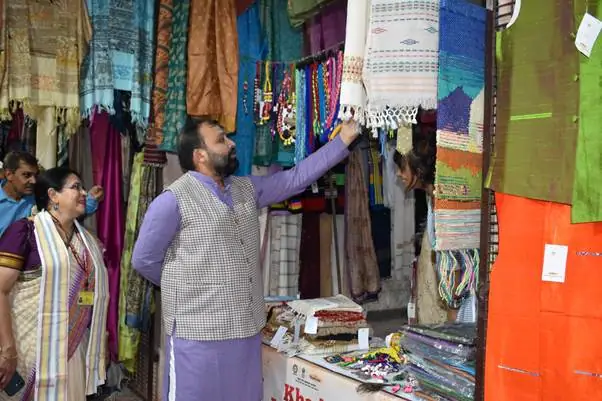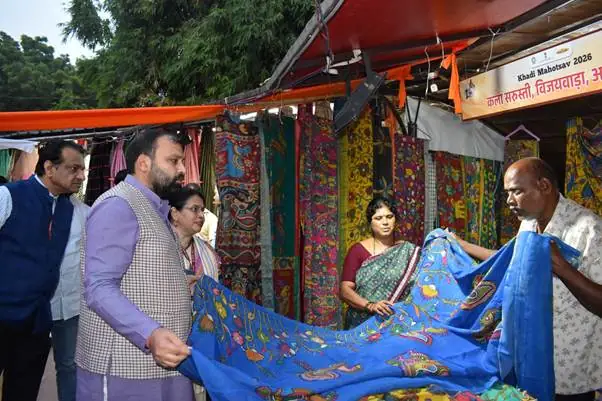
The Khadi and Village Industries Commission (KVIC) on Friday opened a special khadi and village industries exhibition at Delhi Haat in the INA area of the national capital, with Chairman Manoj Goyal formally inaugurating the showcase under the banner of Khadi Mahotsav-2026. The event is designed to spotlight India's traditional handspun and handmade industries while also reinforcing the policy push around self-reliance, rural employment, and market access for small producers.
The exhibition arrives at a time when khadi is being framed not merely as a heritage textile, but as a strategic instrument of economic policy. By placing the event at Delhi Haat, one of the capital's most visible public marketplaces for crafts and regional products, KVIC is seeking to connect producers directly with urban consumers, tourists, and institutional buyers. That approach reflects a broader government effort to move village industries beyond symbolic promotion and into more commercially sustainable channels.
Policy Meets Marketplace
The choice of venue is significant. Delhi Haat has long served as a curated retail space where artisans and small enterprises can present products in a setting that blends cultural visibility with commercial opportunity. For KVIC, the location offers a high-footfall platform to demonstrate that khadi and village industries are not confined to ceremonial displays or seasonal fairs, but can compete in contemporary consumer markets when given the right exposure.
The exhibition also fits into a wider national narrative in which indigenous production is increasingly linked to employment generation and local value chains. Khadi, in particular, has acquired a dual identity: it remains a symbol of India's freedom movement and also functions as a policy brand for rural entrepreneurship. Officials have repeatedly argued that the sector supports decentralized production, women's participation, and income opportunities in non-farm rural economies.
While the inauguration itself was ceremonial, the underlying message was practical. KVIC is attempting to deepen demand for products made by small producers, many of whom operate outside large industrial supply chains. Such exhibitions can help bridge a persistent gap in the sector: production capacity exists, but market discovery, branding, and consistent consumer engagement remain uneven. Events like this are intended to address that bottleneck by creating direct visibility for products and producers.
Khadi's Economic Signal
The timing of the exhibition under Khadi Mahotsav-2026 also carries policy weight. In recent years, khadi has been increasingly used as a shorthand for domestic manufacturing, rural empowerment, and import substitution in select consumer categories. The government's broader emphasis on "vocal for local" and self-reliance has given the sector renewed relevance, even as it continues to face questions about scale, competitiveness, and modern branding.
For village industries, the challenge is not only production but perception. Many products from the sector are still associated in the public mind with niche or ceremonial consumption. By staging a special exhibition in a prominent urban retail environment, KVIC is trying to reposition these goods as viable everyday purchases, while preserving their artisanal identity. That shift is essential if the sector is to expand beyond periodic publicity and become more deeply embedded in mainstream consumer behavior.
The event also highlights the continuing role of state-backed institutions in shaping market access for micro and small producers. In sectors where private distribution networks are thin or costly, government-supported exhibitions can function as a critical bridge. They offer visibility, but also legitimacy, helping producers signal quality and provenance to buyers who may otherwise have limited exposure to the sector.
Rural Enterprise Focus
At a structural level, the exhibition reflects the government's continuing bet on rural enterprise as a component of national economic strategy. KVIC has long been tasked with promoting village industries that generate employment with relatively low capital intensity. That model is especially relevant in a country where job creation remains a central policy concern and where non-farm livelihoods are increasingly important to rural households.
The Delhi Haat showcase is therefore more than a retail event. It is part of an institutional effort to keep khadi and village industries visible in the national policy conversation, while also testing whether heritage-based production can be translated into durable market demand. The success of such initiatives will depend not only on ceremonial launches, but on sustained consumer interest, product quality, pricing, and the ability of producers to scale without losing the authenticity that defines the sector.
For now, the inauguration by KVIC Chairman Manoj Goyal signals continuity in the government's support for khadi as both an economic and cultural project. The exhibition at Delhi Haat is intended to reinforce that message in a setting where policy meets commerce, and where the future of traditional industry is being presented not as nostalgia, but as a living part of India's development agenda.