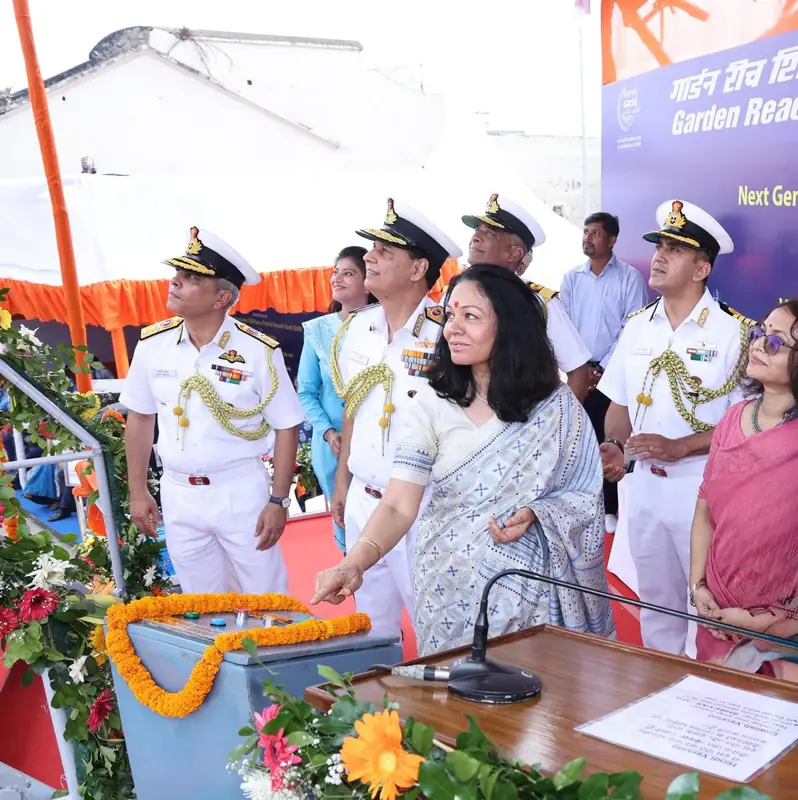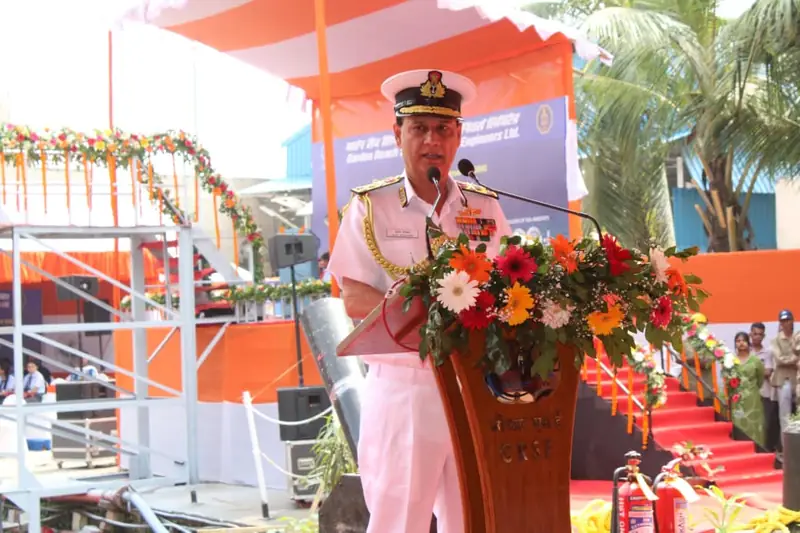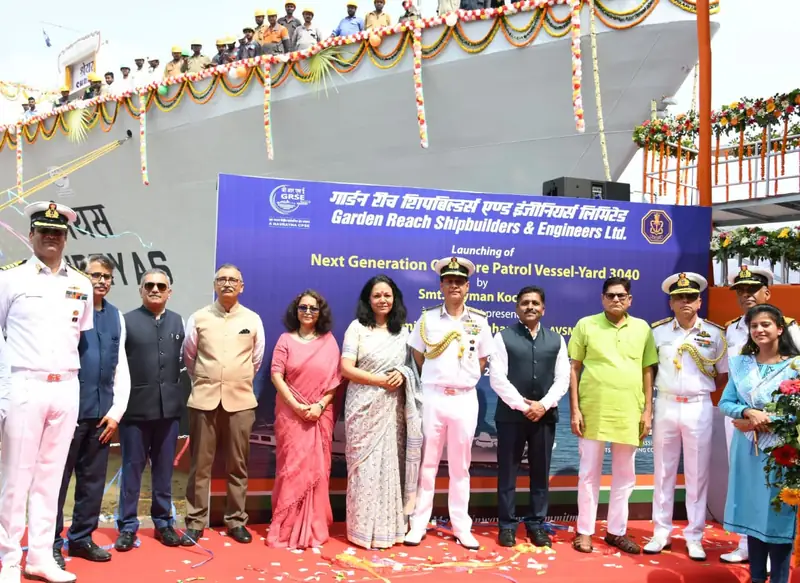
The launch of the next-generation offshore patrol vessel Yard 3040, named Shreyas, at Garden Reach Shipbuilders and Engineers Ltd. in Kolkata adds fresh momentum to India's naval expansion and domestic defense-industrial strategy. The vessel's induction into the production pipeline is significant not only as a shipyard milestone, but also as a signal of the state's continuing effort to strengthen maritime surveillance, coastal security, and indigenous manufacturing capacity.
Naval Build-Up
Offshore patrol vessels occupy a critical place in India's maritime architecture. They are designed to carry out a wide range of missions, including coastal patrol, surveillance, anti-piracy support, search and rescue, and protection of offshore assets. In a strategic environment shaped by expanding sea-lane traffic, energy infrastructure, and persistent security challenges across the Indian Ocean region, such vessels are increasingly central to day-to-day maritime enforcement.
The launch at GRSE reflects the steady pace at which India is seeking to modernize its naval fleet through domestic production rather than imported platforms. That approach has become a defining feature of national defense policy, with successive governments placing greater emphasis on local design, local fabrication, and supply-chain resilience. For the Navy, this means greater operational flexibility and reduced dependence on foreign vendors. For policymakers, it offers a visible demonstration of industrial capability and strategic autonomy.
Yard 3040 is part of a broader category of next-generation offshore patrol vessels that are expected to combine endurance, versatility, and improved mission readiness. While detailed technical specifications were not immediately central to the launch announcement, the vessel's designation as a next-generation platform indicates an emphasis on modernized design standards and enhanced operational utility. In practical terms, that matters because maritime security demands are no longer limited to traditional patrol duties; they now include persistent domain awareness, rapid response, and the ability to operate across a wide range of contingencies.
Indigenous Capacity Push
GRSE's role in the launch is also important from an industrial policy perspective. The shipyard has long been one of India's key public-sector defense manufacturers, and its continued output reinforces the government's push to deepen domestic capability in a sector where scale, precision engineering, and long production cycles are essential. Each successful launch strengthens the ecosystem of suppliers, engineers, welders, designers, and systems integrators that underpin the broader defense manufacturing base.
This is where the policy significance extends beyond a single vessel. India's defense-industry strategy increasingly hinges on the idea that maritime strength must be built through a durable industrial foundation. Shipbuilding is labor-intensive, technologically demanding, and strategically consequential. A vessel launched in Kolkata is therefore not just a naval asset in the making; it is also evidence of a manufacturing chain that links public investment, technical expertise, and national security priorities.
The timing of the launch is also notable. India's maritime focus has sharpened in recent years as the country seeks to protect trade routes, monitor its extensive coastline, and respond to evolving security risks in the Indian Ocean. Offshore patrol vessels are among the most practical tools for that mission because they can be deployed across a broad spectrum of peacetime and low-intensity security tasks without the cost or complexity of larger combatants.
Strategic Maritime Signal
The launch of Shreyas carries a broader strategic message: India intends to remain a serious maritime power by building the ships it needs at home. That message resonates across defense planning, industrial policy, and geopolitical signaling. In an era when supply-chain vulnerabilities and external dependencies have become more visible, indigenous shipbuilding is increasingly viewed as both a security necessity and an economic opportunity.
For the central government, such launches help demonstrate progress on self-reliance goals while supporting high-skill manufacturing jobs and long-term industrial capacity. For the Navy, they help ensure that fleet renewal does not stall as older platforms age out of service. And for the shipyard itself, each launch is a reminder that Indian public-sector industry remains a core instrument of national capability.
The Kolkata launch therefore fits squarely within a larger pattern: India is not merely expanding its maritime footprint; it is trying to institutionalize the means to sustain that footprint over time. Yard 3040, now launched and moving toward the next stages of outfitting and trials, stands as a tangible marker of that ambition.