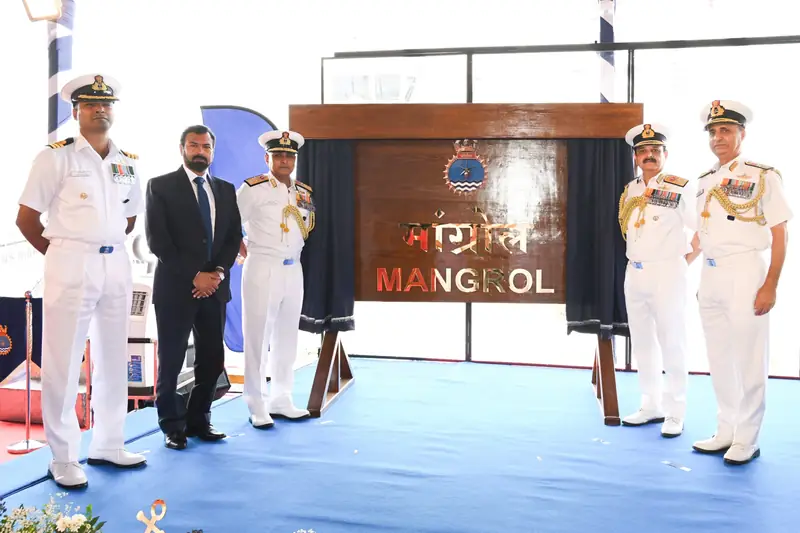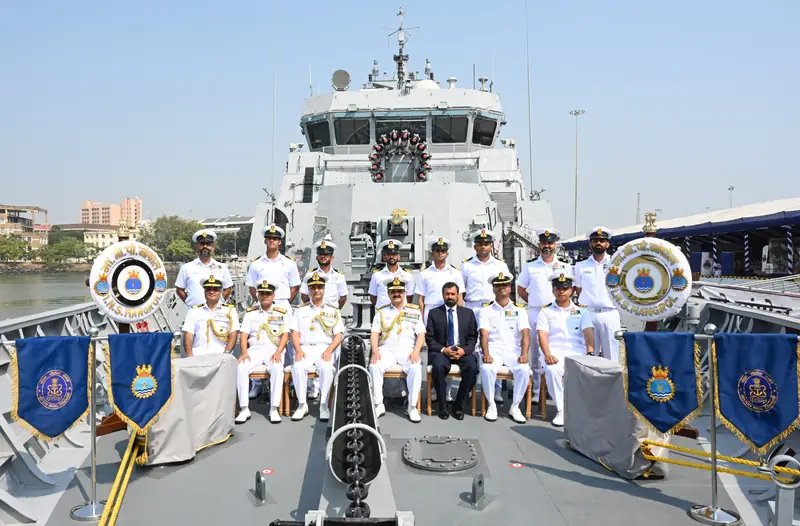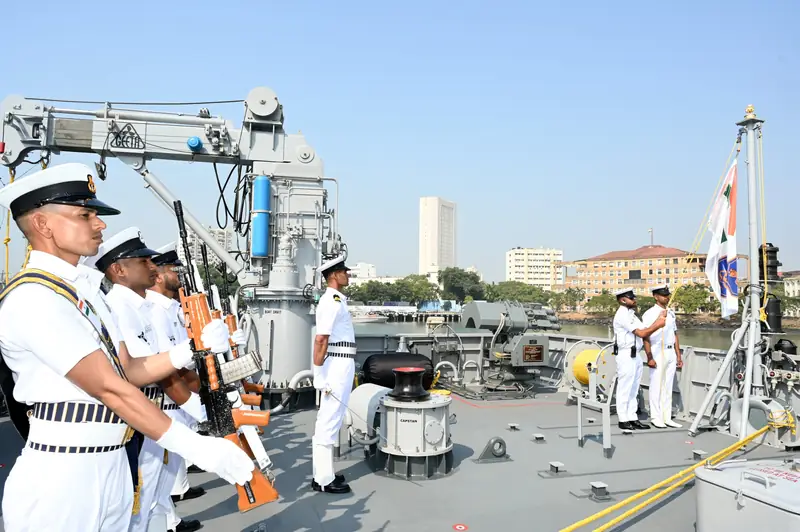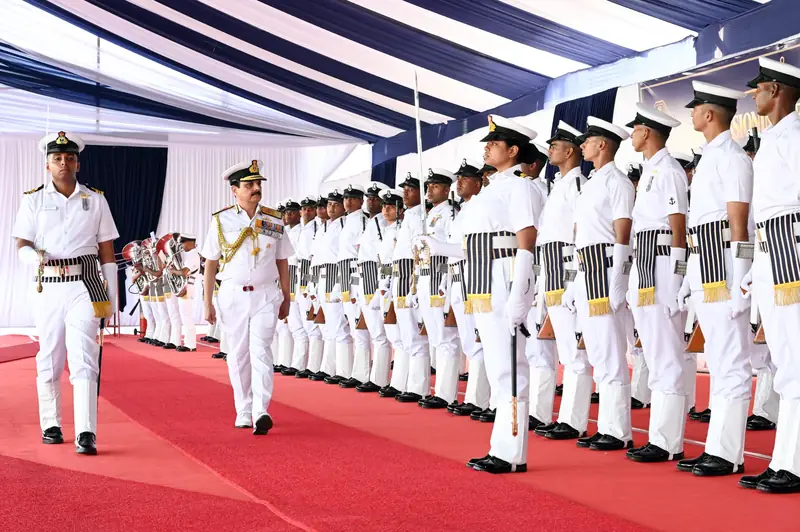
The Indian Navy has commissioned INS Mangrol, an indigenous anti-submarine warfare vessel, marking another step in India's effort to expand its domestically built maritime combat capability. The commissioning reflects a broader strategic shift toward self-reliance in defense manufacturing, while also addressing the Navy's need for specialized platforms capable of detecting and countering underwater threats in increasingly contested waters.
Indigenous Fleet Expansion
INS Mangrol enters service as part of a steady but deliberate push by India to reduce dependence on imported naval hardware and to strengthen the domestic shipbuilding ecosystem. Anti-submarine warfare vessels are a critical component of modern naval operations because they are designed to track, deter and, if necessary, engage hostile submarines that can threaten sea lanes, ports and offshore infrastructure. For India, whose maritime interests stretch across the Arabian Sea, Bay of Bengal and wider Indian Ocean region, such capabilities are not optional; they are foundational.
The commissioning also carries industrial significance. Indigenous warships support a wider network of Indian shipyards, suppliers and systems integrators, creating a defense production chain that can be scaled over time. Each successful induction of a locally built platform reinforces confidence in domestic design and manufacturing, while also reducing lifecycle dependence on foreign vendors for upgrades, maintenance and spares. That matters in a security environment where supply-chain resilience is increasingly viewed as a strategic asset.
Maritime Security Priorities
The timing of the induction is notable. India's naval planners have been emphasizing undersea domain awareness as submarine activity expands across the Indo-Pacific and as regional navies modernize their fleets. Anti-submarine warfare assets are particularly important in chokepoints and coastal approaches, where submarines can operate with relative stealth and where early detection can shape the outcome of a crisis long before open confrontation begins.
INS Mangrol's commissioning therefore fits into a larger operational logic: building layered maritime defense. That includes surveillance, patrol, escort, and rapid-response capabilities that can be integrated with other naval and coast guard assets. In practical terms, the addition of another anti-submarine warfare vessel improves the Navy's ability to maintain presence, protect shipping routes and support deterrence without relying solely on larger capital ships.
For policymakers, the vessel's induction is also a signal that India's defense modernization is increasingly being pursued through indigenous platforms rather than through one-off procurement deals. This approach aligns with the government's long-running emphasis on "Make in India" in defense, which seeks to combine strategic autonomy with industrial development. The challenge, however, remains execution: domestic production must continue to deliver reliability, interoperability and timely delivery if it is to match the operational demands of the fleet.
Strategic Self-Reliance Push
The commissioning of INS Mangrol should be read as part of a cumulative pattern rather than as an isolated event. India has been steadily adding locally built ships, submarines and support vessels to its inventory, reflecting a long-term effort to build a navy that is both technologically capable and less exposed to external shocks. In a region where maritime competition is intensifying, the ability to field indigenous platforms is not only a matter of industrial policy but also of strategic signaling.
Anti-submarine warfare remains one of the most technically demanding areas of naval warfare. Success depends on sensors, acoustics, training, coordination and persistence, not merely on hull numbers. The value of INS Mangrol will therefore depend on how effectively it is integrated into the Navy's broader operational architecture and how well crews are trained to exploit its capabilities in real-world conditions.
Still, the commissioning is an important marker. It demonstrates that India's naval modernization is moving forward on multiple fronts: expanding fleet strength, strengthening domestic production, and sharpening focus on undersea threats. In a maritime environment shaped by competition, uncertainty and the need for persistent presence, those are capabilities India is likely to continue prioritizing.