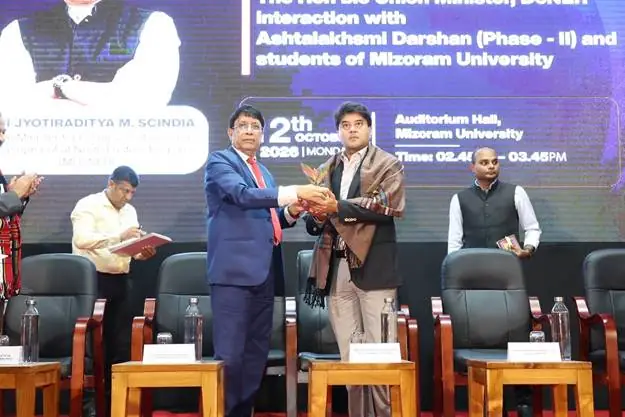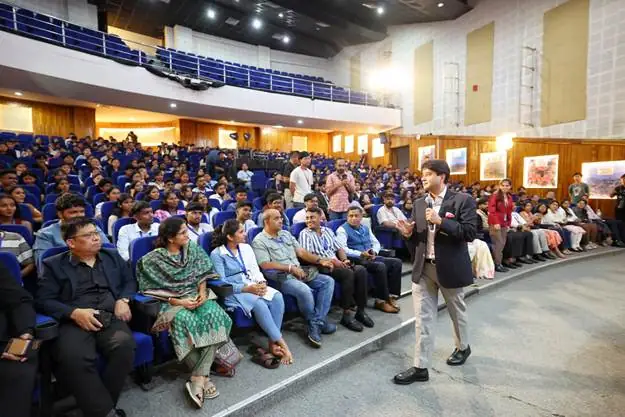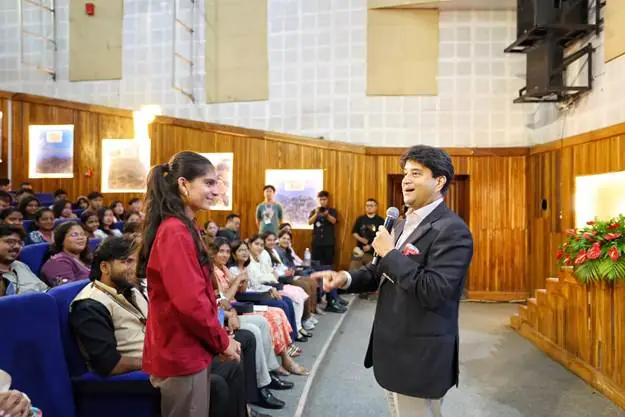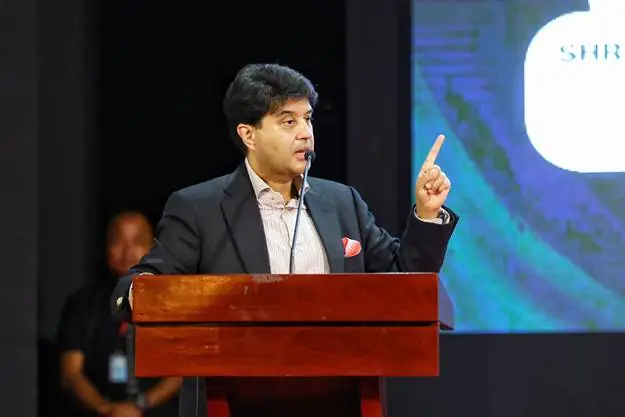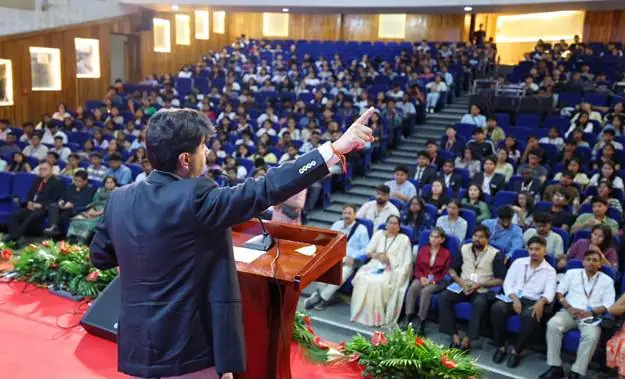
Union Minister Jyotiraditya M. Scindia's interaction with students at Mizoram University on Thursday added a policy-facing dimension to the Centre's outreach in the Northeast, where youth engagement has become an increasingly important part of the national governance agenda. The visit, framed as a direct conversation with students, reflected the government's continuing emphasis on connecting with young citizens in regions that are strategically significant, culturally distinct, and central to India's long-term development priorities.
Youth Outreach Priority
Scindia's engagement comes at a time when the Union government is seeking to project a more accessible and responsive style of governance, particularly in states where questions of connectivity, opportunity, and representation remain closely linked. By choosing a university setting, the minister placed students at the centre of the conversation, signalling that higher education institutions are not merely academic spaces but also platforms for shaping civic participation and public leadership.
The interaction is also consistent with the broader political logic of outreach in the Northeast, where the Centre has repeatedly sought to demonstrate that national policy is not confined to metropolitan centres. In states such as Mizoram, where geography, infrastructure, and access to national markets have historically shaped development outcomes, direct ministerial engagement carries symbolic weight. It conveys attention, but also an expectation that young people will be active participants in the country's economic and institutional future.
Northeast In Policy Focus
Mizoram occupies a distinct place in India's governance map. The state's educational institutions, youthful population, and location along the eastern frontier make it an important test case for policies on connectivity, digital inclusion, and human capital development. A ministerial visit to a university in Aizawl therefore extends beyond ceremonial value; it serves as a reminder that the Northeast is increasingly being integrated into national policy conversations on mobility, employment, and innovation.
Scindia's public interaction with students also aligns with the Centre's wider effort to build confidence among younger citizens at a time when expectations around jobs, skills, and opportunity are high. For government leaders, university campuses offer a direct channel to explain policy intent, hear concerns, and frame national priorities in terms that resonate with first-time voters and emerging professionals. In that sense, the event was as much about political communication as it was about education.
The minister's presence in Mizoram also reflects the government's interest in reinforcing institutional relationships in the region. Universities in the Northeast often serve as important civic spaces where national policy is interpreted through local realities. Engagements of this kind can help bridge the distance between New Delhi's policy architecture and the lived experience of students who are preparing to enter public service, private enterprise, or civil society.
Symbolism And Governance
The optics of the visit matter. In contemporary Indian politics, ministerial interactions with students are increasingly used to project openness, responsiveness, and a willingness to listen. But beyond the optics, such engagements can shape how governance is perceived in regions that have long sought greater inclusion in national development narratives. For Mizoram, a state with strong educational aspirations and a highly literate population, the presence of a Union minister on campus reinforces the idea that academic institutions are integral to policy dialogue.
Scindia's interaction also fits into a broader national pattern in which the government is attempting to cultivate a more participatory relationship with youth. That strategy is especially relevant in the Northeast, where demographic trends, migration pressures, and employment aspirations make young people central to the region's future trajectory. Conversations on campus can therefore carry policy significance well beyond the immediate event.
While the interaction itself was framed as a student engagement, its implications are wider. It reflects a governance model that seeks to combine visibility with outreach, and symbolism with substance. In a region where the Centre has repeatedly highlighted infrastructure expansion, digital access, and educational opportunity, such visits help reinforce the message that national policy is intended to be felt on the ground, not only announced from afar.
For the students at Mizoram University, the event offered a direct encounter with a senior Union minister and a chance to engage with the language of governance from within an academic setting. For the government, it provided a platform to project attentiveness to the Northeast and to underline the role of youth in shaping India's policy future. In the broader national context, the interaction is another sign that the Centre views universities not just as centres of learning, but as strategic partners in public engagement and state-building.