
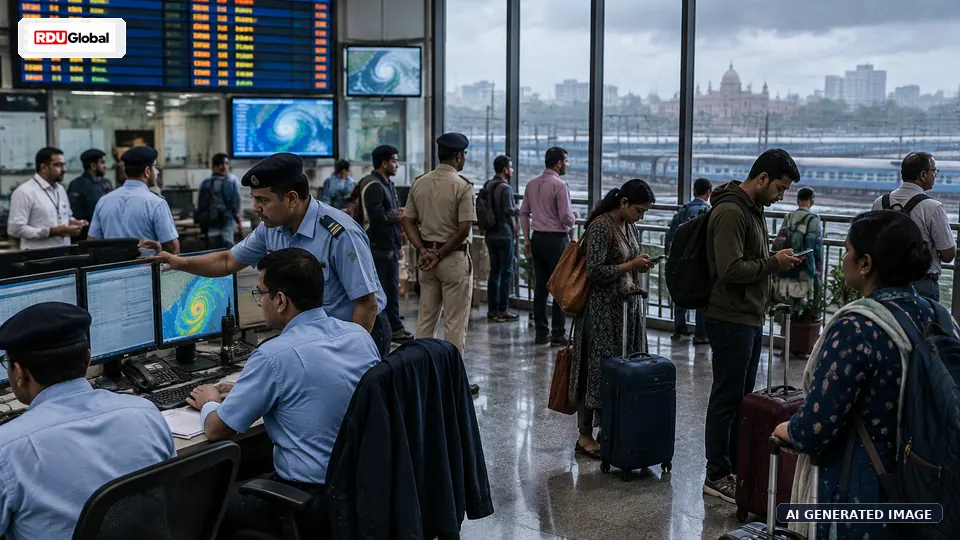
Railways have moved to pre-empt severe weather disruption by cancelling 64 train services on October 27 and 28 as Cyclone Arnab advances toward the eastern coast. The cancellations, announced as part of a precautionary operational response, are expected to affect long-distance express connectivity across key inter-state routes, particularly those linking Telangana with coastal Andhra Pradesh and Odisha.
Rail Network Under Strain
The scale of the cancellations underscores the vulnerability of India's intercity rail network when extreme weather systems threaten coastal and near-coastal infrastructure. Long-distance express trains are especially exposed because they traverse multiple railway divisions, depend on tightly sequenced timetables, and often serve as the primary mobility link for passengers travelling between major urban centres and smaller regional stations. When a cyclone approaches, railways typically face a difficult trade-off: keep services running and risk stranded passengers, or suspend operations early to reduce exposure to flooding, wind damage, signalling failures and fallen trees or overhead equipment disruptions.
In this case, the affected services include trains connecting Telangana with the coastal belt of Andhra Pradesh and onward to Odisha, a corridor that is both commercially important and weather-sensitive. These routes are frequently used by migrant workers, students, traders and families travelling for festivals or personal commitments, making cancellations disruptive well beyond the immediate storm zone. The timing, on October 27 and 28, suggests rail authorities are acting ahead of the cyclone's most disruptive phase rather than waiting for conditions to deteriorate.
Passenger Advisory Issued
Passengers have been advised to check the latest train status before beginning their journey, a standard but essential warning during severe weather events. In practice, this means travellers should confirm cancellations, short terminations, diversions and rescheduling through official railway channels rather than relying on older timetables or third-party booking information. During cyclone-related disruptions, even trains that are not formally cancelled can face delays, altered departure times or route changes as control rooms adjust operations in real time.
For passengers, the immediate impact is not limited to inconvenience. A cancelled long-distance train can trigger missed connections, hotel costs, lost workdays and overcrowding on the limited alternative transport that remains available. In corridors where rail is the most affordable and reliable mode of travel, the cancellation of dozens of services can rapidly create pressure on buses and road networks as travellers seek last-minute substitutes.
The advisory also reflects a broader shift in disaster management practice across Indian Railways, which has increasingly prioritised preventive action over reactive recovery during extreme weather. That approach is intended to protect passengers, railway staff and infrastructure, but it also highlights how climate-linked disruptions are becoming a recurring operational challenge rather than an occasional exception.
Wider Operational Impact
Cyclone-related rail cancellations carry implications beyond passenger inconvenience. Freight movement can also be affected when passenger services are withdrawn or when lines are reserved for emergency inspection and restoration work. In coastal and delta regions, rail infrastructure is particularly vulnerable to waterlogging, embankment damage and power interruptions, all of which can slow the return to normal operations after the storm passes.
The decision to cancel 64 services in advance indicates that railway planners are treating Cyclone Arnab as a serious threat to network stability. Such measures are usually informed by meteorological forecasts, route vulnerability assessments and coordination with disaster response agencies. The objective is to avoid placing trains, crews and passengers in exposed conditions where evacuation or rescue could become difficult.
For now, the operational message is clear: travel plans across the affected eastern and southern routes should be considered fluid until the cyclone threat eases. Passengers booked on services through Telangana, coastal Andhra Pradesh and Odisha are being urged to monitor official updates closely, as further changes remain possible depending on the storm's track and intensity.