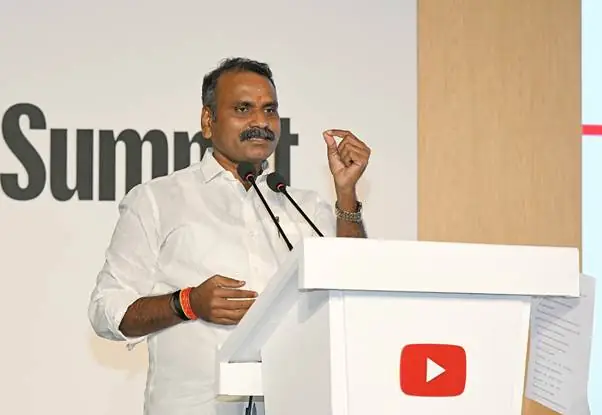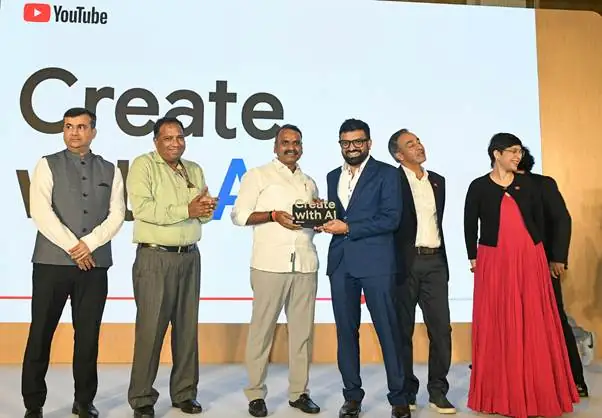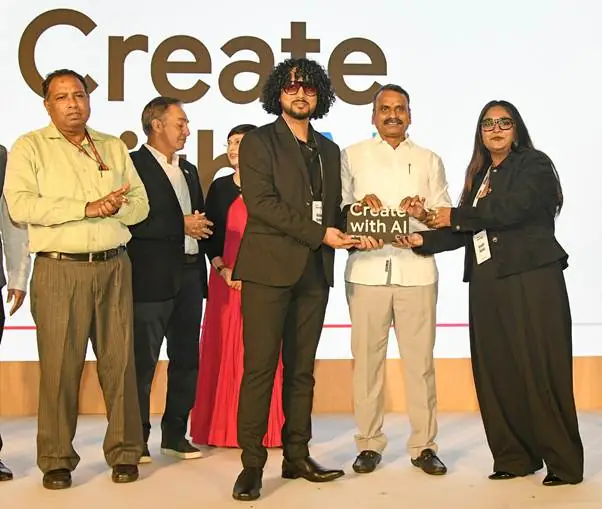
Union Minister of State for Information and Broadcasting and Parliamentary Affairs Dr. L. Murugan on Thursday underscored the growing policy significance of India's creator economy and artificial intelligence, describing both as central to the country's long-term development ambitions. Speaking at the YouTube Impact Summit 2026, he linked the rise of digital creators to the broader national project of building Viksit Bharat, or a developed India, by 2047.
The minister's intervention comes at a moment when India's digital public sphere is expanding rapidly, with short-form video, livestreaming, educational content, and vernacular storytelling increasingly shaping how millions consume information. In that environment, the creator economy is no longer a niche cultural trend. It is becoming a measurable economic and social force, with implications for employment, entrepreneurship, media diversity, and public outreach.
Creator Economy Rising
Dr. Murugan's remarks reflect a wider policy recognition that creators now occupy a space between media, commerce, and civic communication. For government, this matters because creators can amplify messages in local languages, reach younger audiences more effectively than traditional channels, and help translate complex policy into accessible formats. For the economy, the sector is generating income streams across production, editing, brand partnerships, platform monetisation, and digital services.
The significance of the minister's message lies in its framing. By placing creators within the Viksit Bharat narrative, he signalled that the government sees digital content not only as entertainment but as part of the infrastructure of growth. That includes the potential for small creators in tier-two and tier-three cities to participate in the digital economy without requiring the capital intensity of conventional industries.
India's creator ecosystem has also become a laboratory for entrepreneurship. A single creator often functions as a one-person media company, managing content strategy, audience engagement, analytics, and monetisation. As platforms mature, this ecosystem is increasingly linked to formalisation, skill development, and digital literacy. The policy challenge is to ensure that growth is broad-based rather than concentrated among a small number of high-reach accounts.
AI And Public Value
Artificial intelligence, meanwhile, is emerging as both an enabler and a test case for India's digital future. Dr. Murugan's emphasis on AI suggests a recognition that the technology can improve content discovery, translation, editing, accessibility, and audience targeting. For a multilingual country like India, AI tools can help creators scale across languages and regions, while also making public information more inclusive.
At the same time, AI introduces questions that policymakers cannot ignore. These include misinformation, synthetic media, copyright, data governance, and the risk of automation displacing certain creative tasks. A summit focused on impact is therefore not only about celebrating innovation, but also about defining guardrails that preserve trust and accountability.
The minister's comments align with India's broader effort to position itself as both a consumer and shaper of emerging technologies. In policy terms, that means encouraging innovation while ensuring that digital growth supports national priorities such as skilling, inclusion, and responsible platform governance. The creator economy and AI are increasingly intertwined: creators use AI to produce faster and reach wider audiences, while AI systems learn from the scale and diversity of creator-generated content.
Policy And Platform Shift
The YouTube Impact Summit itself is emblematic of a larger shift in how governments engage with digital platforms. Once viewed primarily as private entertainment ecosystems, platforms are now treated as strategic partners in education, communication, and economic participation. That shift gives public officials a new channel to engage citizens, but it also raises expectations that platforms will support local creators, language diversity, and safe information environments.
Dr. Murugan's remarks suggest that the government intends to keep the creator economy within the frame of national development rather than leaving it solely to market forces. That approach could influence future policy discussions around digital skills, monetisation frameworks, content regulation, and support for small creators. It also reflects a broader political understanding that influence in the digital age is increasingly shaped by those who can communicate authentically at scale.
For India, the strategic question is whether the creator economy and AI can be harnessed not just for visibility, but for value creation. If managed well, they could expand opportunity, strengthen digital inclusion, and deepen public engagement. If left unbalanced, they could widen inequalities between large and small creators, or between those with access to advanced tools and those without.
Dr. Murugan's message at the summit was therefore more than a ceremonial endorsement of digital culture. It was a statement of policy direction: that India's path to Viksit Bharat will increasingly run through the platforms, tools, and creators shaping the country's online public life.