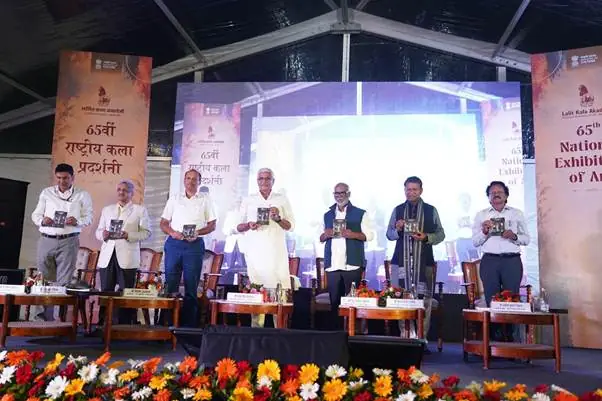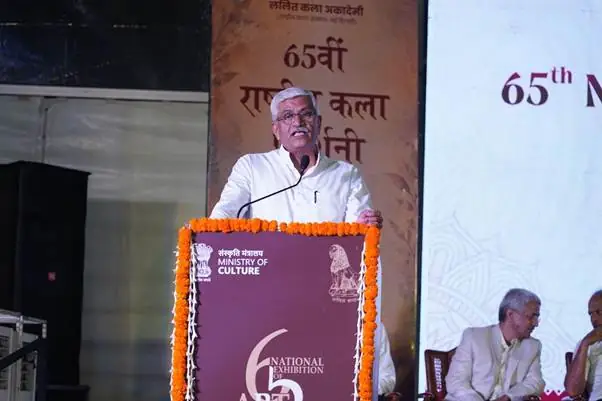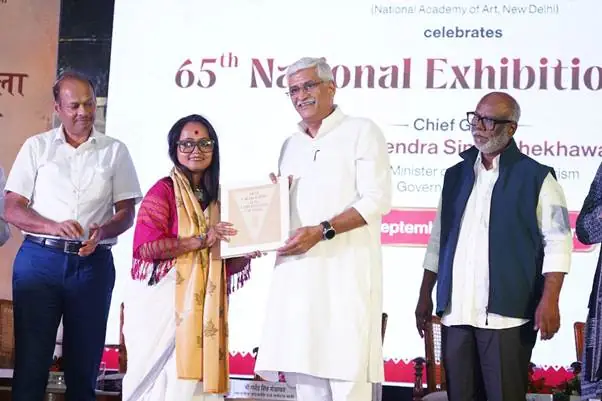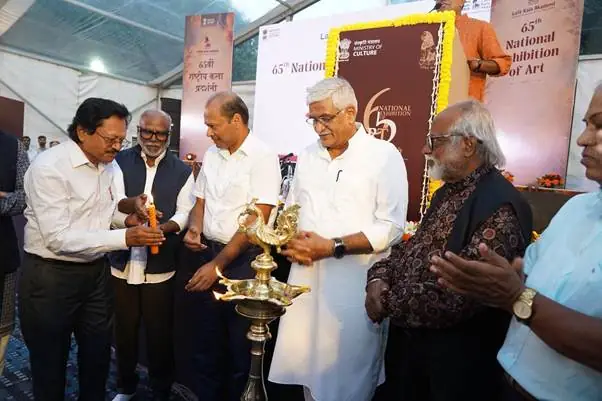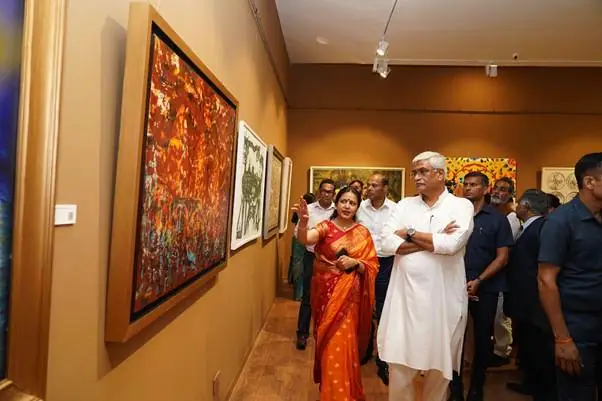
Union Culture and Tourism Minister Gajendra Singh Shekhawat on Friday felicitated 20 award-winning artists at the National Art Exhibition, in a ceremony that placed India's visual arts ecosystem squarely within the government's broader cultural agenda. The event, held amid renewed official emphasis on heritage, creativity and public cultural participation, served both as recognition of individual artistic achievement and as a signal of policy intent: the state wants to be seen not merely as a patron of monuments and museums, but as an active supporter of contemporary artistic production.
Art as Public Policy
The minister's presence at the exhibition was significant beyond the ceremonial exchange of honours. In recent years, the Union government has increasingly framed culture as a strategic domain tied to national identity, soft power, tourism and creative economy development. By felicitating artists in a national forum, the ministry is reinforcing the idea that artistic excellence is not peripheral to governance but part of the country's public narrative and cultural diplomacy.
Such events also carry practical implications for the sector. Recognition at a national exhibition can elevate artists' visibility, strengthen institutional credibility, and create pathways to wider patronage, commissions and curatorial attention. For many artists, especially those working outside major commercial circuits, state-backed recognition remains one of the few mechanisms that can translate creative merit into sustained professional opportunity.
The National Art Exhibition itself functions as a key platform for showcasing the diversity of Indian artistic practice. It brings together work that reflects regional traditions, contemporary experimentation and evolving aesthetic vocabularies. In that sense, the felicitation of 20 award winners is not only an honour roll but also a statement about the range of artistic expression the state wishes to celebrate and preserve.
Cultural Diplomacy Signal
Shekhawat's participation also reflects the government's effort to connect culture with tourism and national branding. India's cultural institutions have increasingly been asked to do more than preserve heritage: they are expected to generate public engagement, attract visitors, and project a confident civilisational image abroad. Visual arts, with their ability to bridge language and geography, are central to that effort.
The timing of the event is notable as the government continues to position cultural programming alongside infrastructure, tourism promotion and heritage conservation. In policy terms, this suggests a more integrated approach in which exhibitions, awards and public ceremonies are treated as instruments of cultural statecraft. The message is clear: artistic recognition is being used to deepen public participation in culture while also strengthening India's external image.
At the same time, the event underscores a long-standing challenge in India's arts sector — the gap between symbolic recognition and structural support. Awards and honours can raise profile, but artists continue to face uneven access to funding, exhibition spaces, archival support and market opportunities. For cultural policy to have lasting impact, such ceremonies must be matched by sustained investment in institutions, education and creative infrastructure.
Recognition And Reach
The felicitation of 20 artists at a national exhibition also highlights the government's preference for visible, high-symbolism interventions in the cultural sphere. These moments are politically useful because they are easy to communicate and resonate with a broad public audience. They also help the ministry project responsiveness to the creative community at a time when cultural identity remains an important part of national discourse.
For the artists, the recognition is likely to carry both symbolic and practical weight. National-level honours can validate years of work, strengthen professional standing and open doors to future institutional engagement. For the ministry, the event offers a platform to demonstrate that cultural governance is not confined to preservation alone, but extends to nurturing living artistic traditions and contemporary talent.
The broader significance of the ceremony lies in its alignment with India's evolving cultural policy framework. As the government seeks to expand the role of culture in public life, events like this are becoming part of a larger architecture of recognition, outreach and nation-building. In that architecture, artists are not only creators; they are also custodians of memory, interpreters of society and contributors to the country's global cultural presence.