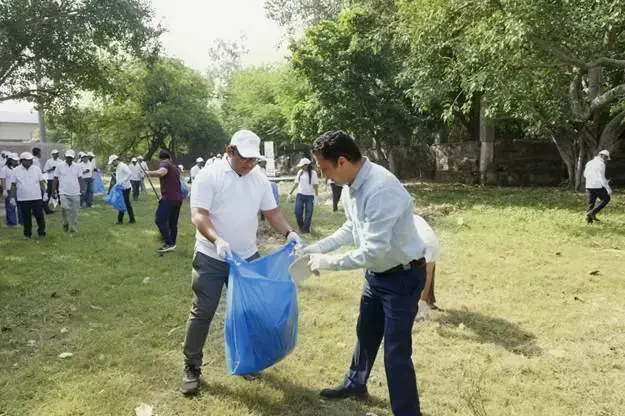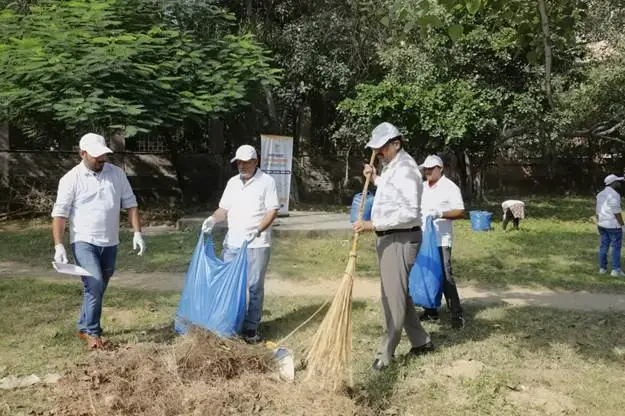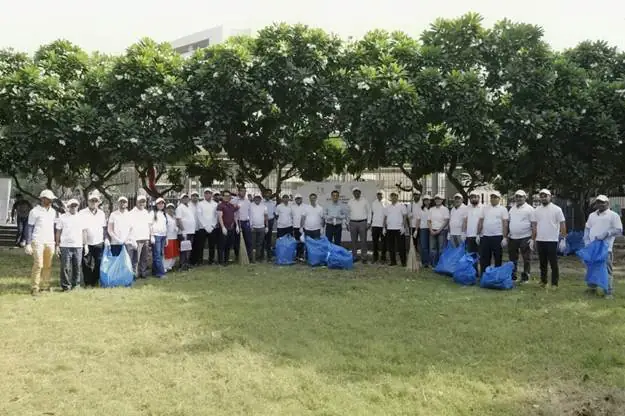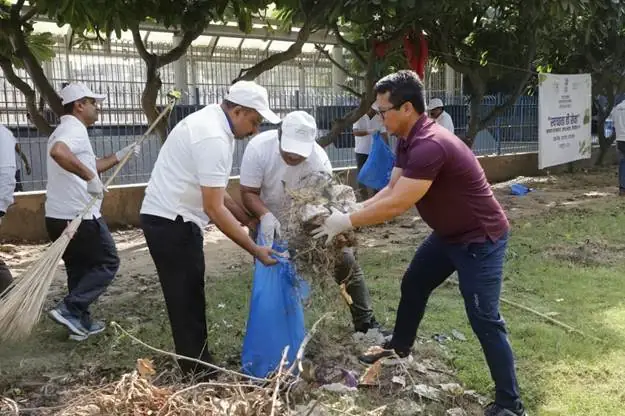
The Land Resources Department on Wednesday carried out a one-hour cleanliness campaign under the broader national civic hygiene drive, presenting the exercise as both a symbolic and operational reminder that sanitation remains a shared administrative responsibility. The initiative, framed around the theme of collective participation, brought officials together for a concentrated cleanliness effort intended to reinforce workplace discipline and public service values.
The campaign, described as "One Day, One Hour, Together," reflects the continuing effort by central institutions to keep sanitation visible within the machinery of governance rather than treating it as a one-off ceremonial event. In practical terms, such drives are designed to do more than remove litter or tidy office premises. They are meant to signal that cleanliness is part of administrative culture, not merely a municipal function or a seasonal publicity exercise.
Civic Discipline Message
The department's participation comes at a time when the government continues to place strong emphasis on cleanliness as a governance benchmark. Over the past decade, sanitation campaigns have evolved from public-awareness initiatives into recurring administrative rituals that seek to normalize civic responsibility across ministries, departments, and field offices. The Land Resources Department's drive fits squarely within that framework, linking internal housekeeping with the broader language of public service delivery.
Such campaigns are often modest in scale, but their significance lies in institutional messaging. When a department with a policy and administrative mandate publicly engages in cleanliness work, it reinforces the idea that government offices should model the standards they expect from citizens. That matters in a country where sanitation remains closely tied to urban management, public health, and the credibility of state institutions.
The one-hour format also reflects a deliberate strategy: short, visible, and easy to replicate. Rather than relying on large-scale events that can fade quickly from public memory, the campaign uses concentrated participation to create a sense of shared responsibility. The emphasis on "together" is not accidental. It suggests that the government wants cleanliness to be understood as a collective habit, not a top-down instruction.
Governance Through Participation
The Land Resources Department's involvement is notable because it illustrates how governance campaigns increasingly rely on participation as a policy tool. In contemporary public administration, symbolic actions are often used to complement formal rules. A cleanliness drive does not replace sanitation policy, but it can strengthen compliance culture, improve office environment standards, and encourage staff engagement with broader civic goals.
This approach also has a communication function. By staging a visible campaign, the department helps keep sanitation on the administrative agenda and aligns itself with the national narrative around cleanliness and public order. In policy terms, that is important because sustained governance reform often depends on repetition, visibility, and institutional buy-in rather than on isolated directives.
The campaign further reflects the government's preference for linking internal administrative behavior with external public messaging. Clean offices, orderly workspaces, and staff participation in sanitation activities are presented as evidence of a responsive and disciplined state. That framing is especially relevant in departments that deal with land and resource administration, where public trust depends heavily on procedural clarity and institutional credibility.
While the drive itself lasted only an hour, its significance lies in the larger administrative signal it sends. It suggests that cleanliness is being treated not as a peripheral concern but as part of the everyday grammar of governance. In that sense, the department's campaign is less about the duration of the activity than about the discipline it seeks to normalize.
Broader Administrative Context
The campaign also arrives against the backdrop of a wider national effort to sustain sanitation awareness beyond flagship events. Government departments have increasingly been encouraged to integrate cleanliness into routine office management, public interaction, and citizen-facing service systems. The logic is straightforward: if public institutions embody cleanliness and order, they are better positioned to demand the same standards in the public sphere.
That broader policy logic gives the Land Resources Department's initiative a relevance beyond its immediate setting. It is part of a continuing attempt to make sanitation a permanent administrative value rather than a campaign-season slogan. Whether such drives translate into long-term behavioral change remains an open question, but their role in shaping institutional norms is clear.
For now, the department's one-hour campaign stands as a concise example of how the government continues to use participatory cleanliness drives to reinforce civic discipline, administrative visibility, and the idea that public service begins with the condition of public institutions themselves.