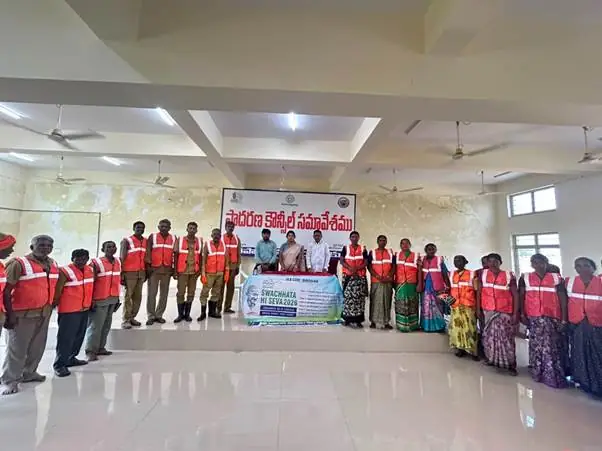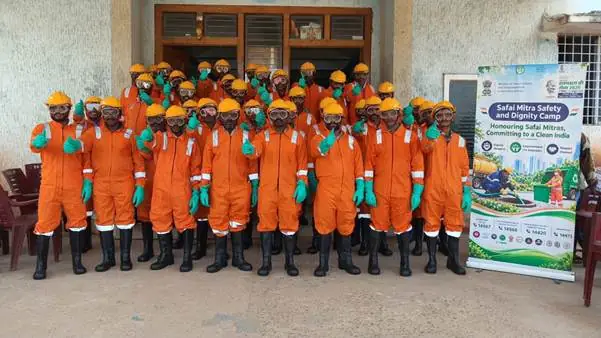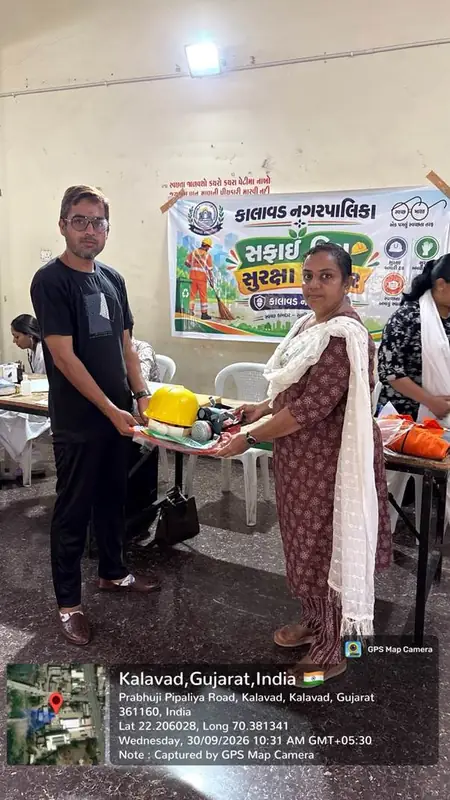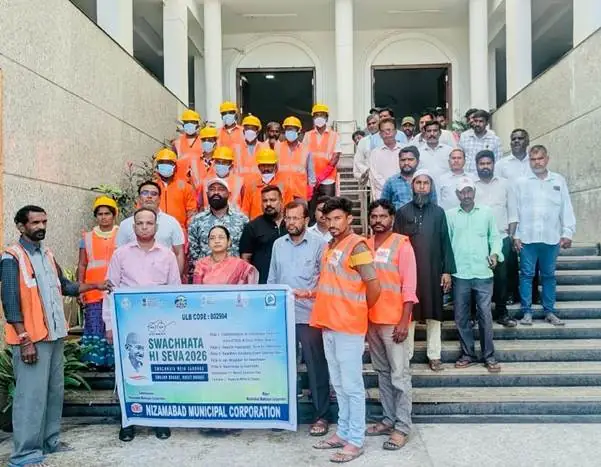
The national Safaimitra Safety and Dignity Camp has expanded to 3,870 urban local bodies and reached more than 369,000 beneficiaries, according to the latest government update, in a large-scale outreach effort focused on sanitation workers and their families. The campaign is being positioned as both a welfare intervention and a governance exercise, designed to bring essential services closer to a workforce that remains critical to urban cleanliness, public health, and municipal functioning.
The scale of the outreach is notable not only for the number of beneficiaries but also for the administrative footprint it covers. Urban local bodies are the frontline institutions responsible for sanitation management in cities and towns, and the campaign's spread across thousands of such bodies suggests a coordinated attempt to standardize support for Safaimitras across diverse municipal settings. In policy terms, the initiative reflects a growing recognition that sanitation work cannot be treated solely as a labor issue; it is also a question of safety, dignity, and social protection.
Wide Urban Reach
The campaign's presence in 3,870 urban local bodies indicates a broad national rollout rather than a limited pilot. That matters because sanitation workers are employed across a highly fragmented urban system, where access to welfare schemes often depends on local administrative capacity. By extending the camp model across such a wide network, the government is attempting to reduce the unevenness that has long characterized service delivery for informal and municipal sanitation workers.
The beneficiary count, crossing 369,000, suggests that the camps are not merely symbolic events. They appear to be functioning as service delivery platforms, likely bundling health-related support, welfare enrollment, documentation assistance, and awareness on occupational safety. For workers who often face barriers in accessing formal systems, such camps can serve as a practical bridge between municipal employment and state-backed entitlements.
The initiative also carries political and administrative significance. Sanitation workers occupy a highly visible yet historically undervalued role in India's urban governance architecture. A campaign centered on their safety and dignity signals an effort to reposition them from invisible labor to acknowledged public service providers. That framing is important in a country where sanitation remains both a public health necessity and a deeply stratified occupation.
Safety And Dignity Focus
The emphasis on safety and dignity is especially relevant in the context of sanitation work, where occupational hazards remain a persistent concern. Even where mechanization has advanced, many workers continue to face unsafe conditions, inadequate protective equipment, and limited access to health safeguards. A national camp model can help address some of these gaps by combining awareness, screening, and direct support in one setting.
The dignity component is equally significant. In governance language, dignity is often invoked broadly, but in this case it points to a concrete policy objective: ensuring that sanitation workers are not treated as peripheral to urban development. Recognition, access, and protection are being linked as part of a broader welfare narrative. That approach aligns with the growing policy consensus that social inclusion must accompany infrastructure expansion if cities are to be genuinely sustainable.
The outreach also reflects a shift toward last-mile governance. Rather than waiting for workers to navigate complex administrative channels, the camp model brings services to them. This is particularly important for workers who may lack time, mobility, or documentation to access benefits through conventional routes. In that sense, the initiative is as much about administrative design as it is about welfare spending.
Policy Signal For Cities
For urban policymakers, the campaign offers a useful template. India's cities depend heavily on sanitation workers, yet the systems that support them are often inconsistent and under-resourced. A nationwide camp structure creates a replicable mechanism for connecting workers to entitlements while also reinforcing the state's obligation to protect those who perform essential civic labor.
The broader policy signal is that sanitation governance is moving beyond cleanliness metrics toward worker-centered reform. That evolution matters because urban sanitation outcomes are ultimately tied to labor conditions. Safer workers, better access to support, and stronger recognition can improve retention, morale, and service quality. In a sector where labor shortages and informal arrangements are common, these factors are not secondary; they are central to performance.
The latest figures suggest that the campaign has already achieved significant reach, but its longer-term impact will depend on whether the outreach translates into durable access to benefits and safer working conditions. If the camps are sustained and integrated into municipal systems, they could become an important instrument for institutionalizing respect and protection for sanitation workers nationwide. For now, the numbers point to a large and deliberate effort to make dignity a measurable part of urban governance.