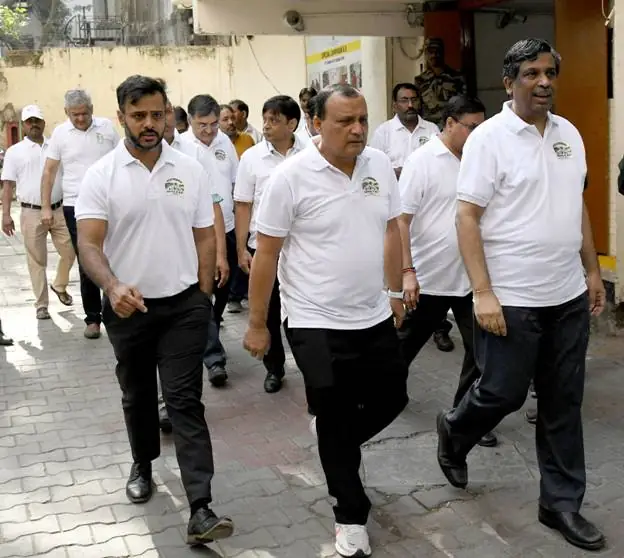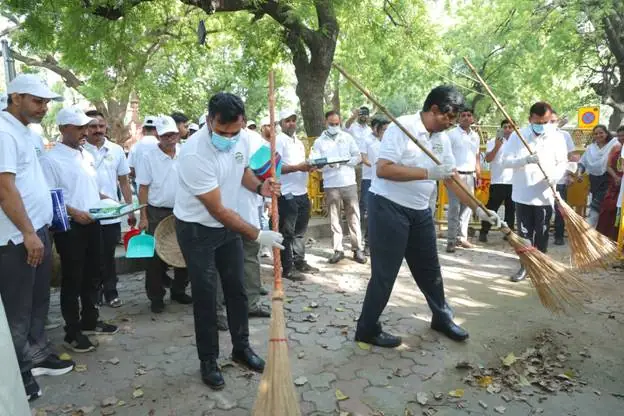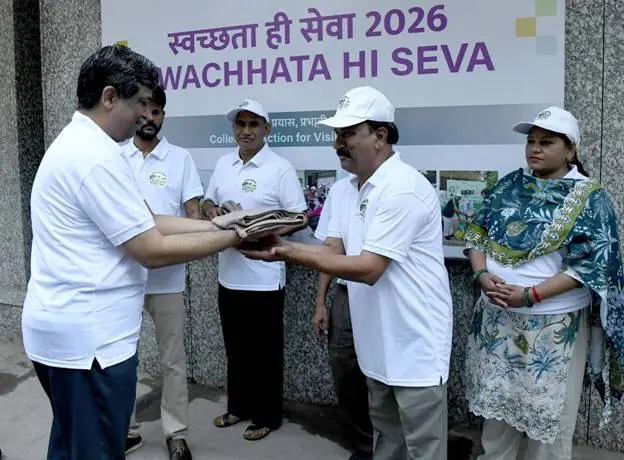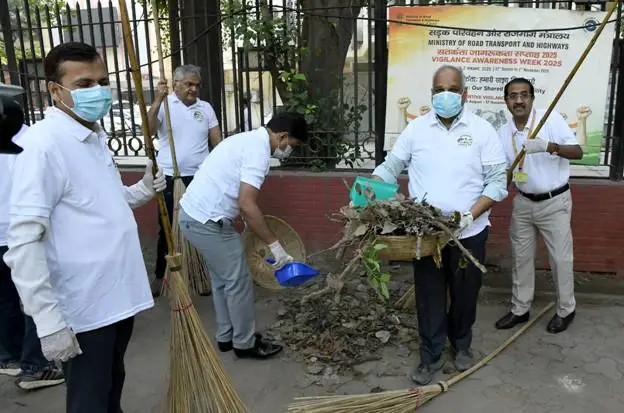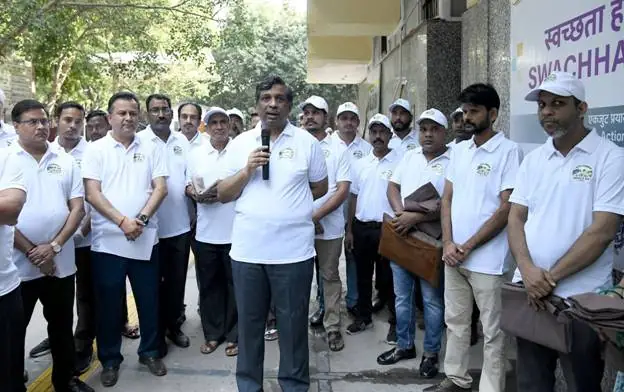
The Ministry of Road Transport and Highways on Friday observed the Swachhata Hi Seva campaign through a coordinated 'One Day, One Hour, Together' shramdaan drive, bringing officials and staff into a collective cleanliness effort aligned with the government's wider sanitation outreach. The initiative, timed for 01:50 PM IST, is part of a recurring national push that seeks to reinforce cleanliness as both a civic responsibility and an administrative priority.
The ministry's participation carries significance beyond a routine observance. In recent years, Swachhata Hi Seva has evolved into a high-visibility platform for ministries, departments and public institutions to demonstrate compliance with the broader Swachh Bharat framework. By mobilising employees for a concentrated hour of manual cleanliness work, the ministry is signalling that sanitation is not limited to municipal systems or urban local bodies, but is also a matter of institutional discipline and public example.
Civic Duty Signal
The 'One Day, One Hour, Together' format is designed to create a simple but powerful message: cleanliness requires collective participation, not just policy announcements. In practice, such drives typically involve sweeping, waste collection, segregation, and the cleaning of office premises and surrounding public spaces. The emphasis on shramdaan, or voluntary labour, is intended to evoke a sense of shared ownership over public hygiene and environmental upkeep.
For the Road Transport and Highways Ministry, the campaign also has a symbolic policy dimension. The ministry oversees one of the country's most visible public assets: the road network. Clean roadsides, service areas, transport corridors and highway-adjacent spaces are closely tied to the public perception of infrastructure quality. A cleanliness drive within the ministry therefore resonates with its core mandate, linking administrative culture to the condition of the transport ecosystem it governs.
The timing of the initiative is also notable. Swachhata-related campaigns have increasingly been used by the Union government to sustain public attention on sanitation beyond annual observance days. Rather than treating cleanliness as a one-off ceremonial event, the administration has sought to embed it into routine governance through mass participation, departmental accountability and public messaging. The ministry's latest participation fits squarely within that strategy.
Administrative Discipline
At a governance level, such campaigns serve multiple purposes. They generate visible engagement from officials, create internal pressure for workplace cleanliness, and project a model of compliance that can be replicated across the public sector. They also help translate broad national campaigns into measurable local action, even if only for a limited duration. In bureaucratic terms, the value lies not only in the physical cleaning itself, but in the culture it is meant to reinforce.
The challenge, however, remains one of durability. Cleanliness drives often produce immediate visual results, but their long-term impact depends on whether they are followed by sustained waste management, maintenance protocols and behavioural change. Without that follow-through, such initiatives risk becoming episodic demonstrations rather than structural improvements. The ministry's participation will therefore be judged not just by the hour of shramdaan, but by whether it contributes to a more consistent internal and public-facing sanitation ethic.
The broader Swachhata Hi Seva campaign has long relied on the idea that public institutions should lead by example. That principle is especially relevant for ministries with operational footprints across the country. In the case of road transport and highways, the message is particularly practical: infrastructure is not only about construction and expansion, but also about upkeep, cleanliness and user experience.
The ministry's observance of the campaign underscores a familiar but important administrative truth. National cleanliness drives gain credibility when they move from slogans to shared labour. By participating in 'One Day, One Hour, Together,' the ministry has aligned itself with that principle, using a short but visible act of collective service to reinforce a larger policy narrative around civic responsibility and public hygiene.