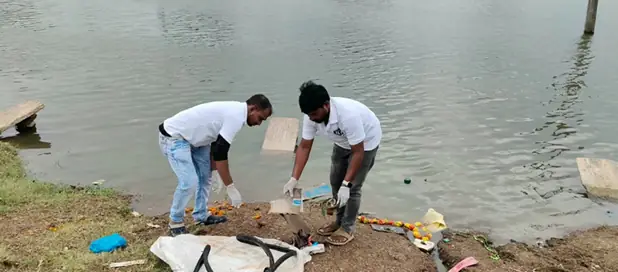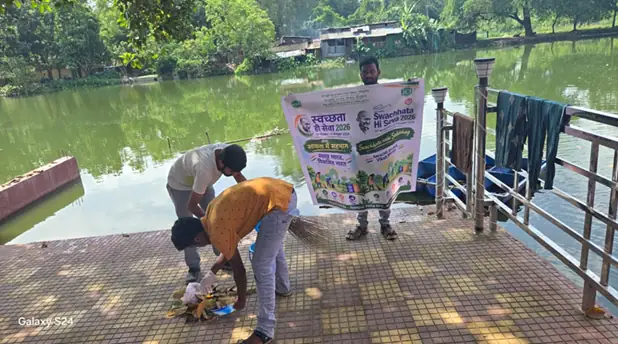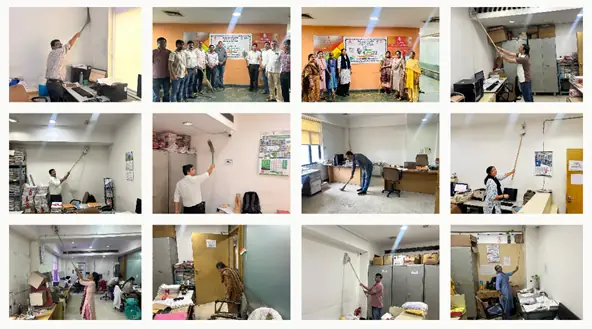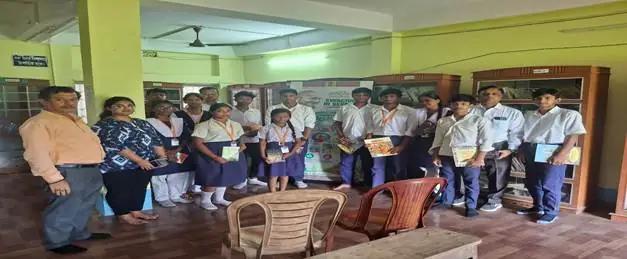
Textile organizations across India have begun rolling out cleanliness, awareness and environmental protection programs under the Swachhata Hi Seva 2026 campaign, signaling a broader attempt to connect industrial participation with national sanitation goals. The initiative places the textile sector, one of the country's largest employment-generating and resource-intensive industries, within a public policy framework that increasingly expects private associations to contribute to civic outcomes beyond their commercial footprint.
Sector Joins Civic Drive
The campaign's emphasis on cleanliness and environmental stewardship comes at a time when India's governance model is steadily expanding the role of non-state actors in public service delivery and behavioral change. Textile bodies, which often operate through dense networks of manufacturers, traders and workers, are being positioned as practical mobilizers for local sanitation drives, waste management awareness and responsible consumption messaging. Their participation gives the campaign a wider reach in industrial clusters, market areas and worker communities where public messaging can translate into measurable local impact.
Officials and industry participants view such programs as more than symbolic observance. In sectors like textiles, where production, packaging, dyeing, transport and retail all generate environmental pressures, cleanliness campaigns can serve as entry points for deeper conversations on waste segregation, water conservation, plastic reduction and workplace hygiene. The linkage between sanitation and environmental protection is especially significant because it reflects a policy shift from one-off cleanliness events toward sustained civic discipline and ecological responsibility.
Awareness Beyond Cleanliness
The awareness component of the campaign is likely to be as important as the physical cleanliness drives themselves. Public sanitation programs in India have increasingly shown that infrastructure alone cannot deliver durable outcomes unless accompanied by community participation and behavioral change. By involving textile organizations, the campaign seeks to reach business owners, workers and surrounding neighborhoods with messages on personal hygiene, waste disposal practices and the environmental costs of careless consumption.
This approach also fits a larger national governance pattern in which ministries, local bodies and industry associations collaborate to amplify public campaigns. The textile sector's involvement is particularly relevant because it has both urban and semi-urban footprints, allowing awareness efforts to travel across supply chains and into communities that may not be directly reached by formal government outreach. In practical terms, that means the campaign can influence not just factory premises but also markets, transport corridors and residential clusters linked to the industry.
The environmental protection dimension adds another layer of policy significance. Textile production is often scrutinized for its use of water, chemicals and energy, as well as for the disposal of fabric waste and packaging material. Even when the immediate campaign is framed around cleanliness, it can create pressure for better housekeeping standards, more disciplined waste handling and a stronger culture of environmental compliance. That makes the initiative relevant not only to sanitation officials but also to regulators and sustainability advocates.
Policy Signal For Industry
The campaign also carries a clear governance message: industry associations are expected to be active partners in national missions, not passive observers. Swachhata Hi Seva 2026 appears designed to convert a public cleanliness initiative into a broader social contract, one in which trade bodies, employers and workers share responsibility for the spaces they occupy and influence. For the textile sector, this may strengthen its public image while also encouraging internal reforms in cleanliness standards and environmental practices.
The timing is notable because India's policy discourse increasingly links sanitation with urban livability, public health and climate-conscious development. In that context, textile organizations participating in cleanliness and environmental drives are not merely supporting a campaign; they are helping normalize the idea that industrial growth must coexist with civic responsibility. The success of such efforts will depend on whether the programs remain limited to campaign periods or evolve into regular institutional practice.
If sustained, the initiative could become a template for other sectors seeking to align with national service campaigns. Its significance lies not in the scale of a single cleanliness drive, but in the possibility that industry-led participation can reinforce public policy objectives in a visible and locally grounded way. For a sector as widespread and socially embedded as textiles, that could make Swachhata Hi Seva 2026 more than a slogan — it could become a mechanism for translating civic ideals into everyday industrial behavior.