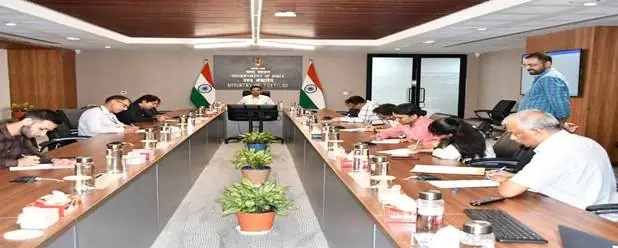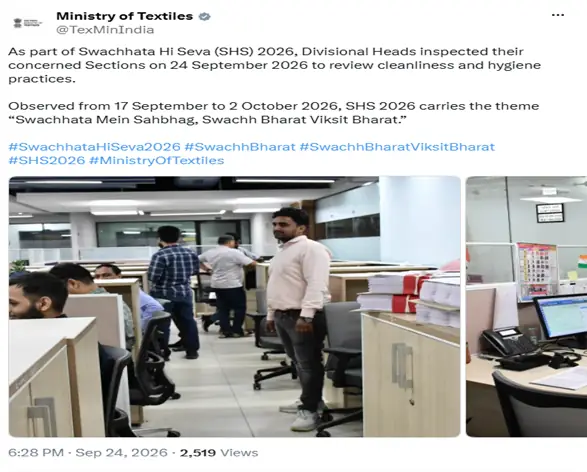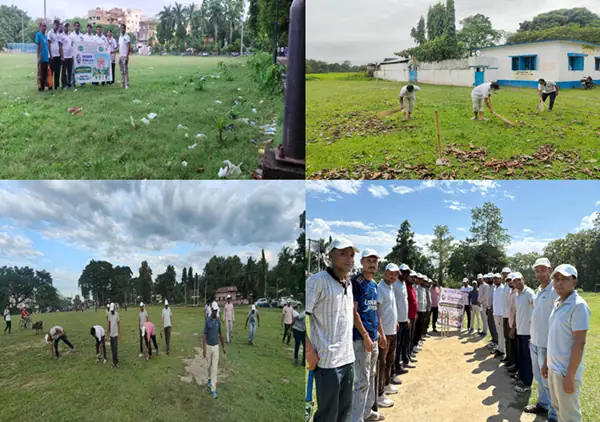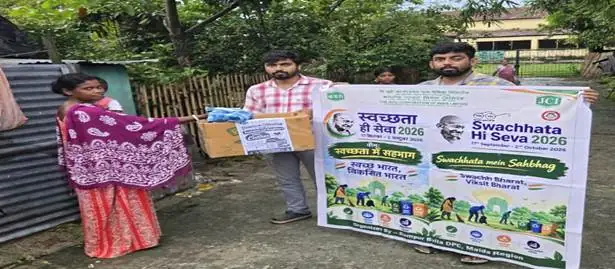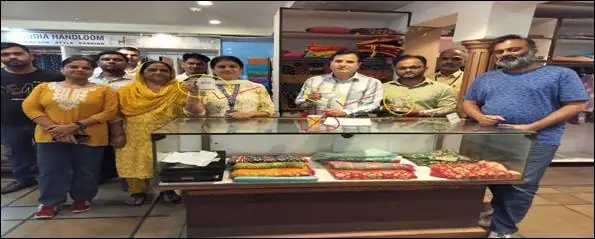
The Ministry of Textiles and its subordinate organizations have undertaken a range of cleanliness and awareness activities under Swachhata Hi Seva 2026, joining the nationwide civic campaign that seeks to deepen public participation in sanitation and hygiene. The initiative reflects a broader administrative push to embed cleanliness not merely as a symbolic observance, but as a recurring governance priority across ministries, public institutions, and field offices.
The activities, carried out across the ministry's ecosystem, were designed to promote workplace sanitation, community awareness, and a stronger culture of civic responsibility. While the campaign is part of a larger government-wide effort, the textiles sector's participation is notable because of its extensive institutional footprint, spanning policy offices, public sector undertakings, research bodies, and training institutions. Such a network gives the ministry an opportunity to translate a national message into localized action across multiple touchpoints.
Civic Outreach Push
The Swachhata Hi Seva framework has evolved into a recurring platform for ministries to demonstrate compliance with sanitation goals while also encouraging behavioural change among employees and the public. In the case of the Textiles Ministry, the emphasis appears to have been on visible cleanliness drives, awareness messaging, and internal mobilization. These activities are consistent with the government's effort to keep sanitation at the centre of administrative culture rather than limiting it to periodic campaigns.
The significance of such drives lies in their dual function. On one level, they improve the immediate cleanliness of offices, campuses, and shared spaces. On another, they serve as a public signal that sanitation remains a governance issue requiring continuous engagement. For a ministry linked to a sector with large-scale manufacturing, labour-intensive production, and extensive supply chains, the message carries added weight. Cleanliness in institutional settings often becomes a proxy for broader discipline, efficiency, and public accountability.
The campaign also fits into the Centre's larger narrative of Swachh Bharat, which has increasingly moved from infrastructure creation to sustained behavioural reinforcement. That shift is important because sanitation outcomes depend not only on facilities, but also on habits, supervision, and institutional ownership. Ministry-led participation helps normalize these expectations across the government apparatus.
Sectoral Role In Hygiene
The textiles sector has a distinct place in this effort because it connects policy, production, and workforce welfare. Public sector units and affiliated bodies in the sector often operate in environments where large employee populations, industrial premises, and community interfaces make hygiene management especially relevant. By organizing cleanliness and awareness activities, the ministry is reinforcing the idea that sanitation is integral to operational culture, not an external add-on.
This approach also has administrative value. Ministries that lead by example can strengthen compliance within their own organizations and create a template for affiliated institutions. In practice, that means cleaner premises, better waste management practices, and more consistent messaging on civic responsibility. It also helps ensure that national campaigns do not remain confined to symbolic events in the capital, but are reflected in the daily functioning of government-linked bodies.
The timing of the initiative is also meaningful. As public institutions continue to face scrutiny over service delivery and workplace standards, visible cleanliness campaigns offer a low-cost but high-visibility method of demonstrating responsiveness. They can also help build employee engagement by linking staff participation to a larger public purpose. In that sense, Swachhata Hi Seva functions both as a civic campaign and as an internal governance exercise.
Governance Through Participation
The ministry's participation in Swachhata Hi Seva 2026 highlights a broader trend in Indian governance: the use of participatory campaigns to reinforce policy goals that depend on citizen and institutional cooperation. Cleanliness, unlike many regulatory objectives, cannot be achieved through enforcement alone. It requires repeated messaging, social reinforcement, and visible leadership from public bodies.
That is why ministry-level involvement matters. It signals that sanitation is not the responsibility of a single department or local authority, but a shared administrative obligation. When ministries and their organizations take part in such drives, they help sustain the credibility of national campaigns and widen their reach beyond ceremonial observance.
The Textiles Ministry's activities under Swachhata Hi Seva 2026 therefore carry significance beyond the immediate cleanliness drives. They reflect an ongoing effort to embed civic hygiene into the machinery of government, strengthen public awareness, and demonstrate that national sanitation goals are being pursued across sectors. In a policy environment where outcomes increasingly depend on institutional coordination, such participation remains an important part of the governance toolkit.