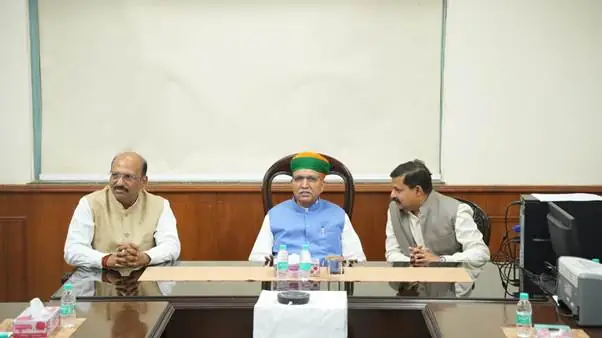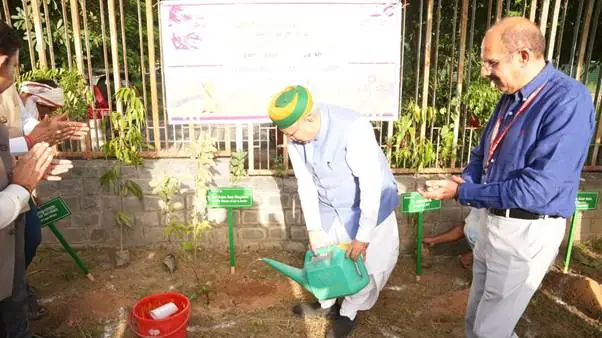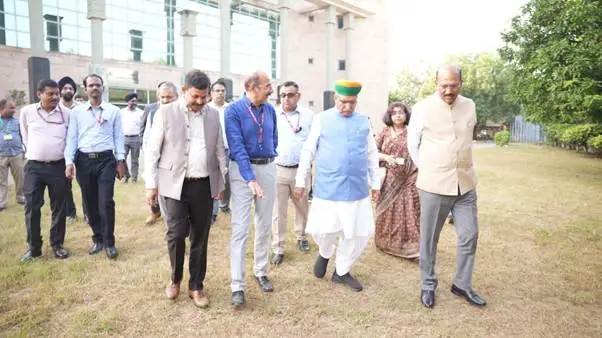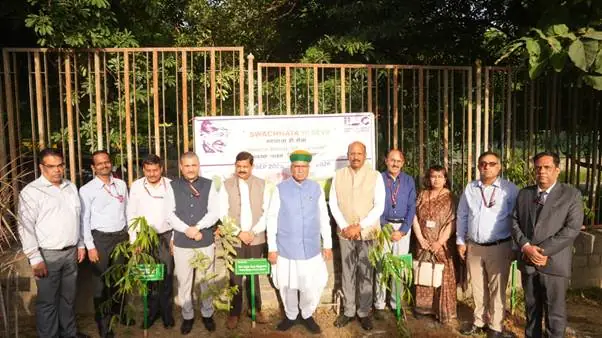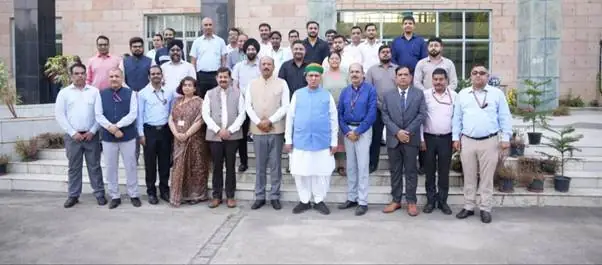
Union Minister of State for Law and Justice with independent charge Arjun Ram Meghwal on Thursday led a tree-planting drive at the Indian Institute of Advanced Conservation (IIAC), using the occasion to project environmental stewardship as both a civic duty and a policy priority. The event, held in New Delhi, placed a senior Union minister at the center of a visibly symbolic but politically resonant campaign focused on expanding green cover and reinforcing public awareness around ecological responsibility.
The plantation drive comes at a time when environmental messaging has become increasingly embedded in the language of governance. Across India, tree-planting events are no longer treated merely as ceremonial gestures. They are now often used by ministries and institutions to signal alignment with broader national goals on sustainability, urban resilience, and climate-conscious development. Meghwal's participation at IIAC fits squarely within that pattern, presenting the campaign as part of a wider public narrative about conservation and collective action.
Green Message, Public Role
Meghwal's presence lent political weight to the initiative, especially because the law ministry is not typically associated with environmental programming. That makes the appearance notable: it reflects the government's tendency to frame ecological responsibility as a cross-cutting obligation rather than a narrow portfolio issue. In practical terms, such events help extend the reach of environmental messaging beyond specialist departments and into the mainstream of governance.
The tree-planting drive also served a communications function. By placing a Union minister in a hands-on role, the event projected a model of leadership that is participatory rather than purely administrative. This is significant in a policy environment where public trust increasingly depends on visible engagement, not just formal announcements. The image of a senior minister leading by example is intended to reinforce the idea that environmental action begins with institutions and public officials before it can scale to citizens and communities.
While the event itself was limited in scope, its broader significance lies in the recurring effort by the central government to normalize environmental action as part of public life. Tree-planting campaigns are often used to mobilize students, civil society groups, and government personnel around a simple but durable message: ecological restoration requires repetition, visibility, and institutional backing. In that sense, the IIAC drive was as much about civic culture as it was about planting saplings.
Policy Signal, Not Ceremony
The timing of the event also matters. India continues to face mounting environmental pressures, including urban heat, air pollution, water stress, and the loss of green spaces in rapidly expanding cities. Against that backdrop, even modest plantation drives are increasingly framed as part of a larger response to ecological degradation. They do not solve structural problems on their own, but they help create the political and social conditions for more sustained environmental action.
For the government, such events also offer a low-friction way to connect governance with public sentiment. Environmental initiatives tend to enjoy broad appeal, cutting across party lines and social groups. That makes them useful for reinforcing a constructive policy image, particularly when linked to national institutions and senior officeholders. The IIAC campaign therefore carries a dual message: it promotes conservation while also demonstrating that environmental stewardship is being folded into the everyday practice of government.
There is also an institutional dimension worth noting. When a public body such as IIAC hosts a plantation campaign led by a Union minister, it signals that environmental responsibility is being treated as a shared administrative task. That matters in a country where implementation often depends on coordination between ministries, educational institutions, and local stakeholders. The event may not produce immediate policy change, but it helps sustain the administrative culture needed for longer-term environmental programmes.
Broader Governance Context
Meghwal's involvement is consistent with a broader trend in Indian governance: the use of symbolic public action to reinforce policy priorities. In recent years, ministries have increasingly relied on visible campaigns to communicate goals related to cleanliness, conservation, digital inclusion, and citizen participation. These events are designed not only to inform but also to normalize certain behaviors and expectations.
In that framework, the IIAC plantation drive should be read as more than a photo opportunity. It reflects the government's effort to keep environmental stewardship in the public eye while linking it to institutional leadership. The message is straightforward: sustainability is not a peripheral concern, but an integral part of responsible governance.
As India balances development ambitions with environmental constraints, such campaigns are likely to remain a recurring feature of the policy landscape. Their immediate impact may be modest, but their value lies in shaping public habits, institutional norms, and the language of leadership. Meghwal's tree-planting drive at IIAC fits that template closely, combining symbolism, policy messaging, and public engagement in a single event.