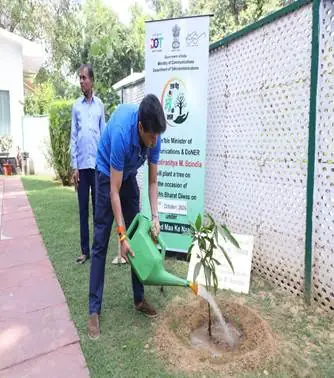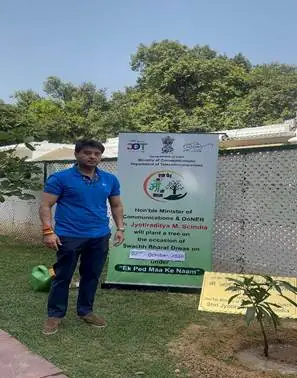
The Department of Telecommunications has wrapped up its Swachhata Hi Seva 2026 campaign, bringing to a close a cleanliness-focused initiative that formed part of the government's wider effort to embed sanitation, workplace order, and civic responsibility into routine administration. The conclusion of the campaign reflects the continuing emphasis placed by the Union government on visible, measurable public-service drives that extend beyond symbolic observance and into day-to-day institutional practice.
Campaign Wrap-Up
The campaign's closure comes at a time when central ministries are under sustained pressure to demonstrate not only policy delivery but also administrative discipline and public-facing efficiency. Swachhata Hi Seva, which has become a recurring feature of the government's cleanliness agenda, is typically used to mobilize offices, staff, and affiliated units around sanitation, waste management, and workplace hygiene. In that sense, the Department of Telecommunications' participation is notable because it signals that even a technology and infrastructure ministry is expected to align with broader governance priorities that are not limited to its core sectoral mandate.
While the campaign is framed around cleanliness, its administrative significance is broader. Such drives are often used to audit office spaces, remove legacy clutter, improve record management, and encourage staff participation in civic campaigns. For a department that oversees a critical national utility, the optics and discipline of internal housekeeping can be read as part of a larger message: public institutions are expected to model the standards they seek to promote externally.
Governance And Messaging
The conclusion of the drive also fits into the Centre's long-running strategy of linking sanitation with governance reform. Over the years, cleanliness campaigns have been positioned not merely as public-awareness exercises but as instruments for changing bureaucratic behavior. The underlying logic is that cleaner offices, better waste disposal, and more orderly public premises can reinforce a culture of accountability and responsiveness. In practice, these campaigns are often designed to generate measurable outcomes that can be reported, reviewed, and replicated across ministries and field formations.
For the Department of Telecommunications, the campaign's end may also serve as a reminder of the sector's expanding public profile. Telecommunications is no longer viewed solely through the lens of connectivity and regulation; it is increasingly tied to digital governance, citizen services, and the infrastructure of everyday state interaction. That makes internal administrative standards more visible and more politically relevant. A department that helps shape digital access and communication networks is also expected to demonstrate operational efficiency in its own offices.
The Swachhata Hi Seva framework has also become a way for ministries to align themselves with national campaigns that carry strong symbolic value. Cleanliness drives are among the most recognizable instruments of public messaging in India, and they allow the government to present governance as participatory, disciplined, and reform-oriented. The Department of Telecommunications' conclusion of its 2026 campaign therefore carries significance beyond the immediate event: it reinforces the idea that administrative culture is itself a policy tool.
Administrative Significance
The broader policy context matters here. In a large and complex bureaucracy, campaigns like this are often judged by whether they produce sustained behavioral change rather than one-off activity. That includes how offices manage space, how staff engage with sanitation norms, and whether such initiatives translate into more efficient service delivery. The challenge for ministries is to ensure that the momentum generated by a campaign does not fade once the formal observance ends.
The Department of Telecommunications' closure of the drive suggests that the ministry has completed its scheduled observance and is now expected to carry forward whatever institutional practices were reinforced during the campaign. In governance terms, that is the real test: whether cleanliness becomes embedded in routine administration rather than remaining confined to a seasonal campaign.
As the government continues to emphasize cleanliness, efficiency, and citizen-oriented administration, the end of this campaign is less a conclusion than a checkpoint. It reflects a continuing administrative philosophy in which symbolic drives are used to shape institutional behavior, strengthen public messaging, and project a state that is attentive not only to policy outcomes but also to the condition and conduct of its own machinery.