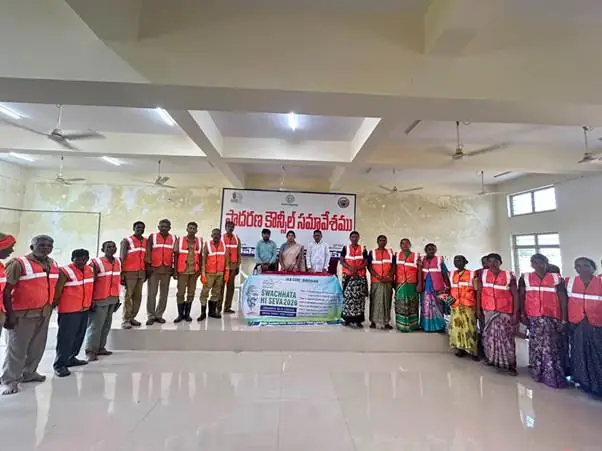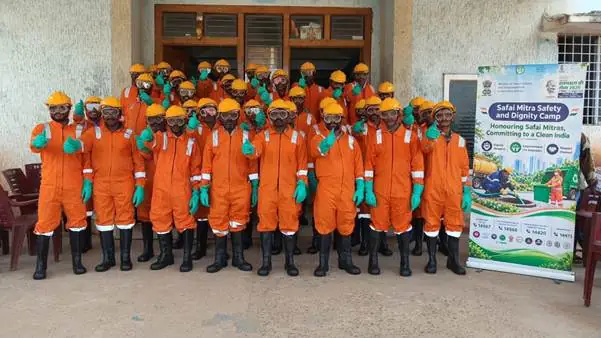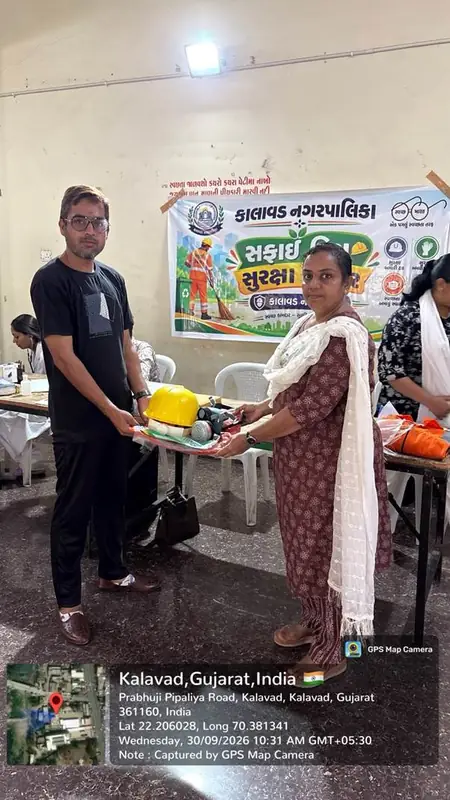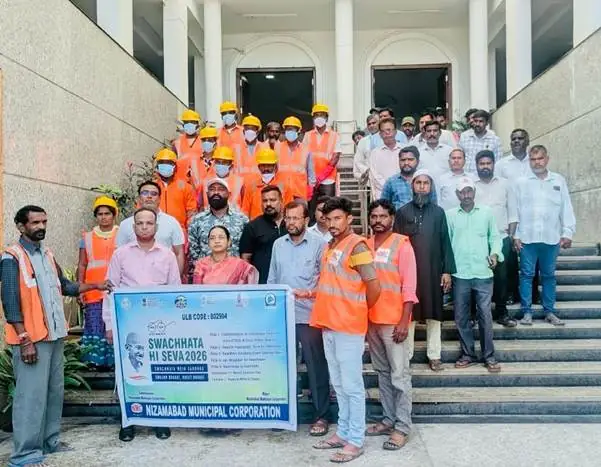
The National Sanitation Safety and Dignity Camps have emerged as one of the most expansive welfare outreach efforts in the urban sanitation sector, reaching more than 369,000 beneficiaries across 3,870 urban local bodies, according to the latest official update. The initiative reflects a growing policy emphasis on the people who sustain India's cleanliness systems, many of whom continue to work in physically demanding, high-risk environments with limited social visibility.
The scale of the campaign is significant not only for its numerical reach but also for what it suggests about the government's current governance priorities. By extending services across thousands of urban bodies, the programme appears designed to move beyond symbolic recognition and toward direct, on-the-ground delivery of safety and welfare measures. In a sector long associated with informal employment, uneven protections, and persistent stigma, such a nationwide camp-based model offers a practical mechanism for last-mile inclusion.
Wide Urban Reach
The outreach across 3,870 urban local bodies indicates a broad administrative footprint spanning municipal systems of varying size and capacity. That matters because sanitation work is deeply decentralized in India: responsibilities are distributed across municipal corporations, councils, and smaller urban bodies, each with different staffing patterns and service conditions. A campaign that can penetrate this fragmented landscape suggests a deliberate attempt to standardize welfare access across jurisdictions rather than confine it to a few large cities.
The beneficiary count, crossing 369,000, also points to substantial demand for such interventions. While the official figure is a headline measure of reach, its deeper significance lies in the likely range of services being accessed through the camps, including safety awareness, health-related support, and dignity-focused engagement with sanitation workers and their families. In policy terms, this kind of outreach helps convert broad commitments into measurable administrative action.
Safety Meets Dignity
The framing of the initiative is notable. By combining "safety" and "dignity" in the same programme, the campaign acknowledges that sanitation policy cannot be reduced to equipment distribution or cleanliness targets alone. The sector's challenges are both material and social. Workers face occupational hazards, exposure to waste, and in some cases unsafe working conditions, while also contending with entrenched discrimination and low public recognition.
This dual emphasis suggests a more holistic governance approach. Safety measures address immediate physical risk; dignity measures speak to the longer-term question of how the state recognizes and supports a workforce that remains essential to urban public health. That combination is increasingly important in a policy environment where labor welfare, social justice, and municipal service delivery are becoming more closely linked.
The camp model also has administrative advantages. It allows authorities to concentrate services, create visible public engagement, and generate a record of coverage that can be monitored and expanded. For a sector that often suffers from patchy implementation, such structured outreach can improve both accountability and uptake.
Policy Signal For Cities
The campaign's nationwide scale sends a clear signal to urban administrations: sanitation worker welfare is no longer a peripheral concern. As cities expand and waste-management systems become more complex, the human infrastructure behind those systems requires more formal support. The camps may therefore serve as both a welfare intervention and a governance instrument, reinforcing the idea that urban cleanliness depends on worker protection as much as on machinery or enforcement.
The initiative also fits into a broader national conversation about public service delivery that is more inclusive, measurable, and visible. In practical terms, the success of such a programme will depend not only on how many people are reached, but on whether the outreach translates into sustained improvements in working conditions, access to support, and institutional respect for sanitation workers.
For now, the latest figures suggest that the campaign has achieved substantial penetration across India's urban governance network. Its reach across thousands of local bodies and hundreds of thousands of beneficiaries makes it one of the more consequential sanitation-sector welfare drives in recent memory, and a reminder that the politics of cleanliness increasingly includes the politics of care.