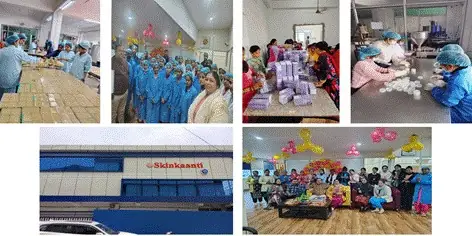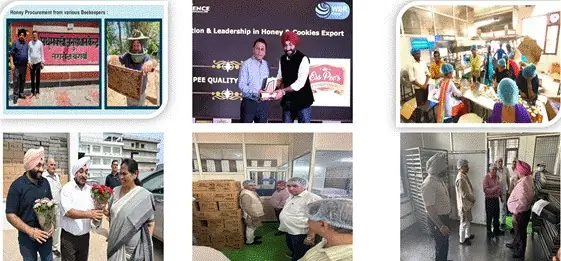
India's Prime Minister's Employment Generation Programme has become one of the government's most visible efforts to translate policy into grassroots enterprise, particularly at a time when formal job creation remains a central political and economic concern. Positioned at the intersection of credit access, rural development and small business promotion, the scheme is intended to help first-time entrepreneurs launch micro-enterprises with financial support that reduces the initial burden of setting up a business.
Policy Push
PMEGP is structured to encourage self-employment through a combination of bank credit and government subsidy, with implementation carried out through a network of institutions that includes the Khadi and Village Industries Commission and state-level agencies. The programme is especially significant because it targets individuals and groups that often face the steepest barriers to formal entrepreneurship: young job seekers, women, artisans, rural residents and small-scale producers with limited collateral or access to commercial finance.
The policy logic is straightforward but consequential. Rather than relying solely on large industrial investment or public sector hiring, PMEGP seeks to create a distributed model of economic participation. That approach is increasingly important in a country where demographic pressure continues to outpace the speed of high-quality job creation. By supporting micro and small enterprises, the scheme aims to generate livelihoods in sectors that can absorb labour more quickly and across a wider geographic footprint.
Officials and policy analysts have long viewed the programme as part of a broader effort to deepen financial inclusion and reduce dependence on informal work. For many beneficiaries, the scheme offers a first formal entry into business ownership, often in manufacturing, services or village-based production. In that sense, PMEGP is not merely a subsidy programme; it is a channel for converting local skills into income-generating activity.
Rural Enterprise Focus
A defining feature of the programme is its emphasis on balanced regional development. In practice, that means encouraging enterprise creation outside major metropolitan centres, where access to capital and markets is often more concentrated. The scheme is particularly relevant in rural and semi-urban districts, where small units can support local supply chains, create ancillary employment and retain economic value within communities.
This rural orientation also reflects a wider policy shift in India toward decentralised growth. As the government continues to promote manufacturing, self-reliance and local production capacity, PMEGP fits into a larger framework that seeks to strengthen the bottom of the economic pyramid. The programme's design allows beneficiaries to establish businesses that are relatively modest in scale but potentially significant in cumulative impact when replicated across thousands of districts.
The challenge, however, lies in execution. Like many credit-linked schemes, PMEGP depends on timely approvals, effective handholding, market access and post-sanction support. Without adequate training and follow-up, first-generation entrepreneurs can struggle with compliance, demand generation and working capital management. That makes implementation quality as important as headline allocations.
Inclusion And Scale
The programme's broader political significance lies in its inclusive architecture. By targeting disadvantaged and underrepresented groups, it seeks to widen participation in enterprise creation and reduce structural barriers that have historically limited access to formal business opportunities. In a country where economic mobility remains uneven, such schemes carry both developmental and symbolic weight.
At the same time, PMEGP's scale makes it a useful test of the government's ability to convert policy intent into measurable outcomes. The real benchmark is not only the number of units financed, but whether those enterprises survive, expand and employ others over time. That requires a functioning ecosystem of credit, training, market linkage and administrative responsiveness.
As India continues to debate the future of employment generation, PMEGP remains a reminder that inclusive growth is not built only through large headline investments. It is also shaped by smaller, distributed interventions that help ordinary citizens become producers, employers and participants in the formal economy. In that sense, the programme's importance extends beyond subsidy disbursement: it represents a model of development that seeks to broaden opportunity while anchoring growth in local enterprise.