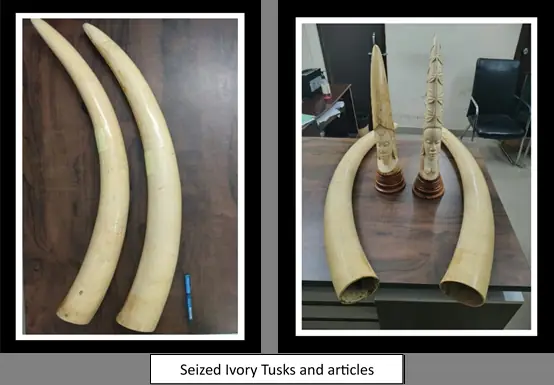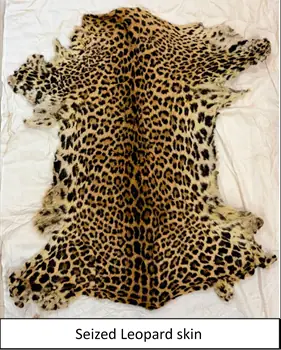
The Directorate of Revenue Intelligence has mounted one of its most consequential recent actions against illegal wildlife trafficking, seizing a cache that included elephant ivory, leopard skin, a live pangolin and tiger parts, and arresting 11 people in connection with the case. The operation highlights how India's enforcement agencies are increasingly confronting wildlife crime not as an isolated conservation issue, but as part of a broader illicit trade ecosystem that can intersect with smuggling routes, organised networks and transnational demand.
The seizure is significant not only for the range of protected species involved, but also for what it suggests about the sophistication of the trafficking chain. Ivory and big-cat derivatives remain among the most sensitive wildlife products under Indian law and international conventions, while the recovery of a live pangolin points to the continuing pressure on one of the world's most trafficked mammals. The presence of tiger parts adds further gravity, given the species' highest level of legal protection and its symbolic importance in India's conservation framework.
Enforcement Pressure
The DRI's intervention reflects a growing pattern in which financial and customs intelligence agencies are being drawn deeper into wildlife enforcement. While forest departments and wildlife crime units remain central to conservation policing, the movement of endangered species parts often depends on transport, concealment and cross-jurisdictional logistics that fall within the investigative reach of revenue and customs authorities. That makes agencies such as the DRI crucial in disrupting trafficking networks before contraband can be moved through ports, highways or informal border channels.
The arrests of 11 individuals suggest that investigators believe the case extends beyond a simple possession offence. In wildlife trafficking cases, multiple arrests often indicate roles spread across procurement, storage, transport and attempted sale. Officials have not yet publicly detailed the full chain of custody, but the scale of the seizure indicates a coordinated operation rather than a chance interception.
India has long been both a source and transit country for illegal wildlife products, and the country's enforcement challenge is compounded by the diversity of species targeted by traffickers. Pangolins are especially vulnerable because of demand for their scales in illegal markets, while leopard skin and tiger parts are frequently linked to status-driven consumption and black-market trade. Ivory remains a persistent target despite global restrictions, driven by demand in illicit luxury and carving markets.
Conservation And Crime
The case arrives at a time when wildlife trafficking is increasingly understood as a serious organised crime issue rather than a narrow conservation violation. The trade can generate substantial profits, exploit weak links in enforcement and, in some cases, overlap with other forms of smuggling. For India, which has invested heavily in tiger conservation and broader biodiversity protection, such seizures are a reminder that habitat protection alone cannot shield endangered species from criminal demand.
The recovery of a live pangolin is particularly important from a conservation standpoint. Unlike seized body parts, a live animal can potentially be handed over for veterinary care and rehabilitation, though survival outcomes depend on the conditions of capture and handling. Authorities typically treat such recoveries as both an enforcement success and a rescue operation, requiring coordination between investigative and wildlife protection agencies.
The seizure also raises questions about the resilience of trafficking networks despite years of enforcement pressure. India has strengthened wildlife protection laws and improved inter-agency coordination, yet traffickers continue to adapt by using smaller consignments, informal transport routes and layered intermediaries. That adaptability makes intelligence-led operations essential, especially when dealing with high-value species products that can be moved quickly and concealed easily.
Wider Policy Signal
Beyond the immediate arrests, the operation sends a broader policy signal: wildlife crime remains a live national governance issue, not merely an environmental one. The involvement of a central investigative agency indicates that the state is treating the matter with seriousness at the level of border control, customs enforcement and criminal prosecution. It also reinforces the need for tighter coordination between revenue intelligence, forest officials, police and judicial authorities if cases are to result in durable convictions.
For conservationists, the case is another reminder that enforcement must keep pace with demand-side pressures. For policymakers, it underscores the importance of intelligence sharing, forensic identification of species products and sustained monitoring of trafficking corridors. And for the criminal justice system, it presents a test of whether arrests and seizures can be converted into prosecutable cases that dismantle networks rather than merely interrupt shipments.
As the investigation develops, the key questions will be whether authorities can identify the source and intended destination of the seized wildlife products, and whether the arrests lead to a wider map of the trafficking chain. For now, the DRI's action stands as a notable strike against a trade that continues to threaten some of India's most protected and imperiled species.