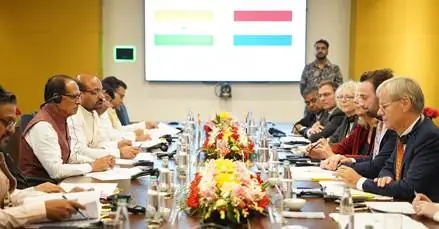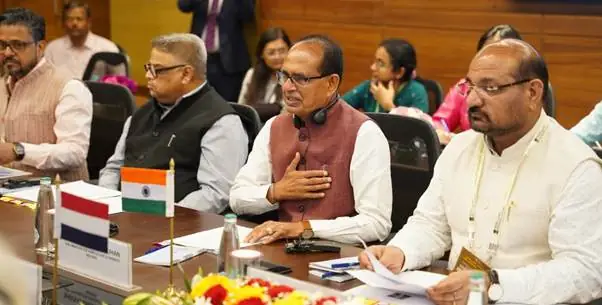
India and the Netherlands have held discussions aimed at deepening agricultural cooperation, with both sides exploring avenues to expand collaboration in farm technology, sustainable production, and knowledge exchange. The engagement reflects a practical convergence of interests: India is seeking to improve productivity, resilience, and market efficiency across its vast agricultural sector, while the Netherlands is looking to extend its globally recognized expertise in high-yield, resource-efficient farming systems.
Strategic Farm Partnership
The talks come at a time when agriculture remains central to India's economic and political priorities. The sector supports a large share of the population, anchors rural livelihoods, and continues to face pressure from climate variability, fragmented landholdings, water stress, and supply-chain inefficiencies. Against that backdrop, cooperation with the Netherlands carries significance beyond symbolism. Dutch agricultural systems are widely regarded for their advanced greenhouse cultivation, seed innovation, post-harvest management, and integrated value-chain models. For India, those capabilities are relevant not only to productivity gains but also to the larger challenge of making farming more resilient and commercially viable.
The conversation also fits into India's broader policy direction, which has increasingly emphasized technology adoption, precision agriculture, and sustainable resource use. Officials have been looking for international partnerships that can support farm modernization without undermining domestic priorities such as food security, smallholder inclusion, and rural employment. In that context, the Netherlands offers a model of high-output agriculture built on efficiency rather than land intensity, a contrast that makes the partnership especially useful for Indian planners.
Technology Meets Scale
A central theme in India-Netherlands agricultural engagement is the potential to combine Dutch technical know-how with India's scale. The Netherlands has developed globally competitive systems in controlled-environment agriculture, horticulture, dairy efficiency, and water-smart farming. India, by contrast, brings a vast and diverse agricultural base, ranging from cereal production and horticulture to livestock and agri-processing. The strategic value of cooperation lies in adapting proven technologies to Indian conditions rather than importing models wholesale.
That distinction matters. India's farm sector is not a single system but a mosaic of regional climates, crop patterns, and institutional capacities. Any meaningful collaboration must therefore account for local soil conditions, irrigation realities, market access, and the needs of small and marginal farmers. If structured well, Dutch expertise could help India improve yield per unit of land and water, reduce post-harvest losses, and strengthen cold-chain and logistics systems. Such gains would be especially relevant in horticulture and perishables, where inefficiencies often erode farmer incomes and raise consumer prices.
The discussions also point to a growing diplomatic logic in agricultural cooperation. As global food systems face mounting strain from climate change, supply disruptions, and input volatility, countries are increasingly treating agriculture as a domain of strategic resilience. For India, partnerships that support innovation in seeds, irrigation, storage, and farm management can complement domestic reform efforts without requiring politically sensitive structural overhauls.
Policy Gains Ahead
The immediate significance of the talks lies in their policy potential. Agricultural cooperation with the Netherlands could support pilot projects, research exchanges, and private-sector collaboration in areas such as greenhouse farming, water conservation, and agri-value chains. It may also open doors for joint work between universities, research institutions, and industry players focused on climate-smart agriculture and food processing.
At a broader level, the engagement reinforces India's effort to position agriculture as a modern, investment-ready sector rather than only a welfare-dependent one. That shift is important for attracting technology, capital, and expertise into rural economies. It also aligns with India's need to improve export competitiveness in high-value agricultural products while safeguarding domestic supply and farmer welfare.
For the Netherlands, the partnership offers access to one of the world's largest agricultural markets and a chance to scale solutions in a setting far more complex than its own domestic landscape. For India, the opportunity is to absorb methods that can make farming more productive, climate-resilient, and market-linked. The talks therefore represent more than routine diplomatic engagement; they signal a pragmatic effort by both countries to turn agricultural cooperation into a long-term instrument of policy and growth.