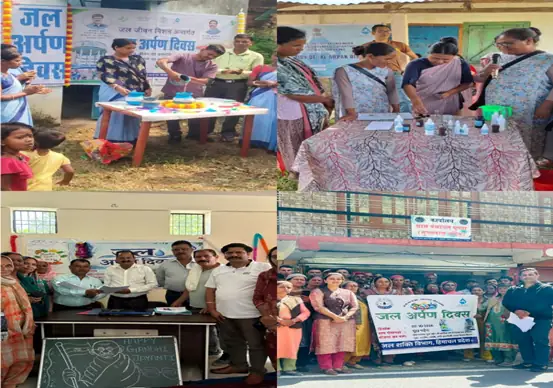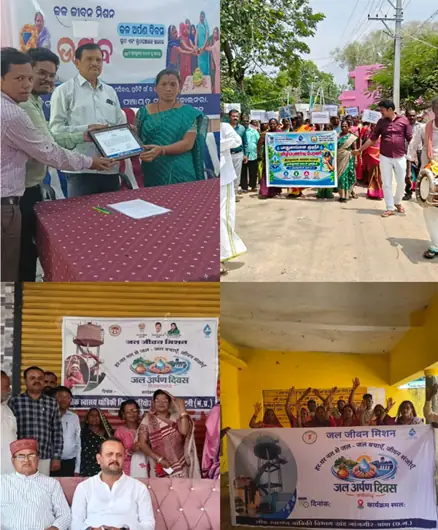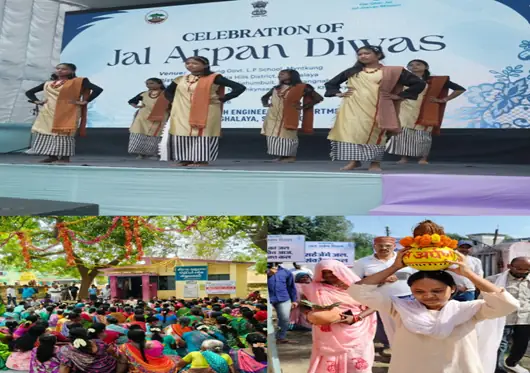
In a significant governance push timed to Gandhi Jayanti, the government and local institutions organised 'Jal Arpan' programmes in more than 1,850 gram panchayats across rural India as part of special Gram Sabha meetings under Jal Jeevan Mission 2.0. The exercise was framed as a community-led effort to reinforce ownership of rural water supply systems, with officials using the platform to place village institutions at the centre of operation, maintenance, and oversight of drinking water assets.
The initiative reflects a broader policy evolution in India's rural water strategy. Jal Jeevan Mission, launched to provide tap water connections to every rural household, has increasingly moved beyond the engineering challenge of laying pipelines and building treatment systems. The harder task now is ensuring that these systems remain functional, equitable, and locally managed over time. By anchoring the programme in Gram Sabhas, the government is signalling that the durability of rural water supply depends not only on capital expenditure but also on social ownership and routine community participation.
Community Ownership Push
The 'Jal Arpan' programme is intended to deepen the role of villagers in the governance of drinking water infrastructure. In practical terms, that means encouraging residents to treat water supply not as a distant government service but as a shared local asset requiring collective care. Gram Sabhas, which are the constitutional forum for village-level decision-making, provide a formal setting for discussing water availability, quality, household coverage, leakages, and maintenance responsibilities.
This approach is especially relevant in rural India, where water schemes often face familiar implementation risks: irregular power supply, source depletion, breakdowns in distribution networks, and weak maintenance systems after initial installation. Community ownership is meant to address these vulnerabilities by creating local accountability structures that can identify problems early and support faster resolution. The emphasis on participation also aligns with the mission's long-term objective of making rural water systems self-sustaining rather than dependent solely on periodic administrative intervention.
Gandhi Jayanti Significance
The decision to organise the programme on Gandhi Jayanti carried symbolic and administrative weight. Gandhi's political philosophy placed strong emphasis on village self-governance, decentralisation, and the moral responsibility of communities to manage their own affairs. By linking the water initiative to special Gram Sabha meetings on this day, the government sought to connect a contemporary public policy programme with the idea of participatory rural democracy.
The timing also helped elevate the visibility of the mission at the village level. National schemes often struggle to translate into sustained local engagement once the initial announcement phase passes. A synchronised nationwide exercise across thousands of panchayats creates a common moment of attention, allowing officials and village leaders to reinforce messages about water conservation, household responsibility, and the importance of protecting public infrastructure. In policy terms, the event served both as a symbolic reaffirmation of decentralised governance and as a practical mobilisation tool.
Mission 2.0 Priorities
Under Jal Jeevan Mission 2.0, the focus is increasingly shifting from coverage expansion to system sustainability, water quality, and community participation. That shift is significant because the success of rural water supply cannot be measured only by the number of connections provided. The real test lies in whether water reaches households consistently, whether supply systems are maintained, and whether local institutions can manage disputes and operational challenges without waiting for higher-level intervention.
The 'Jal Arpan' initiative suggests that policymakers recognise this transition. Rural water governance is not merely a technical or financial issue; it is also an institutional one. Panchayats, village water committees, and Gram Sabhas are being positioned as the first line of stewardship. If that model takes hold, it could reduce dependence on top-down administration and improve resilience in areas where water stress is chronic.
At the same time, the programme's scale underscores the challenge ahead. Conducting events in more than 1,850 panchayats is a meaningful start, but the real measure of success will be whether the engagement translates into regular monitoring, better maintenance, and stronger local decision-making after the ceremonial moment has passed. For rural water policy, the question is no longer whether infrastructure can be built. It is whether communities can be empowered to keep it working.
The government's latest move indicates that it is betting on precisely that proposition: that durable rural water security will depend on turning beneficiaries into custodians, and schemes into shared civic assets.