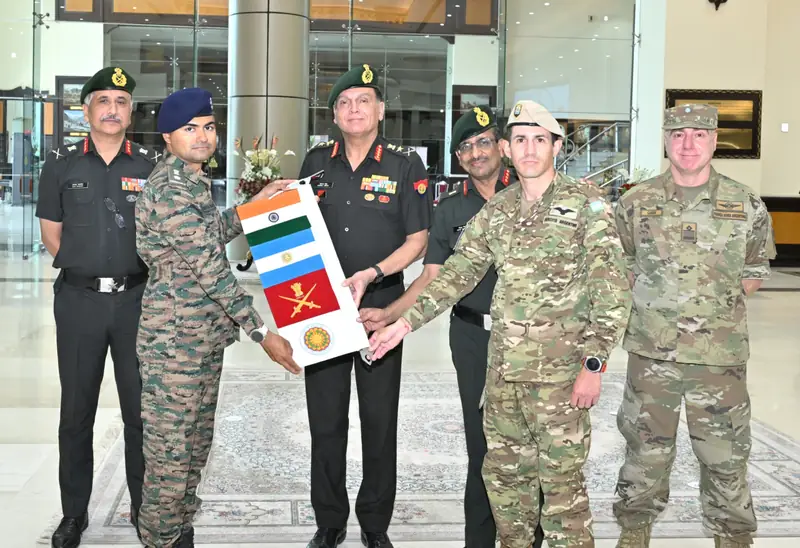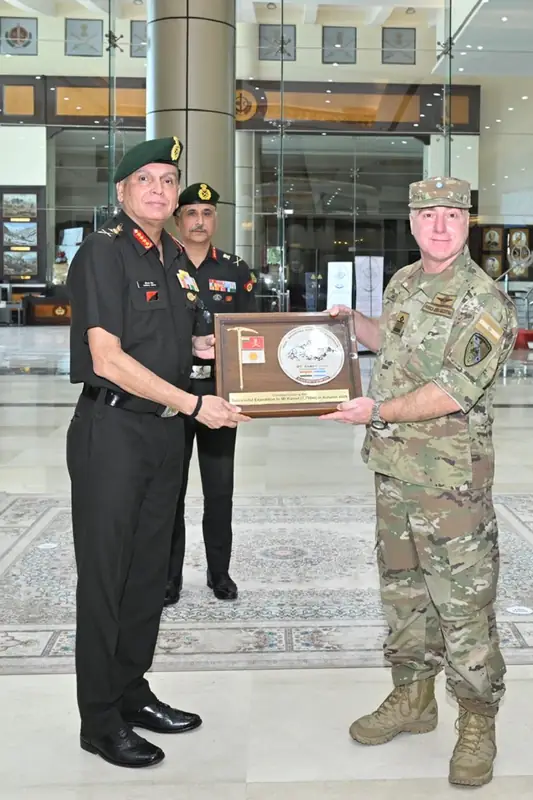
The Chief of the Army Staff welcomed the joint India-Argentina Army mountaineering expedition team in New Delhi on Friday, in a gesture that reflects the Indian Army's sustained investment in high-altitude capability, international military engagement and disciplined outdoor training. The meeting placed a spotlight on a niche but strategically meaningful form of cooperation that blends adventure, endurance and defence diplomacy.
The reception comes at a time when armed forces around the world are increasingly using joint expeditions, training exchanges and sports-based engagements to deepen interoperability and build trust beyond conventional exercises. For India, such initiatives are not merely ceremonial. They reinforce a long-standing military culture that treats mountaineering as a serious professional discipline, particularly relevant to a force that operates in some of the world's most demanding terrain.
High-Altitude Diplomacy
The India-Argentina expedition is notable for its symbolic and practical value. Joint mountaineering efforts allow personnel from two militaries to share techniques in acclimatisation, route planning, survival, logistics and team coordination under extreme conditions. These are skills that matter not only on mountains but also in operational environments where resilience, judgment and cohesion are tested under pressure.
For the Indian Army, such engagements also serve a broader diplomatic purpose. They project an image of a professional force that is outward-looking, confident and willing to build partnerships through non-combat channels. Argentina, with its own tradition of mountain operations and high-altitude geography, offers a natural counterpart for such collaboration. The partnership therefore carries an element of mutual learning rather than one-way outreach.
The Army Chief's welcome also signals institutional recognition of the value of these exchanges. In a security environment shaped by complex borders, difficult terrain and the need for rapid adaptation, mountaineering remains more than a sport. It is a training ground for leadership, endurance and decision-making in austere conditions. That makes such expeditions relevant to the Army's broader preparedness ethos.
Training Beyond Borders
Joint expeditions of this kind often have a deeper significance than their immediate public profile suggests. They help build familiarity between officers and soldiers from different countries, creating informal channels of communication that can outlast a single event. They also provide a platform for sharing best practices in safety, equipment use and expedition planning, which can be especially valuable in high-risk environments.
For India, the emphasis on mountain training has long been tied to geography and security realities. The Army's operational responsibilities in high-altitude regions demand a force that is physically conditioned and mentally prepared for extreme weather, thin air and logistical constraints. Mountaineering expeditions, especially those conducted with foreign partners, reinforce those competencies while also strengthening the Army's international profile.
The New Delhi interaction also fits into a wider pattern of defence engagement that increasingly includes military sports, adventure training and cultural outreach. These activities may not attract the same attention as major exercises or procurement announcements, but they contribute to the steady accumulation of trust and professional familiarity between armed forces. In that sense, they are part of the quieter architecture of defence diplomacy.
Strategic Soft Power
The Army Chief's reception of the expedition team is best understood as a small but meaningful example of strategic soft power. It demonstrates how the military can advance national interest not only through deterrence and readiness, but also through shared professional experiences that build goodwill abroad.
Such events also resonate domestically. They reinforce the image of the armed forces as institutions that value discipline, courage and teamwork, while encouraging younger audiences to see mountaineering and adventure training as part of a broader national ethos of service and resilience. In an era when public attention is often dominated by crises and confrontation, this kind of engagement offers a reminder that defence institutions also operate through cooperation, skill-building and symbolic outreach.
The joint India-Argentina expedition is therefore more than a ceremonial visit. It is a compact expression of how modern militaries use shared challenges to deepen ties, sharpen capabilities and project confidence. The Army Chief's welcome in New Delhi placed that message firmly at the centre of the day's defence calendar.