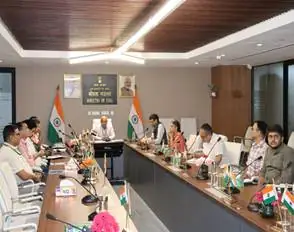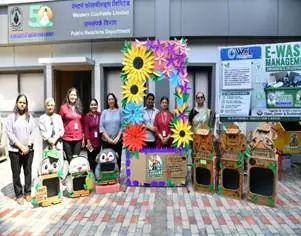
The Ministry of Coal has launched a special drive on electronic waste management under Special Campaign 6, adding a sustainability dimension to the government's annual administrative cleanliness and disposal exercise. The initiative is aimed at identifying, segregating, and responsibly disposing of obsolete electronic equipment across ministry premises and associated offices, while also improving record-keeping and asset management.
E-Waste Focus
The campaign comes at a time when India is grappling with a rapidly expanding stream of discarded electronics, from outdated computers and printers to damaged peripherals, batteries, and communication devices. In government offices, such waste often accumulates quietly in storage rooms and record sections, creating both operational clutter and environmental risk. By targeting e-waste specifically, the Coal Ministry is aligning routine administrative housekeeping with a more consequential policy concern: the safe handling of hazardous materials embedded in modern electronics.
Special Campaign 6 is part of the Union government's wider effort to institutionalize cleanliness, reduce pending files, free up office space, and dispose of redundant assets in a transparent manner. In this context, the Coal Ministry's focus on e-waste is notable because it moves beyond symbolic cleanliness and into the domain of environmental governance. E-waste contains substances that can be harmful if dismantled or dumped improperly, including heavy metals and toxic compounds. A structured disposal drive therefore serves both administrative efficiency and ecological responsibility.
The ministry's action also reflects a growing recognition that digital modernization itself generates waste streams that must be managed with the same seriousness as paper records or obsolete furniture. As public offices upgrade hardware and software systems, older devices are frequently replaced before they are physically unusable. Without a formal disposal mechanism, such equipment can remain idle for years, creating compliance gaps and potential data-security vulnerabilities.
Administrative Cleanup Push
The special drive is expected to support a broader clean-up of ministry assets, with departments likely reviewing inventories, identifying defunct equipment, and coordinating with authorized recyclers or disposal agencies. Such exercises often yield practical gains beyond environmental benefits. They can free up storage space, improve workplace organization, and recover value from scrap or reusable components. They also encourage departments to maintain more accurate asset registers, which is important for public accountability.
For a ministry linked to one of India's most resource-intensive sectors, the emphasis on waste management carries additional symbolic weight. The coal sector has long been associated with extraction, logistics, and industrial output; a focused e-waste campaign suggests an effort to project administrative modernity and environmental awareness alongside operational scale. It also fits into the government's broader narrative of cleaner, leaner, and more digitally disciplined governance.
The timing of the drive is significant as well. Special campaigns in government often serve as short, intensive windows for measurable action, allowing ministries to demonstrate progress on disposal, grievance redressal, record management, and workplace hygiene. In practice, these campaigns can reveal how deeply administrative reform has penetrated day-to-day office culture. A successful e-waste drive would indicate not only compliance with instructions, but also a shift toward more systematic lifecycle management of government property.
Governance And Compliance
The larger policy implication is that e-waste management is no longer a peripheral issue reserved for environmental agencies or urban local bodies. It is becoming a mainstream governance concern that cuts across ministries, public institutions, and procurement systems. Government offices are among the largest institutional users of electronics, and their disposal practices can set standards for the private sector and the public at large.
By centering e-waste in Special Campaign 6, the Coal Ministry is effectively acknowledging that administrative reform and environmental compliance are now intertwined. The campaign may appear modest in scale, but its significance lies in the model it promotes: disciplined disposal, traceable recycling, and a cleaner institutional footprint. If implemented rigorously, such drives can help normalize responsible electronic waste handling across the bureaucracy and reinforce the idea that sustainability begins inside government offices themselves.
The ministry has not framed the drive as a one-off publicity exercise, but rather as part of a structured government campaign with measurable administrative outcomes. That approach matters. In a system where obsolete equipment often lingers due to procedural inertia, even a targeted clean-up can produce meaningful gains in efficiency, compliance, and environmental stewardship.