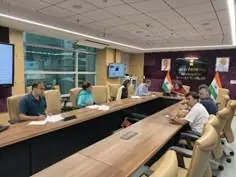
The Department of Science and Technology has reviewed preparations for Special Campaign 6, placing emphasis on cleanliness, disposal of electronic waste, and more effective public outreach as part of a broader administrative efficiency drive. The review underscores how central government departments are being pressed to treat such campaigns not as symbolic exercises, but as structured interventions aimed at improving workplace discipline, environmental compliance, and citizen engagement.
The latest review comes at a time when the Union government has increasingly linked internal housekeeping with governance outcomes. Special campaigns in recent years have evolved beyond file clearance and office sanitation to include asset management, record rationalisation, grievance responsiveness, and disposal of obsolete material. In that context, DST's focus on e-waste is notable. Scientific and technology institutions typically generate a steady stream of outdated computers, peripherals, laboratory equipment, and communication devices, making responsible disposal both an operational and environmental priority.
Administrative Cleanliness Push
The emphasis on cleanliness reflects a wider administrative culture shift in which ministries are expected to demonstrate visible orderliness and efficiency. Clean office spaces, uncluttered records, and systematic disposal of redundant material are increasingly treated as indicators of institutional discipline. For a department such as DST, which sits at the intersection of research, innovation, and policy, the symbolic value of a well-managed internal environment is especially significant. It signals that the department expects the same precision in governance that it promotes in science and technology policy.
The campaign also carries a practical dimension. Departments that fail to clear obsolete files, unused furniture, and redundant equipment often face storage bottlenecks and avoidable compliance burdens. By reviewing readiness early, DST appears to be seeking measurable outcomes rather than last-minute activity. That approach is consistent with the government's broader preference for time-bound administrative drives that can be monitored, audited, and replicated across offices.
E-Waste As Governance Test
The call to focus on e-waste disposal is particularly important in the context of modern public administration. Government offices are major consumers of digital hardware, and the lifecycle of that equipment has become a governance issue in its own right. Improper disposal can create environmental hazards, data-security risks, and procurement inefficiencies. Proper segregation and disposal, by contrast, can reduce storage costs, improve workplace safety, and support compliance with environmental norms.
For DST, the issue has added resonance because the department oversees scientific institutions and policy ecosystems that depend heavily on technology. A campaign that addresses e-waste is therefore not merely about clearing clutter; it is about demonstrating that public institutions can manage the full lifecycle of the tools they use. In a policy environment increasingly shaped by sustainability and circular-economy principles, such measures also help align internal administration with national environmental priorities.
The review suggests that the department is looking beyond one-time disposal and toward a more systematic approach to asset management. That includes identifying obsolete items, separating reusable materials, and ensuring that disposal channels are transparent and compliant. If implemented well, this can reduce waste while improving accountability.
Public Outreach Matters
The third pillar of the review, public outreach, points to a more outward-looking understanding of governance. Government campaigns often fail when they remain confined to internal checklists and do not translate into visible public value. By stressing outreach, DST appears to be acknowledging that administrative reform must also be communicated clearly to stakeholders, researchers, institutions, and citizens who interact with the department.
Public outreach in this context can serve several functions. It can explain the purpose of the campaign, encourage participation from affiliated institutions, and reinforce the message that cleanliness and sustainability are not peripheral concerns but part of responsible governance. It can also help build trust by showing that the department is willing to be accountable for its internal practices.
The review of Special Campaign 6 preparations therefore fits into a larger pattern of performance-oriented governance. It suggests that the department is preparing for a campaign that is expected to be visible, measurable, and administratively meaningful. The challenge now will be execution: whether the department can convert preparatory review into sustained action across offices, laboratories, and affiliated units. If successful, the campaign could offer a model for how routine administrative drives can be used to improve both institutional hygiene and public credibility.