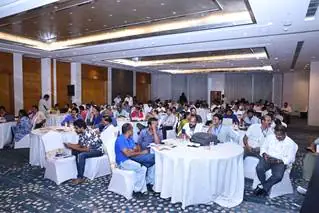
The National Land Monetization Corporation has stepped up preparations for the proposed e-auction of land associated with Rashtriya Ispat Nigam Ltd. by organizing a mock auction training session, a move that signals the government's intent to ensure a smooth, transparent, and technically sound bidding process. The exercise comes at a time when New Delhi is intensifying efforts to unlock value from public assets while maintaining procedural credibility in a politically sensitive and commercially significant sector.
Auction Readiness Push
The mock e-auction was aimed at familiarizing prospective participants and stakeholders with the digital bidding framework that will govern the actual sale. Such rehearsals are increasingly central to India's asset monetization strategy, where the success of a transaction depends not only on valuation and demand, but also on bidder confidence in the integrity of the platform and the clarity of the rules.
For a transaction involving land linked to a major public sector enterprise, the stakes are higher than a routine property disposal. RINL, the corporate entity behind the Visakhapatnam Steel Plant, has long been viewed as a strategic industrial asset with deep regional and national significance. Any monetization involving its land holdings is therefore likely to attract scrutiny from investors, policymakers, labor stakeholders, and state-level actors.
The mock session appears intended to reduce operational risks before the live auction. These include technical glitches, confusion over registration and documentation, uncertainty around bid submission protocols, and disputes arising from unfamiliarity with the digital process. By simulating the auction environment in advance, NLMC is effectively trying to pre-empt avoidable delays and objections once real money is on the table.
Transparency And Process
The use of an e-auction mechanism reflects the government's broader preference for digital, rule-based disposal of public assets. In theory, such systems improve transparency by limiting discretionary intervention and creating a verifiable trail of participation and price discovery. In practice, however, the credibility of the process depends on how well the platform is explained, how accessible it is to bidders, and how consistently the rules are enforced.
That is why mock training has become more than a procedural formality. It serves as a confidence-building tool for bidders who may be evaluating whether to participate in a transaction involving a large and politically visible public asset. It also gives the administering agency an opportunity to identify bottlenecks, clarify eligibility norms, and ensure that the auction architecture can withstand scrutiny.
The timing is notable. Asset monetization has become a recurring policy instrument for the Union government, which has sought to convert underutilized public holdings into revenue-generating assets without necessarily transferring ownership of core strategic operations. Land, in particular, remains one of the most valuable and contested categories in this framework because it can be monetized relatively quickly, but often carries complex questions about usage, zoning, and long-term public interest.
Strategic Monetization Signal
The RINL-linked land auction, even before its formal launch, illustrates the government's balancing act between fiscal pragmatism and industrial sensitivity. On one hand, monetization can help improve capital efficiency and generate funds from dormant assets. On the other, public sector land sales can trigger concerns about valuation, future land use, and the broader direction of industrial policy.
NLMC's role in this process is significant. As the specialized body tasked with facilitating land monetization, it is expected to bring institutional discipline to a process that has historically been uneven across departments and enterprises. A mock auction is therefore not merely a training event; it is part of a larger effort to standardize procedures and reduce the reputational risk associated with public asset sales.
The outcome of the live auction will likely be watched closely for signals about market appetite, pricing discipline, and the government's ability to execute monetization plans without friction. If the process runs smoothly, it could strengthen the case for similar transactions elsewhere in the public sector. If it encounters resistance or technical issues, it may reinforce skepticism around the pace and design of such reforms.
For now, the mock exercise suggests that officials are trying to get the mechanics right before opening the process to bidders. In a policy environment where execution is often as important as announcement, that preparation may prove decisive.