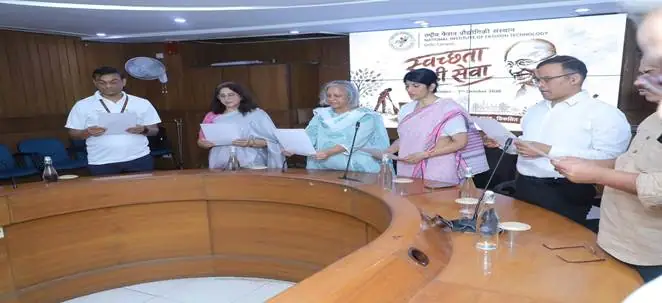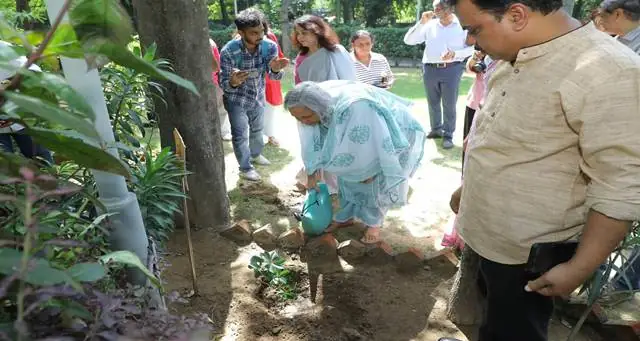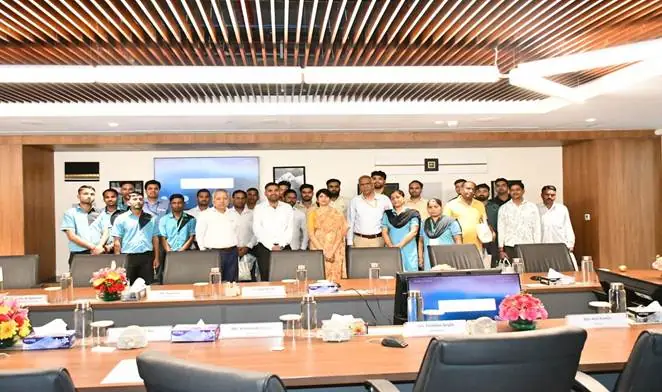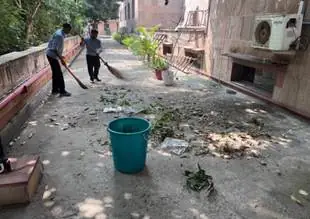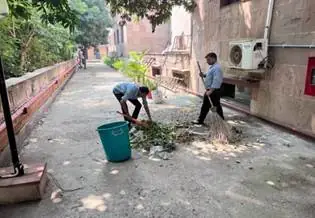
The Ministry of Textiles has brought its nationwide Swachhata Hi Seva 2026 campaign to a close with a coordinated set of cleanliness and awareness activities aimed at reinforcing sanitation as a public duty rather than a one-off administrative exercise. The initiative, carried out across ministry offices and affiliated establishments, was framed as part of the government's wider effort to embed cleanliness into everyday governance and workplace culture.
Officials said the campaign combined physical cleanliness drives with outreach designed to encourage behavioural change among employees and the public. The emphasis was not only on removing waste and improving hygiene standards in government premises, but also on using the campaign period to communicate the importance of sustained civic discipline. In that sense, the ministry's participation reflected a familiar but increasingly strategic model in Indian public administration: pairing symbolic national campaigns with measurable institutional housekeeping.
Cleanliness as Governance
The closing of the campaign comes at a time when sanitation initiatives in India are being used to signal administrative responsiveness and public-sector accountability. For the Textiles Ministry, the exercise carried added significance because the sector spans a wide network of offices, field units, training centres and industry-linked institutions. A cleanliness drive across such a footprint is as much about operational order as it is about public messaging.
The ministry's approach appears to have focused on visible action and internal mobilisation. Such campaigns typically involve waste segregation, removal of legacy clutter, cleaning of office spaces, and awareness sessions encouraging staff to adopt cleaner habits in both professional and personal settings. While these activities may appear routine, they are increasingly treated by ministries as part of a broader governance narrative that links efficiency, discipline and citizen-facing credibility.
The Swachhata Hi Seva framework has, over the years, evolved into a recurring national platform for ministries, departments and local bodies to demonstrate alignment with the Centre's cleanliness priorities. In practice, the campaign serves two purposes: it creates a time-bound push for sanitation outcomes, and it offers a public reminder that cleanliness is expected to be sustained beyond ceremonial observance.
Public Awareness Push
The awareness component of the ministry's campaign is especially relevant in a policy environment where behavioural change is considered essential to sanitation outcomes. Government-led cleanliness drives have often been criticised when they are reduced to photo opportunities or short-lived drives. By pairing cleaning activities with awareness outreach, the ministry sought to project a more durable message: sanitation depends on participation, not just enforcement.
That message matters in a country where waste management, workplace hygiene and civic compliance remain uneven across regions and institutions. Awareness campaigns can help close the gap between policy intent and everyday practice, particularly when they are directed at government employees who are expected to model the standards being promoted. In this respect, the ministry's campaign fits into a larger administrative effort to make public institutions examples of the behaviour they seek to encourage.
The conclusion of the campaign also highlights how central cleanliness has become to the government's public-service identity. What began as a national sanitation mission has gradually expanded into a governance theme that cuts across ministries, schools, transport systems and local administrations. The Textiles Ministry's participation reinforces the idea that sanitation is no longer treated as a peripheral civic issue, but as a core marker of institutional credibility.
Broader Policy Signal
Beyond the immediate cleanliness drive, the campaign sends a broader policy signal about how ministries are expected to engage with national priorities. The Textiles Ministry's role in the initiative shows that sectoral departments are being drawn into cross-cutting governance campaigns that extend beyond their narrow policy mandates. This reflects a style of administration in which ministries are asked to contribute not only to sectoral output, but also to national behavioural campaigns.
For the textiles sector, which has deep links to employment, manufacturing and rural livelihoods, such participation also helps project a socially responsive institutional image. Clean and well-managed offices, public-facing facilities and training environments can support a more professional administrative culture, even if the direct economic impact of such campaigns is limited. The value lies in signalling standards and reinforcing expectations.
As the campaign concludes, the key question is whether the momentum will be sustained after the formal observance ends. That has been the central challenge for cleanliness drives across India: translating short-term mobilisation into routine practice. The ministry's closing activities suggest an awareness of that challenge, and an attempt to position cleanliness not as an annual ritual, but as a continuing administrative norm.
In that sense, the end of Swachhata Hi Seva 2026 at the Textiles Ministry is less a finish line than a checkpoint. The real test will be whether the awareness generated during the campaign leads to lasting improvements in workplace hygiene, waste discipline and civic responsibility across the ministry's network.