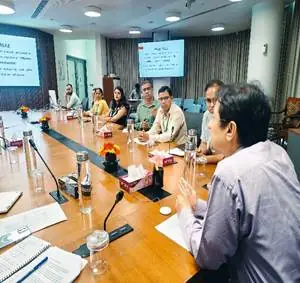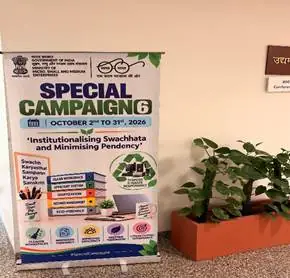
The Ministry of Micro, Small and Medium Enterprises has rolled out Special Campaign 6.0, a fresh administrative push designed to embed cleanliness into the daily functioning of its offices while also reducing the stock of pending cases, records, and other unresolved matters. The campaign is part of a wider government effort to turn periodic cleanliness drives into a sustained management practice, with measurable outcomes tied to office efficiency, record disposal, and public-facing service standards.
Administrative Discipline Drive
The latest campaign underscores how the Union government is increasingly treating cleanliness not merely as a symbolic exercise, but as an operational benchmark for governance. For the MSME Ministry, which oversees one of India's most economically significant sectors, the initiative carries an added layer of importance: the ministry's internal systems must remain responsive, orderly, and accessible if they are to support enterprises that often depend on timely policy delivery, approvals, and institutional support.
Special Campaign 6.0 is expected to focus on a set of routine administrative targets that have become central to such drives in recent years. These typically include the disposal of old files, review of pending references, weeding out obsolete records, improving office space management, and ensuring that cleanliness standards are maintained beyond the campaign period. The emphasis is not only on visible tidiness, but on reducing friction in bureaucratic workflows that can slow decision-making and weaken institutional accountability.
The ministry's participation also signals continuity in a broader governance model that has gained traction across central ministries and departments. By linking cleanliness with pendency reduction, the government is effectively framing administrative reform as a matter of both physical order and process discipline. That approach reflects a recognition that cluttered records, delayed file movement, and poorly maintained office systems can all contribute to inefficiency, especially in large bureaucratic structures.
Pendency Under Scrutiny
The campaign's second major objective — reducing pending matters — is likely to attract close attention because pendency remains one of the most persistent challenges in public administration. Across ministries, unresolved files and delayed disposal of references can create bottlenecks that affect policy implementation, grievance handling, and interdepartmental coordination. For a ministry dealing with the MSME ecosystem, where businesses often seek quick access to schemes, guidance, and institutional support, the cost of delay can be especially significant.
The campaign therefore has implications beyond office housekeeping. It is part of a larger administrative logic that seeks to improve the speed and predictability of government functioning. In practice, this means encouraging officials to identify long-pending matters, prioritize disposal, and streamline internal processes so that routine work does not accumulate into a structural burden.
The government has increasingly used such special campaigns to generate short-term momentum around long-standing administrative issues. While critics may question whether periodic drives can produce durable reform on their own, supporters argue that they create deadlines, visibility, and accountability that are often missing from routine bureaucratic operations. In that sense, Special Campaign 6.0 is as much about institutional signaling as it is about immediate housekeeping.
Broader Governance Signal
For the MSME Ministry, the campaign also carries a symbolic message about the state's relationship with small businesses. The sector is often described as the backbone of employment generation and industrial diversification in India, but it also faces persistent constraints ranging from delayed approvals to fragmented access to support systems. A ministry that demonstrates internal efficiency and discipline may be better positioned to project credibility in its external policy work.
The initiative fits into a broader administrative culture in which cleanliness campaigns are used to reinforce public service values, improve office environments, and promote a more disciplined use of government space and records. Yet the real test will lie in whether the campaign produces measurable reductions in pendency and whether the improvements are sustained after the drive concludes.
If successful, Special Campaign 6.0 could help strengthen the ministry's internal governance architecture while also setting a practical example for other departments. If it remains a one-off exercise, it may add to the long list of government campaigns that generate attention without fully altering administrative habits. For now, the ministry's launch of the drive places both cleanliness and pendency management back at the center of the governance conversation.