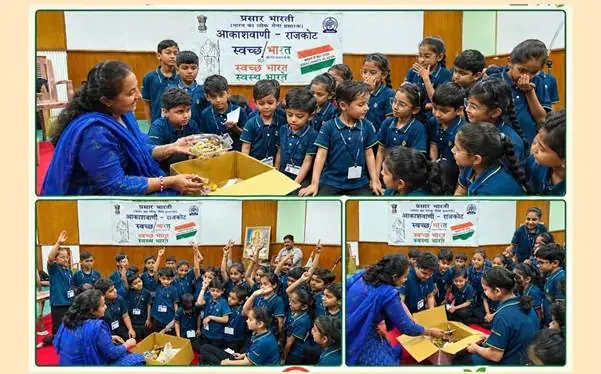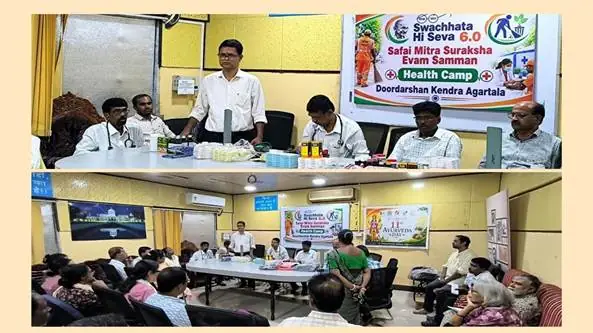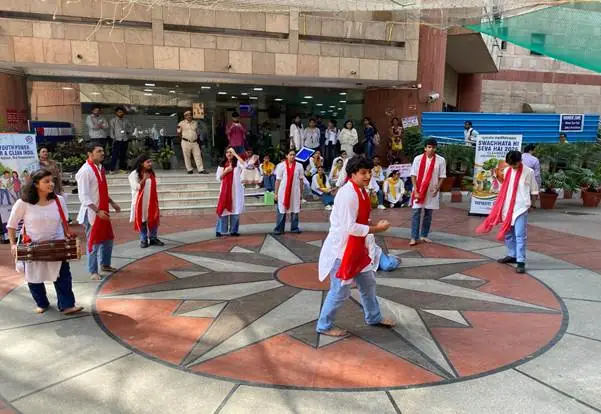
The Ministry of Information and Broadcasting has announced the successful completion of its Swachhata Hi Seva 2026 campaign, marking another coordinated push by the Union government to sustain the national cleanliness agenda through institutional participation and public outreach. The campaign, framed within the broader Swachh Bharat framework, was positioned not merely as a symbolic observance but as an operational exercise in civic engagement, workplace discipline, and message dissemination across government-linked communication channels.
Campaign Completion
Officials described the drive as a successful culmination of activities designed to reinforce cleanliness as a shared civic responsibility. In practice, such campaigns typically combine physical cleanliness efforts with awareness-building, staff participation, and public messaging aimed at embedding sanitation norms into everyday administrative culture. For the Information and Broadcasting Ministry, the significance lies in its communications reach: the ministry is uniquely placed to amplify government priorities through media platforms, public broadcasters, and affiliated outreach systems.
The completion of the campaign also reflects the administration's continuing reliance on thematic national drives to keep policy priorities visible. Swachhata Hi Seva has become one of the government's recurring mobilization tools, allowing ministries, departments, and field offices to align around a common objective while projecting administrative cohesion. In that sense, the campaign is as much about governance signaling as it is about sanitation.
Governance Through Outreach
The Information and Broadcasting Ministry's participation carries added weight because the ministry does not function as a frontline sanitation agency. Instead, its role is to shape narratives, coordinate communication, and ensure that public-interest messages reach households, institutions, and local communities. By completing the campaign, the ministry has effectively demonstrated how communication infrastructure can be harnessed for policy reinforcement.
This approach is consistent with the broader architecture of the Swachh Bharat mission, which has depended heavily on behavioral change rather than infrastructure alone. Cleanliness campaigns in India have increasingly moved beyond one-time drives and toward sustained messaging, with the government seeking to normalize sanitation as a civic habit rather than a temporary campaign slogan. Ministries with strong public-facing capacities are central to that strategy.
The emphasis on successful completion also suggests a focus on measurable administrative participation. In recent years, central campaigns have increasingly been judged by the extent of institutional compliance, visibility of activities, and the ability to generate public engagement. That makes the role of ministries such as Information and Broadcasting especially important, since their internal participation can be translated into wider public communication.
Policy Signal Matters
At a policy level, the campaign reinforces the government's preference for whole-of-government participation in flagship initiatives. Rather than confining cleanliness to municipal bodies or sanitation departments, the Union government has repeatedly sought to make every ministry a stakeholder in the national cleanliness narrative. This broad-based model helps sustain momentum, particularly in a policy environment where public attention is fragmented and campaign fatigue can set in quickly.
The ministry's announcement also fits into a larger pattern of governance through observance, where national campaigns are used to sharpen administrative discipline and public visibility. Such drives are often timed to coincide with symbolic dates or nationwide mobilizations, allowing the government to connect policy goals with civic sentiment. For the public, the message is straightforward: cleanliness is not a seasonal event but an ongoing responsibility.
While the ministry's statement focused on completion, the deeper significance lies in continuity. The success of such campaigns depends less on ceremonial closure than on whether they leave behind durable habits, cleaner workspaces, and stronger public awareness. In that respect, the Information and Broadcasting Ministry's role is less about sanitation in the narrow sense and more about sustaining the communication ecosystem that makes sanitation policy socially legible.
The completion of Swachhata Hi Seva 2026 therefore serves as both an administrative milestone and a reminder of how the Indian state increasingly uses coordinated campaigns to advance governance goals. For a ministry built around messaging, the campaign's success is also a test of institutional credibility: it shows whether public communication machinery can help convert policy intent into civic action.