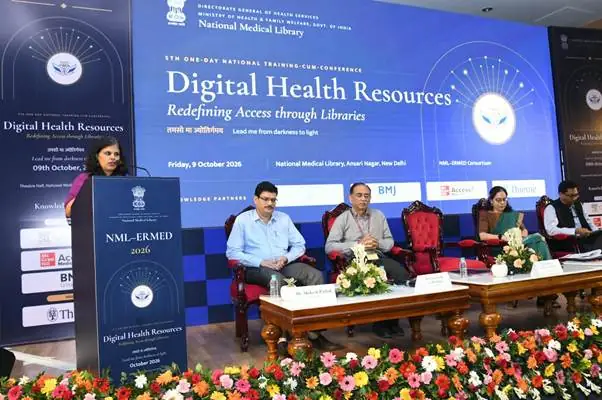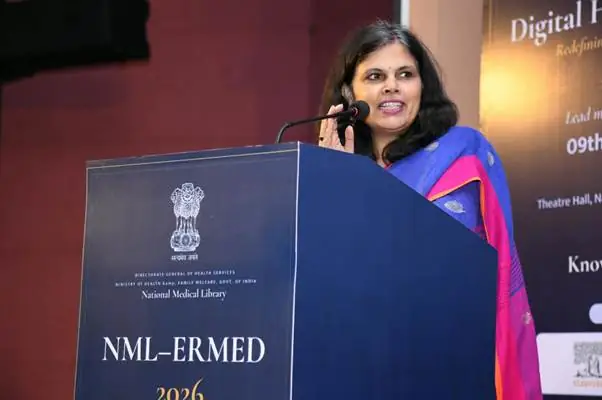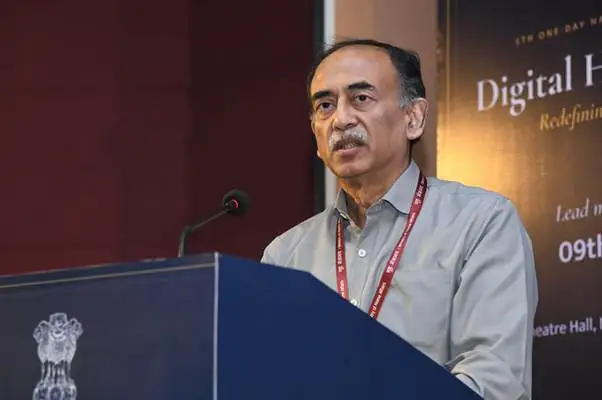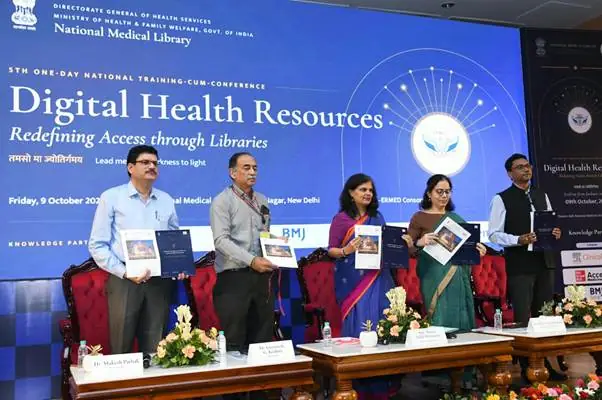
The National Medical Library has hosted the 5th ERMED Consortium national training-cum-conference, placing digital health resources and library-led access at the center of India's evolving knowledge infrastructure. Framed around the theme of redefining access through libraries, the gathering comes at a time when health systems, medical education, and research institutions are increasingly dependent on reliable digital content, interoperable platforms, and equitable information delivery.
Digital Access Agenda
The conference reflects a growing recognition that access to medical knowledge is no longer a back-office concern but a strategic public policy issue. As health information expands across journals, databases, repositories, and online learning systems, libraries are being repositioned as critical intermediaries between content and users. The ERMED Consortium, which supports access to electronic resources for medical institutions, has become an important mechanism for narrowing information gaps across India's health education ecosystem.
By centering the discussion on digital health resources, the National Medical Library has effectively highlighted the changing role of libraries in the digital era. No longer limited to physical collections, modern medical libraries are expected to curate licensed databases, support remote access, train users in information literacy, and help institutions navigate the rapidly expanding universe of digital scholarship. In practical terms, this means libraries are becoming essential infrastructure for clinicians, students, researchers, and policymakers who need timely and credible evidence.
The timing of the conference is significant. India's health sector is undergoing a broader digital transition, with policy attention increasingly focused on data systems, telemedicine, digital public infrastructure, and technology-enabled service delivery. In that environment, access to trustworthy medical literature is not merely academic; it directly influences clinical decision-making, curriculum quality, and the speed at which research findings move into practice.
Libraries As Policy Infrastructure
The conference theme also signals a deeper institutional argument: libraries should be understood as policy infrastructure, not just service units. In a country as large and uneven as India, access to high-quality digital resources can vary sharply between major urban institutions and smaller or geographically remote medical colleges. Consortium-based models such as ERMED are designed to reduce those disparities by pooling access, lowering costs, and creating a shared framework for resource distribution.
That model matters because the economics of digital publishing remain challenging for many institutions. Subscription costs, licensing restrictions, and fragmented access can limit the reach of even the most essential medical literature. Consortium arrangements help address those barriers by enabling collective bargaining and broader institutional participation. The result is a more democratic knowledge environment, where access is determined less by the size of an individual library budget and more by the strength of the shared system.
The National Medical Library's role in convening the event also carries symbolic weight. As a central institution in India's medical information landscape, it is positioned to shape standards, promote best practices, and encourage coordination among participating institutions. Training-cum-conference formats are especially relevant in this context because they combine policy discussion with practical capacity-building, allowing participants to engage not only with the "why" of digital access but also the "how" of implementation.
Capacity For Health Systems
The broader policy implication is clear: digital health access depends as much on human capacity as on technology. Even the most sophisticated platforms are only as effective as the people who manage them and the users who know how to navigate them. Training programs for librarians, information professionals, and institutional stakeholders therefore play a crucial role in ensuring that digital resources are actually used, not merely subscribed to.
For India's medical education system, this is especially important. The quality of training in medicine and allied health fields depends heavily on access to current research, clinical guidelines, and global evidence. A stronger library ecosystem can improve teaching, support research output, and help institutions remain aligned with international standards. It can also strengthen public health preparedness by ensuring that decision-makers and practitioners have access to the latest knowledge during outbreaks, emergencies, and policy shifts.
The conference theme suggests a forward-looking view of libraries as enablers of inclusive knowledge access. In an era defined by digital transformation, the question is not whether health information will be online, but whether institutions can ensure that access is reliable, affordable, and equitable. The National Medical Library's hosting of the 5th ERMED Consortium national training-cum-conference places that question squarely within India's governance and policy agenda, where information access is increasingly inseparable from health system performance.