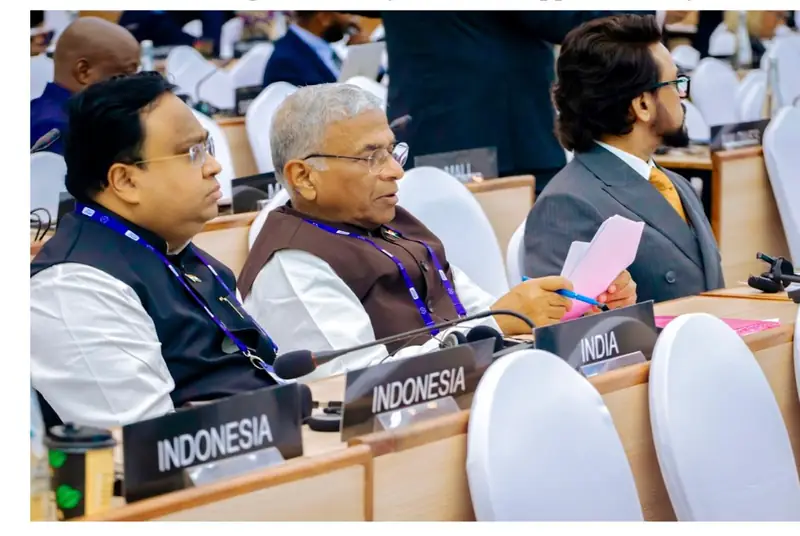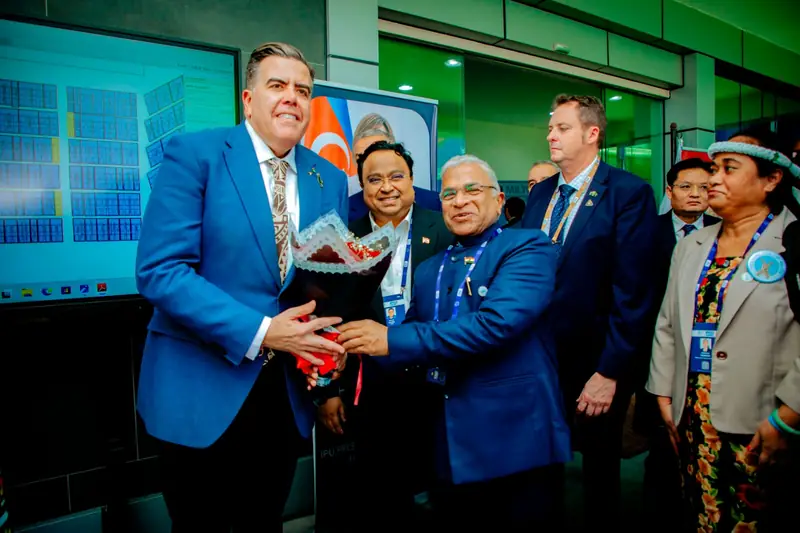
India's parliamentary delegation maintained an active presence on the fourth day of the 153rd Assembly of the Inter-Parliamentary Union in Arusha, Tanzania, with Rajya Sabha Deputy Chairman Harivansh leading the Indian engagement on 8 October 2026. The participation comes at a time when multilateral parliamentary forums are increasingly being used to advance dialogue on democratic resilience, legislative accountability, and cross-border policy coordination.
The Indian delegation's continued involvement reflects New Delhi's broader approach to parliamentary diplomacy: projecting India's democratic experience while contributing to international discussions on governance and institutional strengthening. In a global environment marked by political polarization, economic uncertainty, and pressure on representative institutions, platforms such as the IPU have gained renewed relevance as venues where lawmakers can exchange practical approaches rather than abstract declarations.
Parliamentary Diplomacy Focus
India has long treated inter-parliamentary engagement as a strategic extension of its foreign policy. The IPU Assembly, which brings together legislators from across the world, offers an opportunity to build consensus on issues that sit at the intersection of democracy, development, and public trust. For India, participation in such forums is not merely ceremonial. It is part of a wider effort to demonstrate the scale and maturity of its parliamentary system and to reinforce its standing as a voice for democratic governance in the Global South.
Harivansh's leadership of the delegation is significant in this context. As Deputy Chairman of the Rajya Sabha, he represents one of the highest institutional offices in India's parliamentary structure, and his presence signals continuity in India's engagement with multilateral legislative bodies. The delegation's work in Arusha is expected to contribute to discussions on parliamentary procedure, inclusive governance, and the role of legislatures in addressing contemporary policy challenges.
Global Assembly, Local Stakes
The 153rd IPU Assembly is taking place against a backdrop of intensifying debate over how parliaments can remain effective, representative, and credible in a rapidly changing world. Legislatures are under pressure to respond to public demands for accountability while also navigating complex policy questions involving digital transformation, economic inequality, climate resilience, and social cohesion. In that setting, India's participation carries both symbolic and practical weight.
For India, the value of such forums lies in the ability to exchange institutional lessons with peers from diverse political systems. The country's parliamentary experience, shaped by a large electorate, federal diversity, and a robust committee structure, is often viewed as a useful reference point in international discussions. At the same time, India also benefits from exposure to comparative practices that can inform domestic legislative innovation and oversight.
The Arusha meeting also reinforces the importance of parliamentary diplomacy as a complement to executive-level foreign relations. While governments negotiate treaties and strategic partnerships, legislatures increasingly play a role in shaping public narratives, scrutinizing policy commitments, and building durable international networks. India's delegation is operating within that broader framework, using the IPU platform to sustain dialogue and strengthen institutional ties.
India's Wider Outreach
The delegation's continued participation in Tanzania fits into India's wider outreach to Africa and the Global South, where parliamentary and political engagement has become an important dimension of bilateral and multilateral relations. Tanzania, as host of the assembly, provides a setting that highlights the growing relevance of African parliamentary institutions in global governance conversations.
India's presence at the assembly also serves a diplomatic purpose by reinforcing its image as a country committed to inclusive internationalism and democratic cooperation. In an era when global institutions are often criticized for being detached from citizen concerns, parliamentary forums offer a more representative and politically grounded channel for engagement. India's active role in such spaces helps position it as both a participant and a contributor to the evolution of global legislative norms.
As the assembly continues, the Indian delegation's engagement is likely to remain focused on substantive parliamentary exchange rather than headline-driven diplomacy. That approach aligns with India's broader preference for institutional credibility, policy seriousness, and long-term relationship building in multilateral settings. The Arusha proceedings, though one chapter in a larger international calendar, underscore how parliamentary representation continues to serve as an important instrument of statecraft.