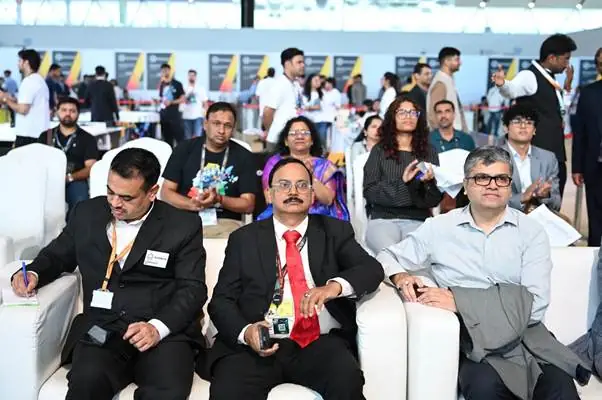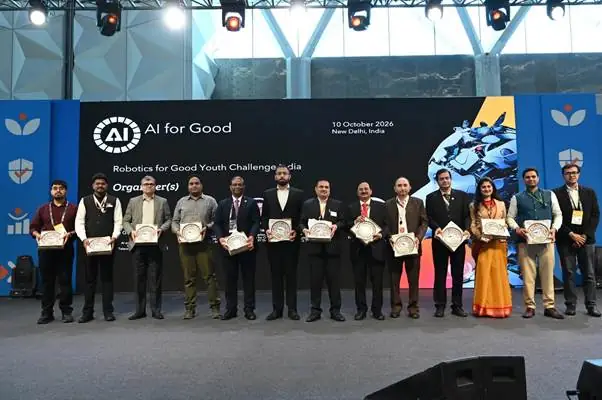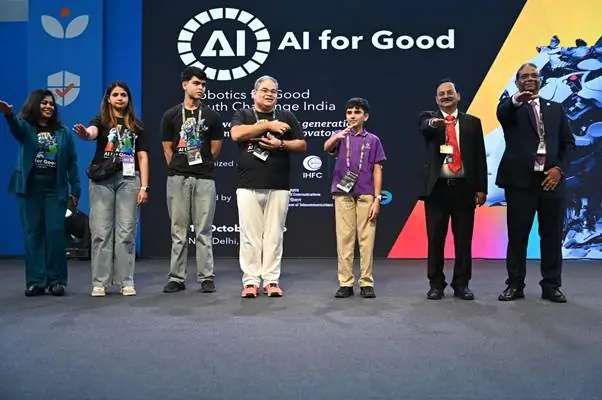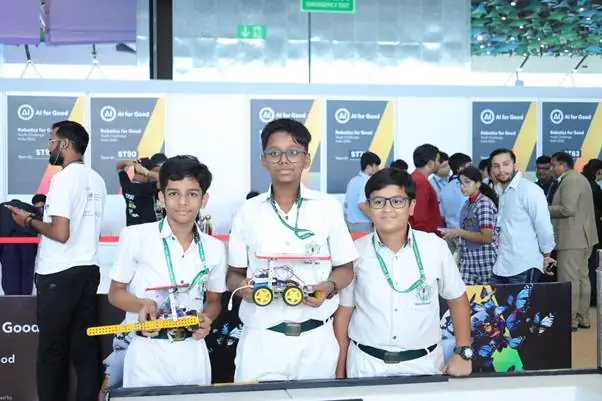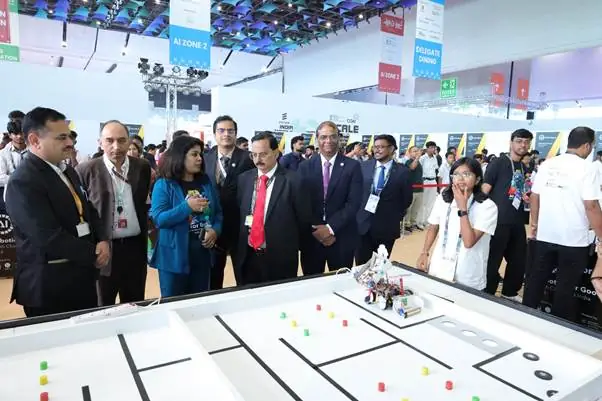
Young innovators demonstrated their robotics projects at the Robotics for Good Youth Challenge India 2026, held during India Mobile Congress 2026, in a high-profile display that blended technology competition with public-policy messaging. The event, organized by the Department of Telecommunications and the International Telecommunication Union, placed youth-led innovation at the center of one of India's most visible technology gatherings, signaling that robotics is increasingly being framed not merely as an industrial capability, but as a civic and developmental instrument.
Youth Innovation Focus
The challenge brought visibility to a generation of students and early-stage innovators working at the intersection of engineering, automation, and social problem-solving. By hosting the competition within India Mobile Congress, organizers effectively linked grassroots innovation with the country's broader digital transformation agenda. That positioning matters: it suggests that the future of technology policy in India is not limited to telecom infrastructure, spectrum management, or enterprise digitization, but extends to cultivating a pipeline of talent capable of building solutions for real-world needs.
The Robotics for Good format is especially significant because it emphasizes utility over spectacle. Rather than rewarding robotics as a purely technical exercise, the challenge encourages participants to design systems that can address human and societal concerns. In practice, that means youth teams are being asked to think about accessibility, safety, efficiency, and inclusion from the outset. For policymakers, this is a useful model: it aligns innovation with public value and helps ensure that the next generation of technologists is trained to solve problems that matter beyond the laboratory.
Policy Meets Emerging Tech
The Department of Telecommunications' involvement gives the event a distinctly policy-driven character. India has spent the past decade building out digital public infrastructure, expanding connectivity, and promoting domestic technology capacity. The inclusion of a youth robotics challenge within a telecom-led platform reflects a broader institutional recognition that communications policy and frontier technologies are now deeply connected. Robotics depends on networks, sensors, data exchange, and increasingly on low-latency digital systems that sit within the wider telecom ecosystem.
The International Telecommunication Union's participation adds an international dimension, reinforcing the idea that India is seeking to place its innovation ecosystem within global standards and cooperation frameworks. That is important at a time when countries are competing not only to deploy advanced technologies, but also to shape the rules, ethics, and talent pipelines that govern them. By associating youth robotics with a global telecom body, the event sends a message that India wants its innovators to be visible in international conversations about responsible technology development.
The timing is also notable. India Mobile Congress has evolved into a flagship platform for showcasing the country's digital ambitions, and the 2026 edition appears to be broadening its scope beyond commercial telecom and enterprise technology. The presence of young robotics teams suggests a deliberate effort to connect industry, government, and education in a single ecosystem. That approach can help bridge a persistent gap in India's innovation landscape: the distance between promising student projects and scalable deployment.
Building Future Talent
The deeper significance of the challenge lies in talent development. India's technology policy has increasingly emphasized skilling, entrepreneurship, and innovation-led growth, but advanced fields such as robotics still require stronger institutional pathways. Competitions like this can serve as early-stage incubators, exposing students to design thinking, teamwork, prototyping, and problem-solving under real-world constraints. They also help identify talent that may later feed into startups, research labs, and industrial automation sectors.
For young participants, the value is not only in winning recognition. It is in being placed on a national stage where their work is treated as relevant to governance and development. That can shape career trajectories and broaden access to mentorship, funding, and institutional support. For the government, the event offers a visible demonstration of how public platforms can be used to encourage innovation culture without waiting for mature commercial outcomes.
The challenge also fits a larger national narrative: India is increasingly trying to move from being a consumer of imported technologies to a producer of solutions tailored to domestic and global needs. Robotics, with its applications in healthcare, agriculture, logistics, disaster response, and accessibility, is one of the clearest examples of a field where youth innovation can have immediate practical value. By spotlighting these projects at India Mobile Congress 2026, organizers have made a strategic statement about the future of technology policy — one that places young inventors, not just large firms, at the center of the story.
As India continues to expand its digital and industrial ambitions, events like this may prove important for another reason: they help normalize the idea that public-interest innovation is a national priority. In that sense, the Robotics for Good Youth Challenge India 2026 was more than a competition. It was a policy signal, a talent showcase, and a reminder that the next phase of India's technology journey will depend heavily on how effectively it nurtures its youngest builders.