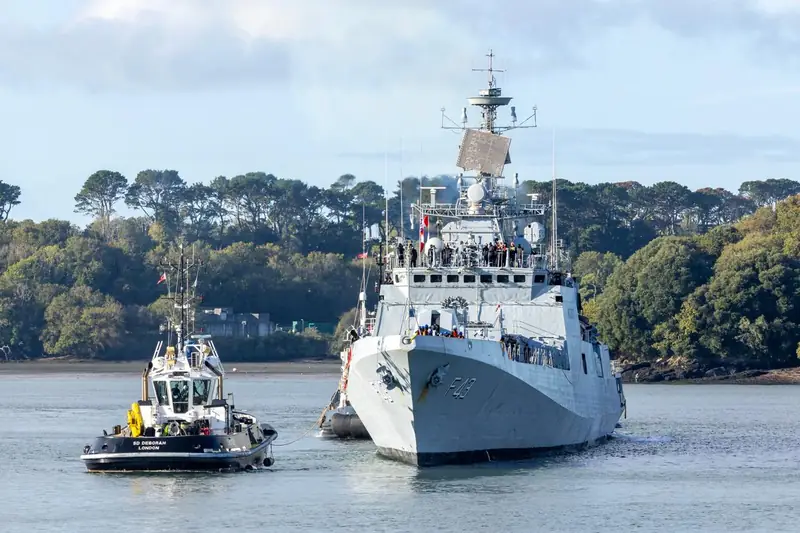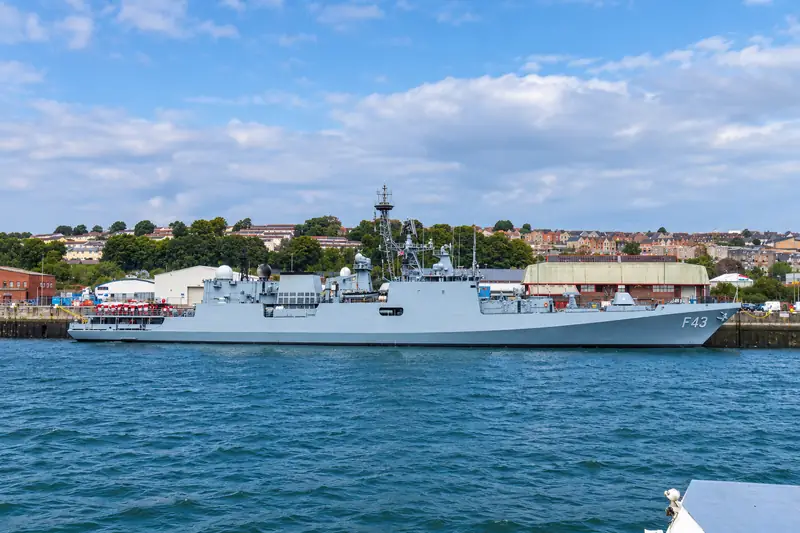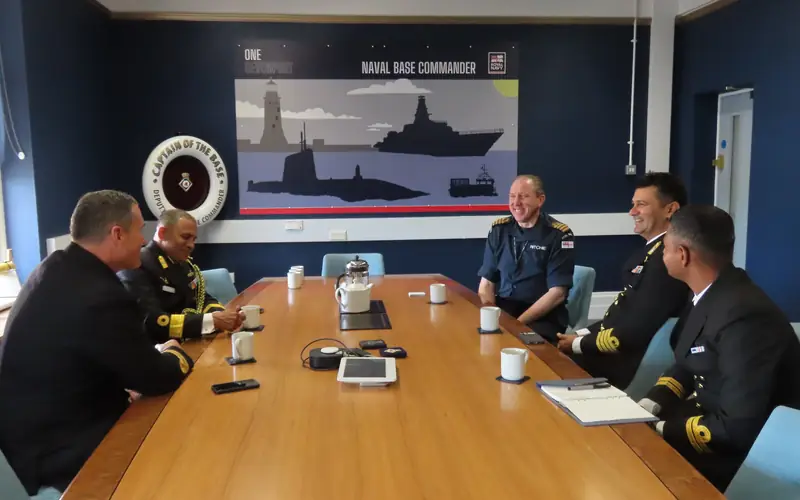
INS Trishul's arrival in Plymouth marks the latest visible step in India's naval engagement with the United Kingdom as both sides prepare for Exercise Konkan-2026, a bilateral maritime drill designed to sharpen coordination at sea. The deployment is significant not merely as a port call, but as a signal of the Indian Navy's intent to project readiness, sustain long-range operational presence, and deepen practical cooperation with a major European maritime power.
The exercise comes at a time when naval diplomacy has become an increasingly important instrument of statecraft. For India, such deployments reinforce the message that its maritime strategy is no longer confined to the immediate Indian Ocean neighborhood. Instead, it is being shaped around wider partnerships, sea-lane security, and the ability to operate seamlessly with friendly navies across theaters. For the United Kingdom, hosting an Indian warship in Plymouth for a major exercise reflects continued interest in the Indo-Pacific and in maintaining a credible naval relationship with one of the region's most consequential maritime actors.
Maritime Signaling
INS Trishul's presence in Plymouth carries operational and political weight. On the operational side, exercises of this kind typically focus on communication procedures, maneuvering, tactical coordination, and joint responses to complex maritime scenarios. These are not ceremonial drills. They are intended to test whether two navies can work together under realistic conditions, where timing, trust, and technical compatibility matter as much as platform capability.
On the political side, the deployment reinforces India's preference for diversified defense partnerships. New Delhi has steadily expanded naval engagements with countries that share an interest in secure sea lanes, maritime domain awareness, and rules-based conduct at sea. The India-UK naval relationship fits into that broader pattern. It is part of a wider architecture of defense cooperation that has gained momentum in recent years through port calls, staff talks, training exchanges, and joint exercises.
Konkan-2026 also arrives against the backdrop of a more contested global maritime environment. Disruptions to shipping, heightened strategic competition, and the growing importance of undersea, cyber, and surveillance capabilities have made naval preparedness more central to national security planning. In that context, bilateral exercises are increasingly valued not just for symbolism, but for the practical lessons they generate about command integration and maritime resilience.
Deepening Naval Ties
The Indian Navy's participation in exercises with the Royal Navy reflects a deliberate effort to build habits of cooperation with technologically advanced partners. Such engagements help standardize procedures, expose crews to different operational doctrines, and improve the ability to communicate across platforms and command structures. For a navy that is expanding its reach and responsibilities, these are essential capabilities.
The Plymouth visit also underscores the diplomatic utility of naval assets. Warships are among the most visible instruments of foreign policy, capable of combining deterrence, reassurance, and engagement in a single deployment. A ship's arrival in a foreign port can carry as much strategic messaging as a formal statement, especially when it is tied to a named exercise with a clear operational purpose.
For the United Kingdom, the exercise is another indication that its maritime links with India remain a priority even as London seeks to balance commitments across multiple regions. The Royal Navy's engagement with India is part of a broader effort to sustain relevance in the Indo-Pacific, where shipping routes, security partnerships, and naval interoperability are becoming increasingly central to long-term strategy.
Wider Strategic Context
Exercise Konkan-2026 is likely to be watched closely by defense planners because it sits at the intersection of capability development and strategic signaling. India's naval modernization has emphasized blue-water reach, surveillance, and the ability to operate with partners across extended distances. Joint drills with the Royal Navy offer a useful test of that ambition.
The arrival of INS Trishul in Plymouth therefore represents more than a routine port call. It is a marker of India's growing confidence in using naval deployments as an instrument of policy, and a reminder that maritime cooperation remains one of the most durable pillars of the India-UK relationship. As the exercise unfolds, the focus will be on how effectively both navies can translate diplomatic goodwill into operational performance at sea.