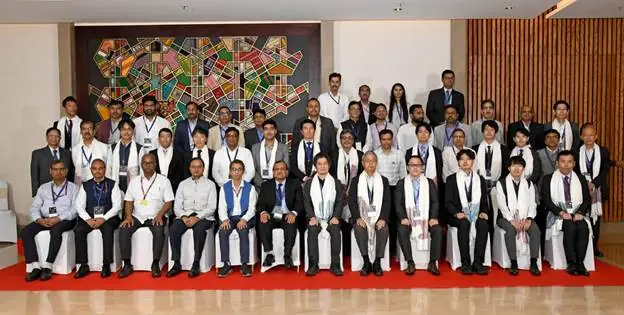
India and Japan have held the 12th session of their Joint Working Group on roads and road transport, a technical but strategically important engagement that reflects the two countries' broader infrastructure partnership. The session brought together officials to review ongoing cooperation in the road sector and to identify areas where Japanese expertise can support India's transport modernization agenda.
The meeting is significant not merely as a routine bilateral exercise, but as part of a wider policy architecture in which road infrastructure is increasingly tied to economic competitiveness, logistics efficiency, and urban-rural connectivity. For India, the road sector remains central to national development planning, with highways and arterial corridors carrying a growing share of freight and passenger movement. For Japan, the engagement aligns with its long-standing role as a technology and financing partner in Indian infrastructure.
Infrastructure Partnership
The Joint Working Group serves as a formal mechanism for dialogue on road engineering, transport planning, safety standards, and project execution. Such sessions typically allow both sides to assess progress on existing cooperation while exploring new avenues in areas such as road asset management, intelligent transport systems, bridge design, and disaster-resilient infrastructure.
India's transport policy priorities have shifted sharply toward scale and speed in recent years, but the emphasis has also widened to include durability, safety, and lifecycle efficiency. That makes Japanese collaboration especially relevant. Japan is widely regarded for high engineering standards, meticulous project planning, and advanced traffic management systems. In a sector where construction speed alone is no longer the only benchmark, those capabilities carry practical value.
The timing of the 12th session is also notable. India is in the midst of a major infrastructure push, with road building positioned as a key lever for industrial corridors, port connectivity, and regional integration. At the same time, policymakers are under pressure to reduce accident rates, improve maintenance, and ensure that expansion does not come at the cost of quality. Bilateral technical cooperation can help bridge that gap by bringing in proven practices on design, monitoring, and safety enforcement.
Safety And Standards
Road safety remains one of the most urgent challenges in India's transport landscape. Rapid network expansion has improved connectivity, but it has also exposed persistent weaknesses in enforcement, signage, pedestrian infrastructure, and driver behavior. A working group focused on roads and road transport can therefore play a role beyond project delivery, helping shape standards that influence outcomes over the long term.
The India-Japan framework is particularly useful because it is rooted in institutional cooperation rather than one-off project announcements. That allows both sides to discuss technical norms, training, and operational systems in a structured manner. In practice, this can support better highway maintenance, improved traffic flow in congested corridors, and more resilient road networks in areas vulnerable to floods, landslides, or extreme weather.
The session also reflects the broader diplomatic logic of the India-Japan relationship. Infrastructure cooperation has long been one of the most visible pillars of ties between the two countries, alongside investment, technology transfer, and strategic coordination in the Indo-Pacific. Road transport may appear narrower than ports, railways, or industrial corridors, but it is foundational to the movement of goods and people across the economy.
Strategic Mobility Agenda
For India, the road sector is now intertwined with a larger mobility agenda that includes logistics reform, digital monitoring, and multimodal integration. The government has been seeking to lower transport costs and improve turnaround times for freight, both of which depend heavily on road quality and corridor efficiency. Any sustained cooperation with Japan in this area can contribute to those goals by strengthening planning capacity and introducing more sophisticated management tools.
The 12th session of the Joint Working Group therefore signals continuity rather than spectacle. Its importance lies in the steady accumulation of technical cooperation that can shape how roads are built, maintained, and governed. In a country of India's scale, even incremental improvements in road safety, design, and maintenance can have outsized economic and social effects.
As India continues to expand its transport network, partnerships that combine capital, engineering discipline, and operational expertise will remain central. The latest India-Japan meeting suggests that both sides continue to see road infrastructure not only as a domestic policy issue, but as a strategic domain where cooperation can produce measurable gains in connectivity, resilience, and long-term growth.