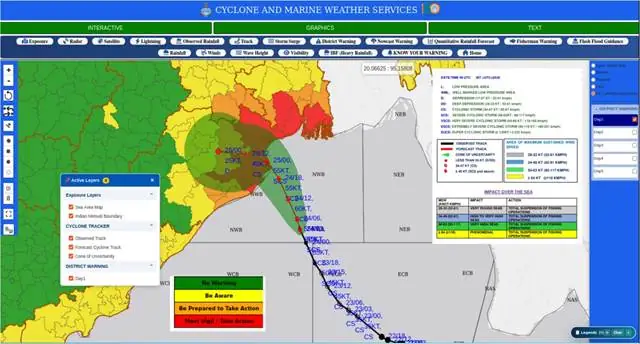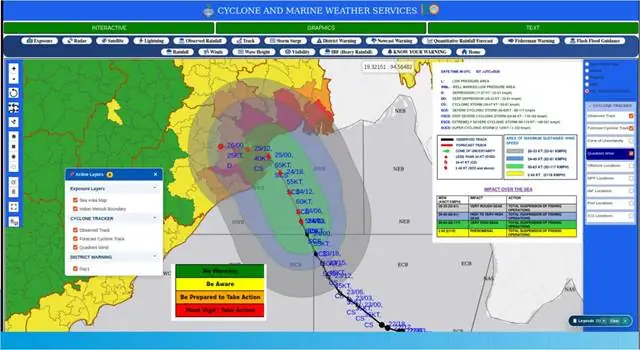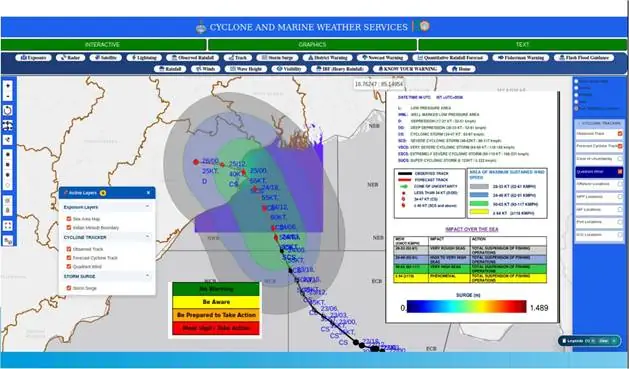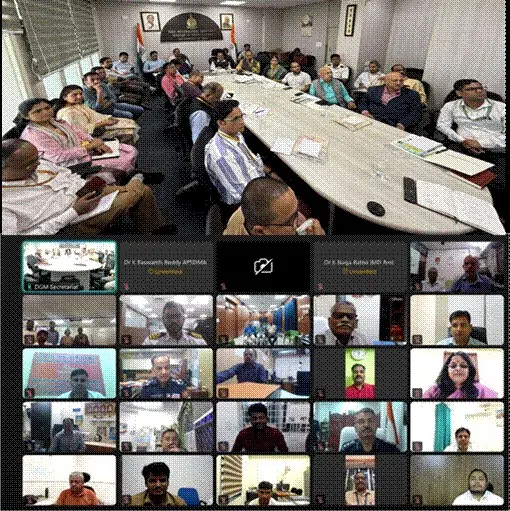
The India Meteorological Department has dedicated a new decision-support system to the country, marking a significant upgrade in the way cyclone warnings and marine weather services are generated, interpreted and delivered. The system is intended to help forecasters and disaster managers make quicker, better-informed decisions by integrating weather observations, model outputs and operational guidance into a single platform.
Warning Capacity Upgraded
The launch comes at a time when India's coastal states are facing increasingly complex weather risks, with cyclones, heavy rainfall, storm surges and rough seas demanding faster coordination between forecasting agencies and response authorities. By centralising data and decision tools, the new system is expected to reduce the lag between scientific analysis and public warning issuance.
For a country with a long coastline and millions of people dependent on the sea for livelihood, the operational value of such a system is substantial. Cyclone warnings are not only about predicting a storm's track; they also determine evacuation timing, port closures, fishing advisories, and the deployment of emergency resources. A more integrated platform can improve consistency across these decisions and strengthen the chain from forecast to action.
Officials have positioned the system as a practical governance tool rather than a purely technical upgrade. That distinction matters. In India, the effectiveness of weather forecasting is measured not just by accuracy, but by how well it supports state administrations, coastal district authorities, the coast guard, port operators and disaster response agencies. The new platform is meant to serve that broader ecosystem.
Marine Services Matter
Marine weather services are a critical but often underappreciated part of India's meteorological infrastructure. They guide fishing operations, shipping movement and coastal safety advisories, particularly during periods of unstable sea conditions. A dedicated decision-support system can help forecasters issue more precise alerts on wind speed, wave height, sea state and the onset of hazardous conditions.
That precision has direct human and economic consequences. For fishing communities, even a few hours of earlier warning can mean the difference between a safe return and a dangerous encounter at sea. For ports and coastal logistics networks, better marine forecasting can reduce disruption, protect assets and improve operational planning. In that sense, the system is not merely a scientific instrument; it is a governance mechanism with real-world economic implications.
The move also reflects a broader shift in public administration toward data-driven decision-making. As extreme weather events become more frequent and more disruptive, governments are under pressure to ensure that forecasting systems are not isolated technical silos. They must be interoperable, actionable and capable of supporting rapid response across multiple agencies. The new IMD platform appears designed with that requirement in mind.
Governance Through Forecasting
The dedication of the system underscores the growing strategic importance of meteorological services in national governance. Weather forecasting has moved far beyond routine reporting. It now sits at the intersection of disaster risk reduction, coastal security, transport management and public communication. In that context, the quality of decision-support infrastructure can shape the speed and credibility of the state's response during a cyclone threat.
India has invested heavily in improving its weather prediction capabilities over the past decade, including better satellite inputs, radar coverage and numerical weather models. The latest system builds on that foundation by focusing on the final mile: converting scientific outputs into operational decisions. That is often where warning systems succeed or fail.
The timing is also significant. With the pre-monsoon and cyclone-prone seasons placing added stress on forecasting systems, the ability to issue timely and targeted marine and cyclone advisories is a major administrative priority. The new platform should help reduce uncertainty in warning dissemination and improve coordination among agencies responsible for protecting lives and livelihoods.
While the announcement is technical in nature, its policy implications are broad. It signals a continued push by the weather office to modernise public safety infrastructure and strengthen India's resilience to climate-linked hazards. In a country where coastal vulnerability remains high, the effectiveness of such systems will increasingly be judged by whether they translate into fewer losses, faster response and clearer public action when the next storm approaches.