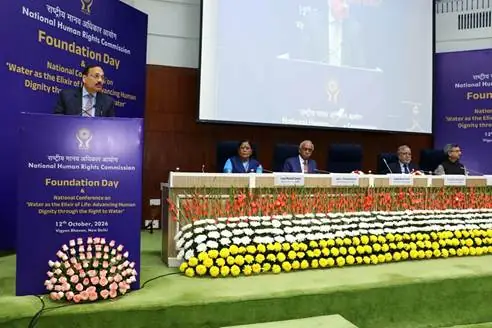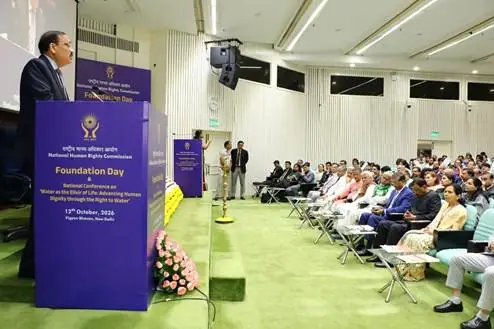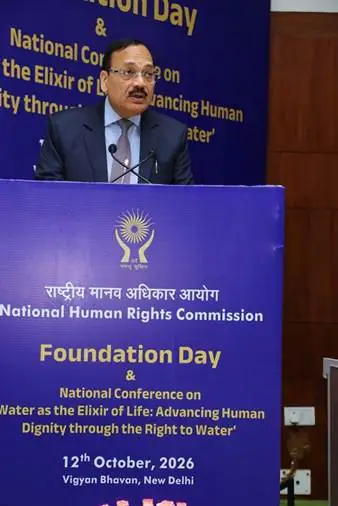
The National Human Rights Commission of India marked its 33rd Foundation Day in New Delhi on Tuesday, using the occasion to reaffirm its core mandate as the country's principal statutory watchdog on human rights. The anniversary arrives at a moment when questions of accountability, access to justice, and the protection of vulnerable communities remain central to India's governance debate.
The commission's foundation day is more than a ceremonial milestone. It serves as a public reminder of the NHRC's role under the Protection of Human Rights Act, 1993, which established the institution as an independent body to inquire into alleged violations, recommend remedial action, and promote awareness of rights protections. Over three decades later, the commission continues to occupy a critical space between citizens and the state, especially in cases involving custodial safeguards, police conduct, discrimination, and the treatment of marginalized groups.
Rights Watchdog Role
The NHRC's anniversary comes amid a broader national conversation about the strength of democratic institutions and the practical enforcement of constitutional guarantees. While the commission does not possess punitive powers, its influence lies in its ability to investigate complaints, issue recommendations, and place human rights concerns before governments, law enforcement agencies, and public institutions. That function has become increasingly important as rights issues intersect with urban governance, digital surveillance, migration, labor conditions, and access to welfare.
In recent years, the commission has also had to navigate a more complex rights environment, where public expectations of institutional responsiveness are rising. Citizens increasingly seek not only redress after violations occur, but also preventive oversight that can deter abuse before it escalates. That shift places added pressure on the NHRC to remain visible, credible, and timely in its interventions.
The 33rd Foundation Day therefore carries symbolic weight beyond the event itself. It highlights the endurance of an institution created to strengthen India's democratic fabric through independent scrutiny. At the same time, it raises familiar questions about the limits of advisory bodies in a system where implementation depends heavily on executive cooperation.
Institutional Accountability
The NHRC's work has often been most closely watched in cases involving police excesses, custodial deaths, communal tensions, child protection, bonded labor, and the rights of women and persons with disabilities. These are not isolated concerns; they reflect structural challenges in governance that require sustained institutional attention rather than episodic outrage. The commission's annual observance therefore also functions as a policy checkpoint, drawing attention to whether rights protection is keeping pace with administrative reform.
For a body such as the NHRC, credibility depends on both independence and effectiveness. Its recommendations matter most when they are followed by measurable action from state authorities. That is why foundation day speeches and commemorations often carry a broader institutional message: human rights protection cannot be treated as a ceremonial commitment. It must be embedded in policing, prison administration, social policy, and grievance redress systems.
The commission's anniversary also comes at a time when India's governance architecture is under scrutiny for how it balances security, development, and civil liberties. In such an environment, the NHRC's role is not merely reactive. It is also interpretive, helping define the standards by which state conduct is assessed in a constitutional democracy.
A Continuing Test
The 33rd Foundation Day underscores a continuing test for India's human rights framework: whether statutory institutions can translate moral authority into practical protection. The answer depends not only on the NHRC's own capacity, but also on the willingness of governments and public agencies to act on its findings in good faith.
As the commission enters its next phase, its relevance will be judged by how effectively it adapts to new forms of rights risk while staying anchored in its original purpose. In a country of India's scale and diversity, that remains a demanding but essential task.