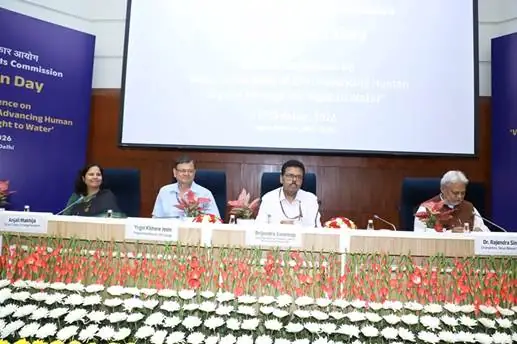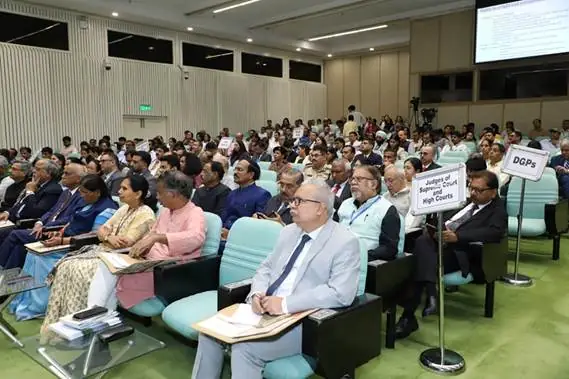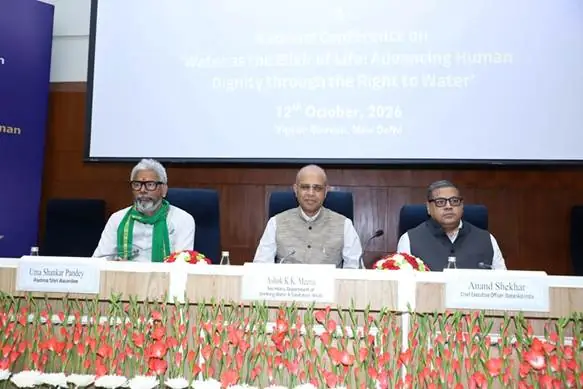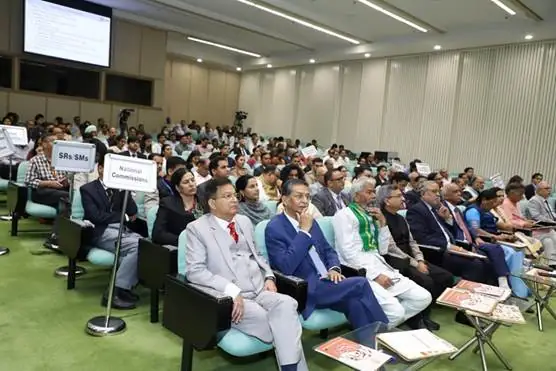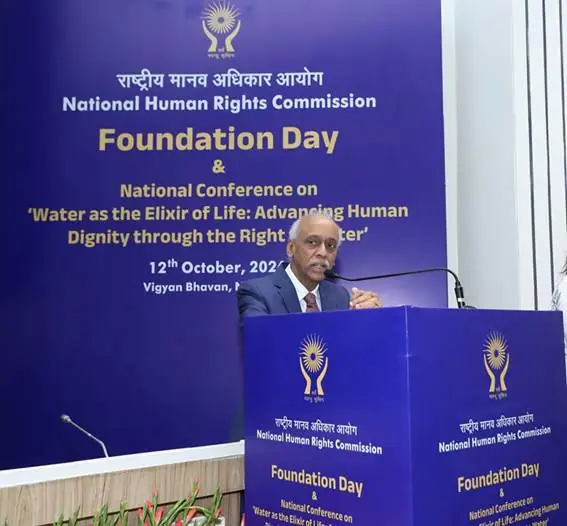
The National Human Rights Commission of India (NHRC) used its 33rd Foundation Day to sharpen attention on one of the country's most consequential governance challenges: the relationship between water access and human dignity. In New Delhi, the commission organised a national conference on the theme of water as the elixir of life and the promotion of human dignity through the right to water, framing the issue not merely as an infrastructure concern but as a core human rights question.
The choice of theme reflects a broader shift in public policy discourse. Water in India is increasingly understood as a cross-cutting issue that touches health, sanitation, livelihoods, gender equity, urban planning, and climate resilience. By placing the right to water at the centre of its anniversary observance, the NHRC signalled that the availability, quality, and equitable distribution of water are no longer peripheral administrative matters; they are integral to the constitutional promise of dignity and equal protection.
Rights and Public Policy
The conference comes at a time when India faces mounting pressure on water systems from multiple directions. Rapid urban growth, groundwater depletion, erratic monsoon patterns, and pollution of rivers and local water bodies have intensified the strain on public supply networks. For millions of households, especially in informal settlements and rural areas, access to clean water remains inconsistent, costly, or dependent on informal arrangements. In that context, the NHRC's intervention is significant because it elevates water from a technical resource issue to a rights-based governance challenge.
Human rights institutions often play a critical role in translating abstract entitlements into actionable public standards. The right to water, while not always articulated in a single standalone statute, is closely linked to the right to life and the right to live with dignity. The commission's conference therefore serves as both a symbolic and policy-facing reminder that water insecurity can produce cascading harms: disease, educational disruption, lost work hours, and heightened burdens on women and children who are often responsible for water collection and household management.
Dignity Through Access
The language of dignity is especially important in the Indian context. Water deprivation is not experienced uniformly; it often maps onto existing inequalities of class, caste, geography, and gender. In many communities, the absence of reliable piped supply forces residents to spend time, money, and physical effort securing water that should be treated as a basic public good. Where supply is intermittent or contaminated, the burden extends beyond inconvenience and becomes a direct threat to health and social participation.
By centring the theme on human dignity, the NHRC is aligning the water debate with a broader rights architecture that includes non-discrimination, public accountability, and state obligation. This approach also places pressure on institutions at every level of government to ensure that water policy is not judged only by engineering output or budget allocation, but by whether it actually reaches vulnerable populations in safe and equitable form.
Commission's Wider Signal
The Foundation Day conference also carries institutional significance. As a national human rights body, the NHRC often acts as a bridge between policy formulation and public accountability. Its decision to host a conference on water suggests an effort to keep environmental and resource questions within the mainstream of rights discourse, rather than allowing them to be treated as separate technical silos.
That framing is likely to resonate as India confronts a future shaped by climate variability and rising demand. Water stress is no longer confined to drought-prone districts; it is increasingly visible in cities, peri-urban areas, and industrial corridors where competing demands can expose weaknesses in planning and distribution. In such a scenario, the right to water becomes a test of governance capacity as much as moral commitment.
The conference in New Delhi therefore stands as more than an anniversary event. It is a policy signal that the human rights conversation in India is expanding to include the material conditions that make dignity possible. Water, in this framing, is not only a resource to be managed. It is a public necessity that underwrites health, equality, and the everyday exercise of citizenship.