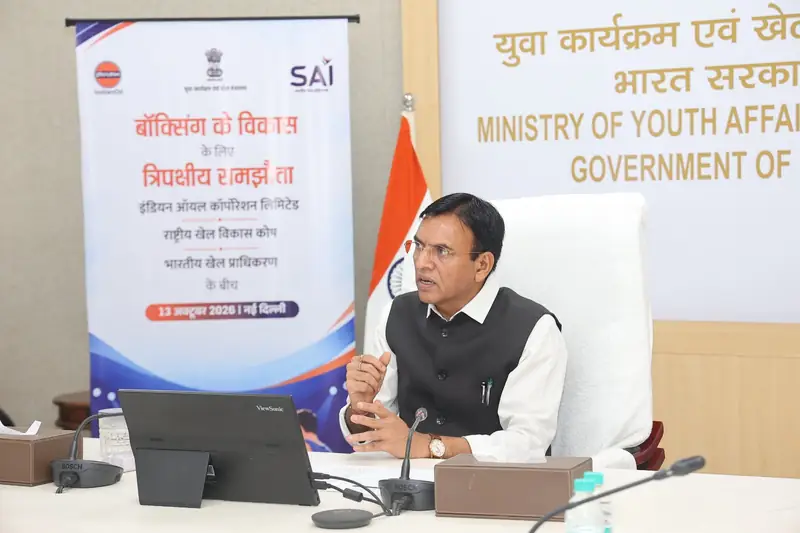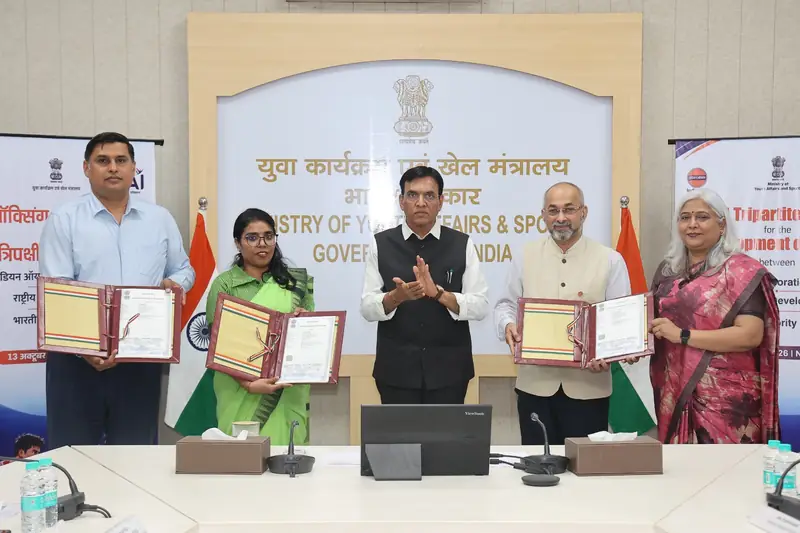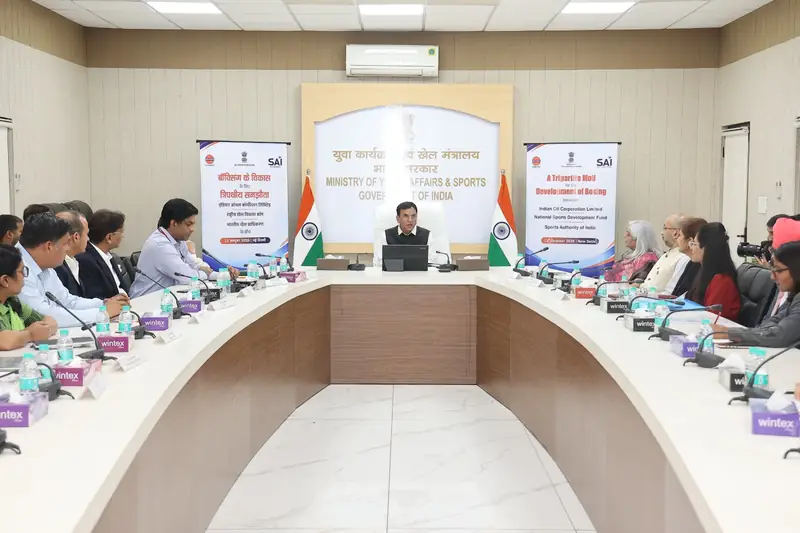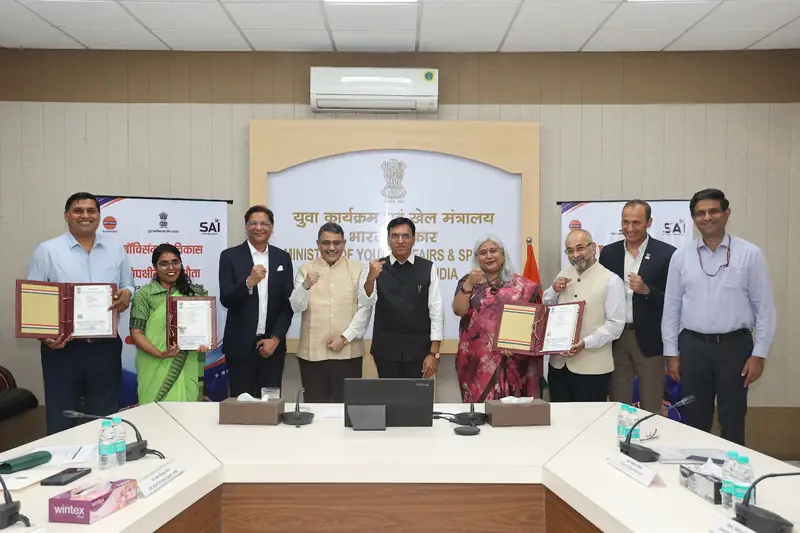
India has moved to reinforce one of its most visible Olympic sports through a new partnership linking the National Sports Development Fund, the Sports Authority of India and Indian Oil. The arrangement is intended to strengthen the country's boxing ecosystem by improving institutional support, expanding athlete development pathways and creating a more stable framework for the sport's growth.
The collaboration reflects a broader policy shift in Indian sport: the recognition that elite results depend not only on individual talent but also on sustained investment in coaching, training environments, competition exposure and administrative continuity. Boxing has emerged as one of India's stronger medal prospects in recent years, but its progress has often been uneven, shaped by gaps in infrastructure and the challenge of converting isolated success into a repeatable system.
Strategic Sports Backing
The partnership brings together a public funding mechanism, the national sports administration apparatus and a major corporate sponsor with a long history of supporting Indian sport. In practical terms, that combination is significant. The National Sports Development Fund is designed to channel resources into athlete and sport development, while the Sports Authority of India remains central to training, camps and performance support. Indian Oil's involvement adds corporate scale and continuity to the effort.
For policymakers, the value of such a model lies in its ability to reduce fragmentation. Indian sport has often relied on ad hoc sponsorships, state-level initiatives and individual institutional efforts that do not always align. A structured partnership can help create a clearer pathway from grassroots identification to elite competition, especially in a discipline like boxing where early technical training and regular international exposure are crucial.
The timing is also notable. India's sporting ambitions have expanded sharply in recent years, with greater emphasis on Olympic disciplines that offer realistic medal potential. Boxing sits near the top of that list. The sport has produced some of the country's most recognisable international performers, but sustaining that momentum requires more than periodic attention after major events. It requires a system that can support athletes through injury cycles, qualification rounds and the long lead-up to global championships.
Why Boxing Matters
Boxing has a particular policy significance because it is both high-yield and high-maintenance. It can deliver international medals with relatively modest infrastructure compared with some other sports, but only if the underlying ecosystem is strong. That ecosystem includes coaching quality, sports science, nutrition, recovery support, domestic competition and access to international sparring and tournaments.
The new partnership suggests that authorities are treating boxing not as a standalone showcase sport, but as a test case for how public and corporate institutions can work together more effectively. If successful, the model could be replicated in other disciplines where India has competitive potential but lacks depth in the development pipeline.
The announcement also carries symbolic weight. Corporate participation in sport is often strongest when it aligns with national priorities, and boxing has become one of the clearest examples of that alignment. For Indian Oil, the partnership extends a public-facing role in national development. For SAI and the NSDF, it offers a way to leverage private-sector support without surrendering policy control.
Building A Durable System
The central question now is execution. Partnerships of this kind are often announced with broad ambition, but their impact depends on how funds are deployed, how athletes are selected and how accountability is maintained. The real measure will be whether the collaboration improves day-to-day training conditions and produces a deeper bench of competitive boxers over time.
That will require more than funding alone. It will require coordination between national and regional structures, consistent athlete monitoring and a long-term view that survives changes in administration and sporting cycles. If the partnership can deliver those elements, it may help India move from sporadic boxing success to a more resilient high-performance system.
For now, the agreement signals that boxing remains a priority within India's evolving sports policy landscape. It also underscores a wider lesson for national governance: in sport, as in other sectors, durable outcomes are most likely when public institutions and corporate partners work from a shared development agenda rather than isolated objectives.