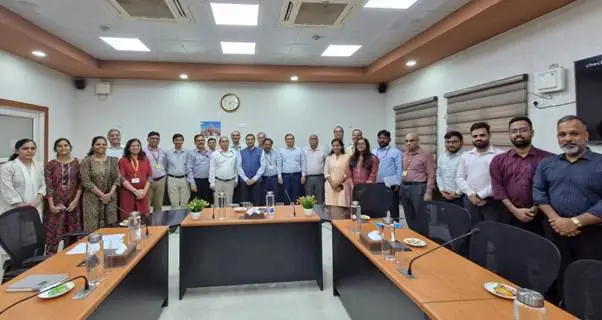
The Telecommunication Engineering Centre (TEC), the technical arm of India's Department of Telecommunications, observed World Standards Day 2026 in New Delhi with a clear message: standards are no longer a back-office technical matter, but a strategic instrument of national policy, industrial competitiveness and digital sovereignty.
The event placed India's role in global telecom standardisation at the centre of the discussion, reflecting a broader shift in how governments now view standards bodies and technical rule-making. In a sector increasingly defined by 5G evolution, network security, artificial intelligence, and the transition toward 6G, the ability to influence standards is becoming as consequential as spectrum policy or infrastructure deployment.
Standards as Policy Power
Officials and industry participants used the occasion to underline that standards determine whether networks can interoperate, whether devices can connect seamlessly across borders, and whether new technologies can be deployed at scale without fragmentation. For India, this has direct implications. A country with one of the world's largest telecom markets cannot remain a passive consumer of standards drafted elsewhere if it wants to shape the architecture of future communications systems.
TEC's message was consistent with India's recent push to move from adoption to authorship in global standard-setting forums. That ambition is tied to multiple national priorities: reducing dependence on imported technical frameworks, ensuring that domestic innovation is reflected in international norms, and creating a more level playing field for Indian manufacturers, operators and technology developers.
Standards also carry economic weight. They influence procurement, compliance costs, product design and market access. For Indian firms, participation in standards development can open export opportunities and reduce the risk of being locked out of global supply chains. For policymakers, it offers a way to align regulation with innovation rather than allowing regulation to lag behind it.
India's Global Telecom Push
India's telecom policy environment has become increasingly focused on indigenous capability, interoperability and secure digital infrastructure. TEC, which develops technical standards and specifications for telecom equipment and networks, sits at the intersection of that effort. Its role is not merely administrative; it helps define the technical baseline for the country's communications ecosystem.
The World Standards Day observance highlighted how India is seeking greater visibility in international standardisation processes, including those that govern next-generation networks and digital services. That matters because the countries and institutions that shape standards often shape markets. As telecom systems become more software-driven and globally integrated, technical decisions made in standards committees can determine who leads in manufacturing, deployment and innovation.
India's growing digital economy adds urgency to this agenda. With expanding broadband use, rapid 5G adoption and rising demand for secure connected services, the country needs standards that support scale, resilience and affordability. The challenge is not only to keep pace with global developments, but to help define them in ways that reflect the needs of large, diverse and price-sensitive markets.
Interoperability, Security, Scale
The event also served as a reminder that standards are central to trust in digital systems. In telecom, interoperability is not a luxury; it is the foundation of network performance and consumer experience. Security standards are equally critical, especially as networks become more complex and more exposed to cyber risk. For India, the stakes are heightened by the size of its user base and the strategic importance of its communications infrastructure.
World Standards Day provided TEC with a platform to frame standardisation as a public-interest issue rather than a narrow technical exercise. That framing is important because it links standards to broader governance goals: digital inclusion, industrial self-reliance, secure connectivity and global competitiveness.
The New Delhi observance also reflected a wider policy reality. As countries race to influence the rules for 6G, artificial intelligence-enabled networks and advanced telecom equipment, standardisation is emerging as a domain of geopolitical significance. India's effort to strengthen its voice in that process suggests a more assertive posture, one that seeks not only to comply with international norms but to help write them.
For TEC, the message from World Standards Day 2026 was unmistakable. In the next phase of telecom growth, the countries that shape standards will shape the market. India, increasingly, wants to be among them.