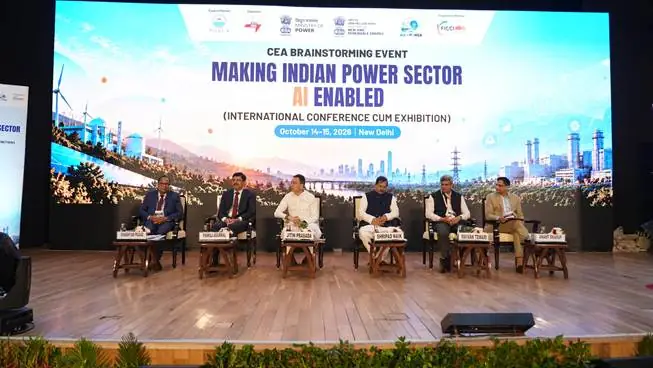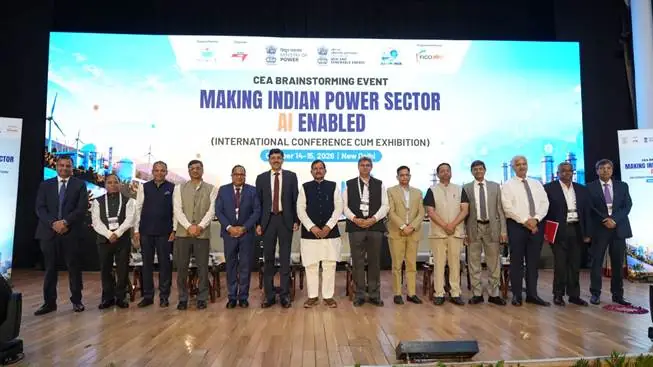
India's electricity system is entering a phase in which digital capability is becoming as important as generation capacity. At a CEA brainstorming forum tied to an international conference and exhibition, the central policy conversation is whether artificial intelligence can be translated from a buzzword into a practical tool for one of the world's fastest-growing power markets.
The event comes at a time when India's grid is under mounting pressure from multiple directions: rising peak demand, the rapid addition of renewable energy, the need to modernize distribution networks and the broader push to improve utility finances. In that context, AI is being positioned not as a futuristic add-on but as a potential operating layer for planning, forecasting and real-time decision-making.
Grid Modernization Push
The Central Electricity Authority's engagement signals that the policy establishment is increasingly open to digital solutions that can help utilities manage complexity. For India's power sector, the appeal of AI lies in its ability to process large volumes of operational data, identify patterns that human operators may miss and support faster responses to changing conditions on the grid.
That includes demand forecasting, outage prediction, equipment monitoring, load balancing and renewable integration. As solar and wind capacity expand, grid operators face greater variability in supply, making prediction and dispatch more difficult. AI tools can help utilities anticipate fluctuations, optimize scheduling and reduce technical losses, all of which are central to improving system efficiency.
The policy significance is substantial. India has spent years expanding physical infrastructure, from transmission corridors to smart meters, but the next stage of reform increasingly depends on software, analytics and automation. A forum of this kind suggests that the government and sector regulators are now examining how digital intelligence can be embedded into operational practice rather than treated as a pilot project on the margins.
From Pilots To Scale
The real challenge is not whether AI can be useful, but whether it can be deployed at scale across a fragmented electricity ecosystem. India's power sector includes central and state utilities, private generators, transmission operators and distribution companies with widely varying technical capacity. Some have already begun experimenting with advanced analytics, while others still struggle with basic data quality and legacy systems.
That unevenness matters. AI systems are only as effective as the data they receive, and power-sector data in India is often scattered across incompatible platforms, incomplete records and inconsistent reporting formats. For AI to deliver measurable gains, utilities will need cleaner datasets, stronger cyber safeguards, interoperable systems and staff trained to interpret machine-generated insights.
There is also a governance dimension. As utilities become more dependent on algorithmic recommendations, questions will arise about accountability, transparency and oversight. If AI is used to support dispatch, maintenance or outage management, policymakers will need to define who is responsible when systems fail or produce misleading outputs. That makes regulatory design as important as technical adoption.
Policy Meets Industry
The international conference and exhibition format is significant because it brings together policymakers, technology providers and industry users in the same room. For the power sector, such forums often serve as a bridge between policy ambition and commercial implementation. They allow the government to signal priorities, while vendors and utilities test what is technically feasible and economically viable.
The broader message from the event is that India's energy transition is entering a more sophisticated phase. The country is no longer focused only on adding capacity; it is now trying to make the system smarter, more resilient and more responsive. AI fits squarely into that agenda, especially if it can help utilities reduce losses, improve reliability and integrate cleaner power without destabilizing the grid.
Still, expectations should remain grounded. AI will not solve structural problems such as weak distribution finances, delayed payments or underinvestment in network maintenance. But it may become a force multiplier if paired with institutional reform, better data governance and sustained investment in digital infrastructure.
For now, the CEA brainstorming forum marks an important policy signal: India's power sector is being asked to think beyond wires and megawatts, and toward intelligence, automation and predictive control. If that shift takes hold, it could reshape how electricity is planned, delivered and managed across the country.