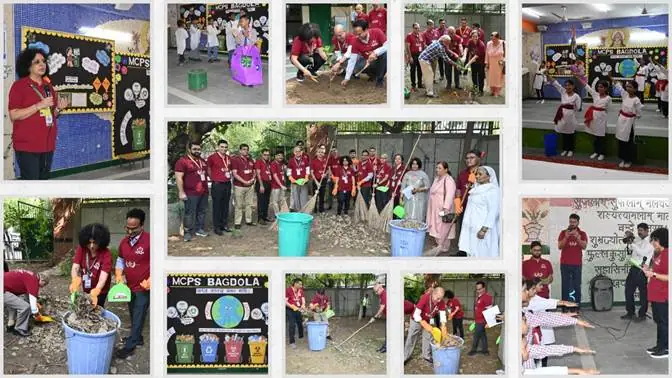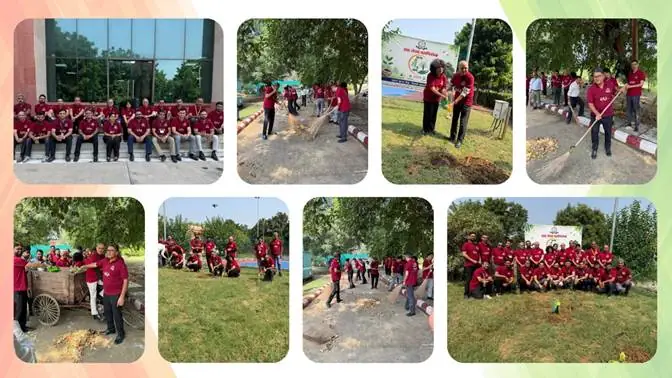
The Defence Accounts Department on Friday organised a shramdaan programme under the Swachhata Hi Seva campaign, joining a wider national effort that has become a recurring feature of India's public administration calendar. The initiative, centred on voluntary labour and cleanliness work, was intended to reinforce the message that sanitation is not merely a municipal function but a shared civic responsibility extending across government institutions.
The programme comes at a time when central ministries and attached offices are being encouraged to move beyond ceremonial observance and demonstrate visible participation in cleanliness drives. In that context, the Defence Accounts Department's decision to mobilise staff for shramdaan carries administrative significance. It signals an effort to align internal workplace culture with the broader policy emphasis on cleanliness, order, and public accountability.
Civic Duty in Practice
Shramdaan, or voluntary labour, has long been used in India's public campaigns as a symbolic and practical tool to encourage citizen participation. Under the Swachhata Hi Seva framework, such activities are designed to make cleanliness a lived practice rather than a one-day slogan. For a department such as Defence Accounts, which functions within a highly structured and compliance-driven environment, participation in the campaign also serves an internal purpose: it reinforces discipline, collective responsibility, and attention to shared spaces.
The significance of the drive lies less in the physical act of cleaning alone than in the institutional message it conveys. Government departments are often judged not only by their policy output but also by the standards they set in their own premises. By organising a shramdaan programme, the Defence Accounts Department placed itself within a broader administrative trend that seeks to normalise cleanliness as part of official conduct.
Administrative Signalling
The Swachhata Hi Seva campaign has evolved into one of the central instruments through which the Union government promotes sanitation awareness across ministries, public sector bodies, and local institutions. Its recurring presence in the official calendar reflects the state's attempt to sustain public attention on cleanliness after the initial momentum of the national sanitation drive. In practice, such campaigns are also a test of whether bureaucratic participation can translate into durable behavioural change.
For departments linked to defence administration, the optics are especially important. The Defence Accounts Department operates in a domain associated with precision, record-keeping, and institutional reliability. Participation in a cleanliness initiative therefore complements its core administrative identity. It also helps project the idea that governance reform is not confined to policy announcements but includes the everyday upkeep of public institutions.
The programme also fits into a larger pattern in which central government offices are being encouraged to demonstrate visible engagement with flagship civic campaigns. These efforts are often used to build a culture of participation among employees, while also signalling to the public that government bodies are expected to uphold the standards they advocate.
Beyond Symbolism
Although cleanliness drives are sometimes criticised as being largely symbolic, their continued repetition across institutions suggests a deeper policy logic. They create routine opportunities for staff engagement, public messaging, and workplace review. In a system as large as India's, even modest institutional actions can help sustain awareness and set behavioural expectations, particularly when they are repeated across departments and regions.
The Defence Accounts Department's shramdaan programme should therefore be read as part of a wider governance strategy rather than an isolated event. It reflects the government's ongoing effort to embed sanitation into administrative culture, using public offices as both participants and exemplars in the campaign. That approach is consistent with the broader Swachhata framework, which has sought to move cleanliness from the margins of public life to the centre of civic responsibility.
At a policy level, such initiatives also serve a soft but important function: they remind civil servants that governance is not only about files, budgets, and approvals, but also about the condition of the spaces in which public service is delivered. In that sense, the shramdaan programme is a small but telling expression of how the state seeks to shape norms through participation, repetition, and visible example.