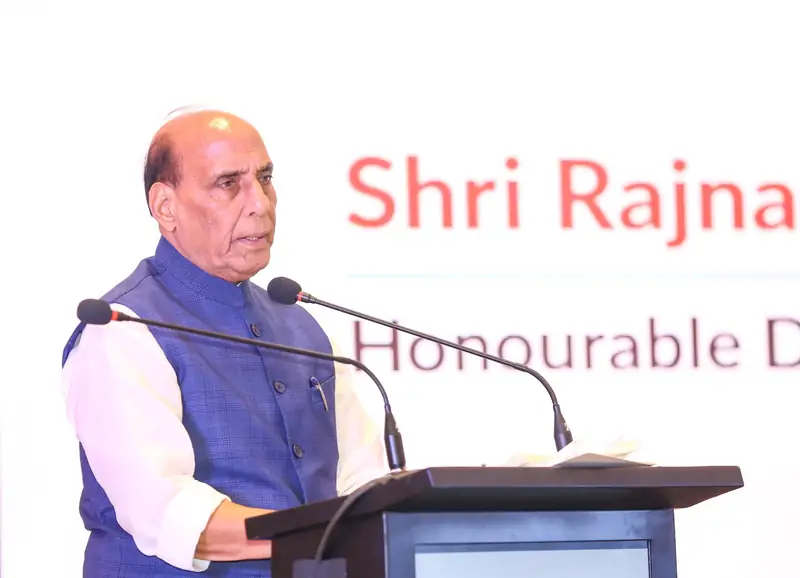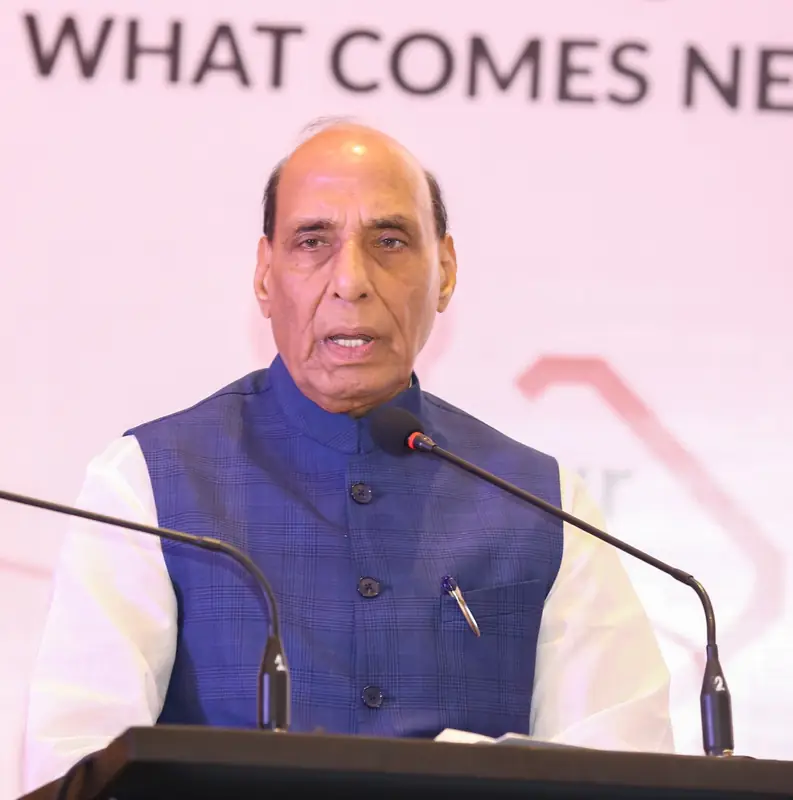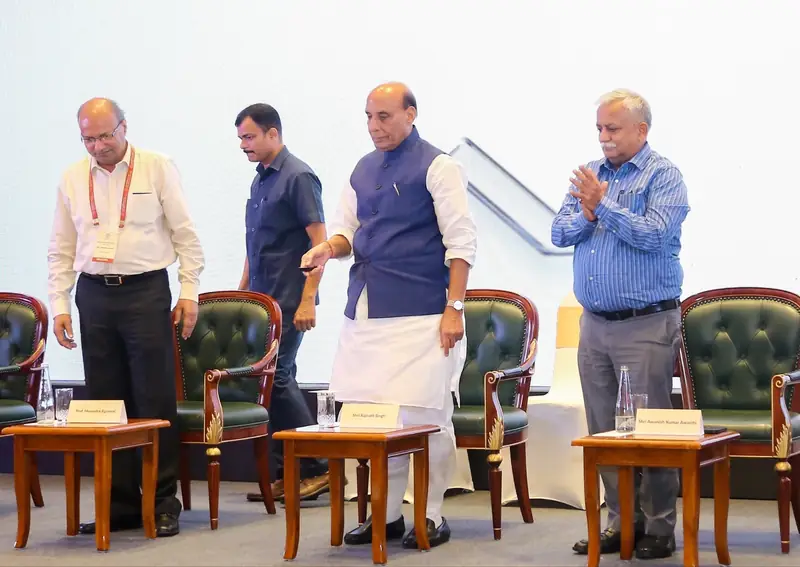
Defence Minister Rajnath Singh has called for a much tighter partnership between the defence establishment, educational institutions and industry to accelerate the development and deployment of indigenous technologies, arguing that the changing nature of warfare demands a faster and more integrated innovation ecosystem.
Speaking in New Delhi, Singh said the future of national security will depend not only on the strength of India's armed forces but also on the country's ability to convert scientific research and industrial capability into usable military systems at speed. His remarks come at a time when India is pushing to reduce dependence on foreign suppliers and build a more resilient defence manufacturing base amid intensifying geopolitical uncertainty.
Faster Innovation Cycle
Singh's message reflects a broader policy shift in which self-reliance in defence is being treated as a strategic imperative rather than a long-term aspiration. The minister's emphasis on collaboration is significant because India's defence modernisation challenge is not merely about inventing new systems, but about shortening the time between laboratory research, prototype development, testing and field deployment.
That gap has often been a weakness in India's defence ecosystem. Universities and research institutions have traditionally generated strong technical talent, while the private sector has increasingly shown interest in defence manufacturing. Yet the links between these two worlds and the operational requirements of the armed forces have often been fragmented. Singh's intervention suggests that the government wants to close that gap by encouraging a more coordinated pipeline for innovation.
The minister's comments also underscore the changing character of warfare, where drones, cyber tools, electronic warfare, precision strike systems and networked command structures are reshaping military planning. In such an environment, countries that can rapidly adapt technologies and integrate them into doctrine gain an edge. Singh's argument is that India cannot afford slow, siloed development if it wants to remain competitive and secure.
Strategic Self-Reliance Push
The defence ministry has in recent years intensified efforts to promote indigenous production through procurement reforms, support for domestic manufacturers and greater emphasis on home-grown research. Singh's remarks fit squarely within that broader agenda, which seeks to build a defence industrial base capable of meeting both current operational needs and future technological demands.
For the armed forces, the stakes are practical as well as strategic. Dependence on imported systems can create vulnerabilities in times of crisis, including supply disruptions, maintenance bottlenecks and limited access to upgrades or spares. Indigenous capability, by contrast, offers greater control over design, production and lifecycle support. It also allows India to tailor systems more closely to its own terrain, threat perception and operational doctrine.
The minister's call for closer cooperation with academia is especially important because advanced defence technologies increasingly draw on civilian research in areas such as artificial intelligence, robotics, materials science, communications and semiconductors. In many countries, defence innovation is no longer confined to traditional military laboratories; it is built through networks that connect universities, start-ups, large manufacturers and state agencies. Singh's remarks indicate that India is trying to move more decisively in that direction.
Building Defence Ecosystems
The challenge, however, lies in execution. India has made progress in promoting domestic production, but the next phase will require more than policy intent. It will demand sustained funding for research, stronger mechanisms for technology transfer, closer engagement between military users and developers, and procurement systems that reward speed and innovation.
Industry leaders have long argued that defence manufacturing needs a clearer demand signal from the state, while academic institutions have often sought more structured pathways to translate research into deployable products. Singh's appeal for closer collaboration effectively acknowledges both concerns. It also signals that the government sees the defence sector not just as a buyer of equipment, but as an ecosystem that must be cultivated across education, research and manufacturing.
The strategic logic is clear: as warfare becomes more technology-intensive and less predictable, countries that can innovate quickly will be better positioned to deter threats and respond to crises. Singh's remarks place India's defence modernisation squarely within that reality, framing indigenous technology as a core element of national power rather than a supplementary objective.
For India, the message is unmistakable. The next phase of defence preparedness will depend on whether the country can turn scientific talent and industrial capacity into operational advantage — and do so at the pace that modern conflict now demands.