Prime Minister Narendra Modi on Thursday described India's civilisational journey as a long and layered story of cultural exchange, positioning heritage not as a static inheritance but as a living force that has shaped the country across centuries. The remarks, delivered in the context of national governance and policy discourse, reflect a familiar but increasingly central theme in the government's public messaging: that India's historical openness, absorptive strength and cultural confidence are integral to its present-day identity.
The Prime Minister's framing is significant because it goes beyond ceremonial language. It places civilisational continuity within the architecture of statecraft, suggesting that India's policy imagination is inseparable from its historical experience. In this reading, the nation's strength lies not only in economic or strategic capacity, but also in its ability to absorb influences, preserve core traditions and project a distinct civilisational voice in a rapidly changing world.
Civilisational Continuity
Modi's emphasis on cultural exchange reflects a broader effort to define India through the lens of continuity rather than rupture. The idea is politically consequential: it presents India as a civilisation that has evolved through interaction with diverse peoples, ideas and traditions, while retaining a coherent identity. That framing has become a recurring feature of the government's domestic and international messaging, especially as India seeks to expand its global influence without appearing detached from its historical roots.
Such language also serves a governance purpose. By invoking civilisational memory, the government can connect contemporary policy goals with a deeper emotional and historical register. This helps build a narrative in which development, diplomacy and cultural assertion are not separate tracks, but mutually reinforcing elements of a larger national project. For a government that often speaks of India's "Amrit Kaal" as a decisive era, civilisational self-confidence is presented as both a political and strategic resource.
The Prime Minister's remarks arrive at a time when India is increasingly projecting itself as a civilisational state in global forums. That concept has gained traction in official discourse because it allows New Delhi to argue that its rise is not merely the ascent of a modern economy, but the re-emergence of an ancient civilisation into a position of influence. The cultural exchange narrative also supports India's soft power ambitions, from heritage diplomacy to international outreach through yoga, spirituality, cuisine, art and classical traditions.
Heritage As Statecraft
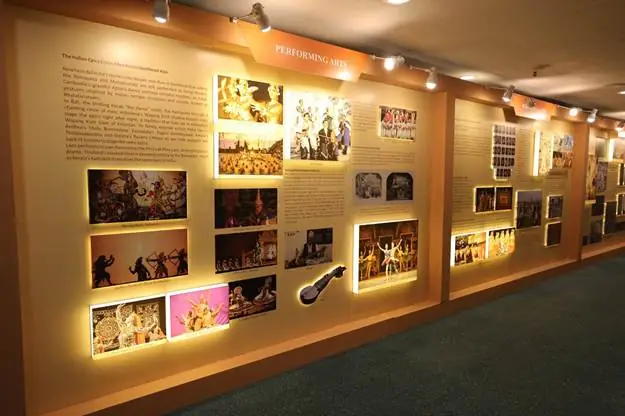
The deeper policy implication of Modi's statement is that culture is being treated as an instrument of statecraft rather than a symbolic afterthought. In practical terms, this means heritage preservation, cultural diplomacy and historical narrative-building are increasingly intertwined with governance. The government has repeatedly sought to foreground monuments, traditions and civilisational sites as markers of national pride and as tools for international engagement.
This approach resonates strongly in a country as diverse as India, where identity is shaped by regional, linguistic and religious plurality. By describing the civilisational journey as one of exchange, the Prime Minister's formulation implicitly acknowledges that India has never been culturally isolated. Instead, it has historically been a meeting point of ideas and traditions, a characteristic that can be used to reinforce both inclusivity and confidence in the national story.
At the same time, the language of civilisational pride carries political weight. It can unify, but it can also sharpen debates over who gets to define the nation's past and present. That tension is central to India's contemporary policy environment, where historical interpretation often intersects with questions of citizenship, belonging and public memory. Modi's remarks therefore sit within a larger contest over narrative authority, even as they seek to project continuity and harmony.
Global Message, Domestic Signal
Internationally, the Prime Minister's civilisational framing serves a clear diplomatic purpose. It presents India as a country with deep historical roots and a confident voice in global affairs, capable of engaging the world without surrendering its distinctiveness. In an era of geopolitical flux, that message is designed to strengthen India's standing as a power that is both modern and ancient, pragmatic and principled.
Domestically, the statement reinforces a political identity that has become central to the government's communication strategy. It tells citizens that India's rise is not accidental or purely economic; it is the outcome of a long civilisational arc. By invoking centuries of cultural exchange, Modi is effectively arguing that India's plural heritage is not a weakness to be managed, but a strength to be mobilised.
For policymakers, the significance lies in how such framing shapes priorities. Cultural institutions, heritage conservation, educational narratives and international outreach all become part of a broader governance agenda. The Prime Minister's remarks suggest that the government sees civilisational identity not as a retrospective theme, but as an active framework for the future.
In that sense, the statement is both symbolic and strategic. It reaffirms a national story in which India's past is not merely remembered, but operationalised — as a source of confidence, cohesion and global influence.