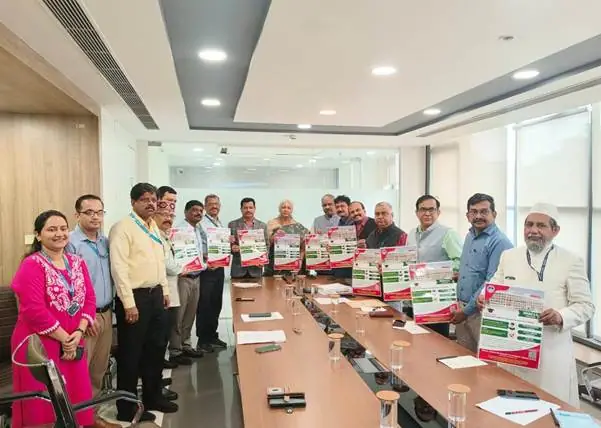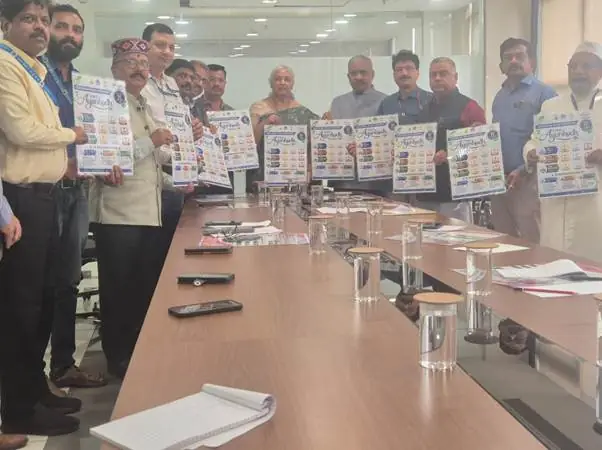
The National Commission for Indian System of Medicine (NCISM) has launched CCRAS SPARK 5.0 and CCRAS Ayushshodh 2026 in a fresh push to strengthen Ayurveda research, innovation, and institutional collaboration across India's traditional medicine ecosystem. The initiative, unveiled by the NCISM chair, is designed to widen participation in research, encourage scientific inquiry among students and faculty, and reinforce the evidence base that increasingly shapes policy around the Indian systems of medicine.
Research Push Intensifies
The launch comes at a time when India's traditional medicine sector is under growing pressure to demonstrate scientific rigor, clinical relevance, and measurable public-health value. Ayurveda, which has long occupied a central place in India's health and cultural landscape, is now being positioned within a more structured research framework that seeks to align ancient knowledge systems with contemporary standards of validation.
CCRAS SPARK 5.0 is expected to serve as a platform for early-stage research engagement, particularly for students and young investigators in the Ayurveda education system. By creating a formal channel for project-based participation, the program aims to cultivate research habits at the entry level rather than waiting until postgraduate specialization. That approach matters in a sector where the quality and consistency of research output have often been uneven, and where capacity-building remains as important as funding.
Ayushshodh 2026, meanwhile, appears to be oriented toward a broader research agenda, likely linking institutions, scholars, and policy stakeholders in a more coordinated effort. The naming itself suggests an emphasis on inquiry and discovery, with the 2026 horizon indicating a medium-term framework rather than a one-off announcement. Together, the two initiatives reflect a strategic attempt to institutionalize research culture rather than treat it as an auxiliary function.
Policy And Evidence
For policymakers, the significance of the launch lies in its timing and intent. India has been steadily expanding the administrative and regulatory architecture around AYUSH systems, but the next phase of growth will depend less on symbolic promotion and more on credible evidence generation. That includes clinical studies, documentation of traditional formulations, standardization of methods, and stronger publication pipelines that can withstand academic scrutiny.
The NCISM's role is especially important because it sits at the intersection of education, regulation, and professional standards in Indian systems of medicine. By backing initiatives such as SPARK 5.0 and Ayushshodh 2026, the commission is signaling that research competence is no longer optional for the sector's future. It is becoming a policy requirement, tied to legitimacy, institutional reputation, and the broader goal of integrating traditional medicine into national health planning.
The launch also underscores the government's continuing interest in positioning Ayurveda as both a heritage system and a modern knowledge discipline. That dual identity creates opportunity, but also demands discipline. Without robust research design, transparent evaluation, and reproducible findings, the sector risks being seen as aspirational rather than authoritative. The new initiatives appear intended to narrow that gap.
Building Research Capacity
A major challenge in Ayurveda research has been the shortage of sustained mentorship, structured project opportunities, and incentives for young scholars to move beyond classroom learning. Programs like SPARK 5.0 can help address that by introducing students to the mechanics of hypothesis formation, data collection, literature review, and ethical research practice early in their careers.
If implemented effectively, such initiatives could also help diversify the research agenda. Ayurveda research has often been concentrated in a limited number of institutions and topics, leaving gaps in areas such as translational research, public-health applications, and interdisciplinary collaboration with modern biomedical science. A wider talent pipeline could improve both the quantity and quality of output.
The success of the launch will ultimately depend on execution: how projects are selected, how mentorship is structured, whether institutions are given adequate support, and whether outcomes are tracked in a transparent manner. In the absence of those safeguards, even well-intentioned programs can become ceremonial. But if the framework is rigorous, the launch could mark a meaningful step toward making Ayurveda research more credible, scalable, and policy-relevant.
For now, the message from NCISM is clear: the future of Indian systems of medicine will be shaped not only by tradition, but by the strength of the research architecture built around it.