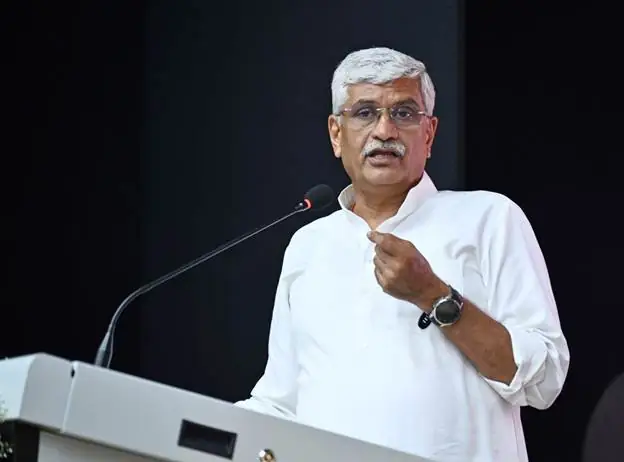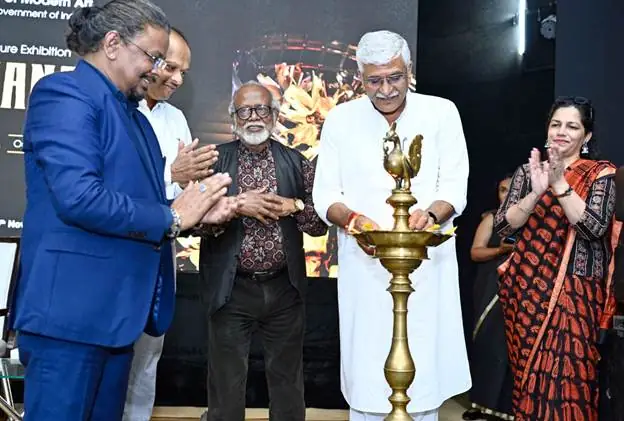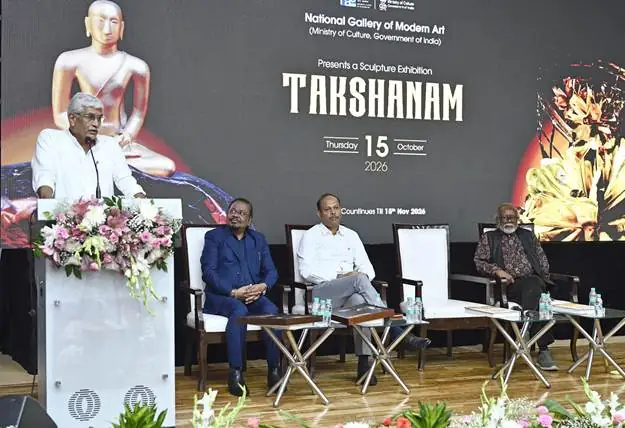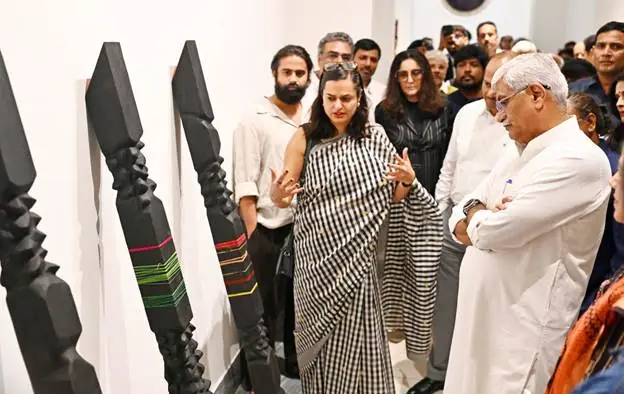
Union Culture and Tourism Minister Gajendra Singh Shekhawat on Tuesday inaugurated the 'Takshanam' exhibition at the National Gallery of Modern Art (NGMA) in New Delhi, opening a large-scale showcase that brings together more than 250 artworks and sculptures by 150 artists. The exhibition, presented at one of India's most prominent state-run art institutions, is being positioned as a significant cultural event that highlights the breadth of contemporary artistic practice while reinforcing the role of public museums in widening access to modern and experimental art.
The inauguration comes at a time when the government has been seeking to project cultural institutions not merely as repositories of heritage, but as active spaces for public engagement, creative dialogue, and soft-power projection. NGMA, under the Ministry of Culture, has long served as a key venue for modern and contemporary art in the national capital. By hosting an exhibition of this scale, the institution is once again placing itself at the centre of India's cultural calendar, offering visibility to a wide range of artists and mediums under one roof.
Public Art Platform
The scale of 'Takshanam' is notable not only for the number of works on display, but also for the diversity implied by the participation of 150 artists. In a country where the contemporary art ecosystem often remains concentrated in a few metropolitan centres and private galleries, a major public exhibition can function as an important equalising platform. It allows artists to reach audiences beyond the commercial circuit and gives viewers access to a broad spectrum of artistic expression, from sculpture to mixed-media and other forms of visual art.
The exhibition also reflects a broader institutional logic: public museums are increasingly being asked to serve multiple roles at once. They are expected to preserve collections, host temporary exhibitions, encourage education, and attract new audiences, all while remaining relevant in a rapidly changing cultural environment. Large group exhibitions such as this one can help museums demonstrate that modern art is not an elite preserve, but a living and evolving field shaped by many voices.
For the ministry, the event offers a visible example of cultural stewardship. The presence of the Union minister at the inauguration signals official endorsement of the arts as a matter of national importance, not simply aesthetic value. In policy terms, such events help reinforce the state's role in sustaining cultural infrastructure, especially at a time when public attention is often dominated by economic and political developments.
NGMA's Institutional Role
NGMA occupies a distinctive place in India's cultural architecture. As a national institution dedicated to modern art, it carries the responsibility of curating exhibitions that are both historically informed and contemporary in relevance. Events like 'Takshanam' help the gallery maintain that balance by creating space for current artistic production while keeping the institution connected to broader public discourse.
The exhibition's emphasis on a large number of artists also suggests an effort to broaden participation and representation. In practical terms, this can help surface emerging talent alongside established names, while also encouraging cross-regional and cross-generational artistic exchange. For audiences, such a format offers a panoramic view of current creative trends rather than a narrow curatorial lens.
The government's cultural messaging has increasingly leaned on the idea that India's identity is strengthened when heritage and modern creativity are presented together. In that context, the exhibition is more than a ceremonial opening. It is part of a larger effort to present culture as a living public good, one that can support education, tourism, and national image-building simultaneously.
Cultural Policy Signal
The inauguration of 'Takshanam' also carries policy significance. Cultural events hosted by the Ministry of Culture and its institutions often serve as indicators of how the government wants the arts sector to be perceived: accessible, nationally relevant, and institutionally supported. By foregrounding a show with 250-plus works, the ministry is effectively highlighting scale, participation, and public access as markers of cultural value.
At a broader level, such exhibitions can contribute to the ecosystem around tourism and urban cultural life. Major art events in New Delhi draw students, scholars, collectors, and general visitors, while also strengthening the city's profile as a cultural destination. For a ministry that oversees both culture and tourism, the overlap is strategically useful. It allows the state to frame art not only as heritage preservation, but also as an asset in civic engagement and visitor attraction.
The exhibition's opening at NGMA therefore stands as more than a routine ministerial appearance. It reflects the continuing effort to position India's public cultural institutions as active participants in national life, capable of convening artists, audiences, and policymakers in a shared space. In that sense, 'Takshanam' is both an art exhibition and a statement about the role of culture in contemporary governance.