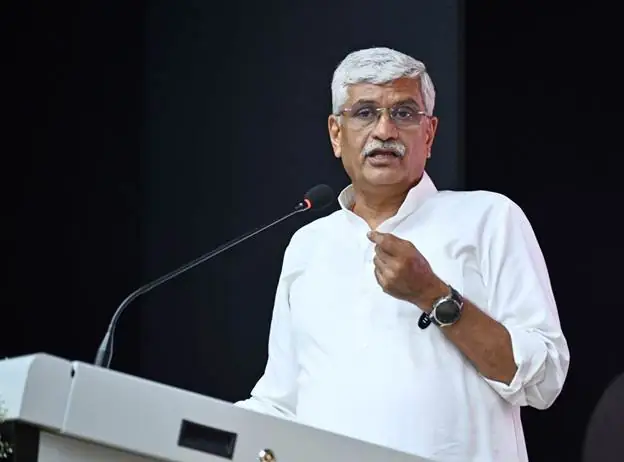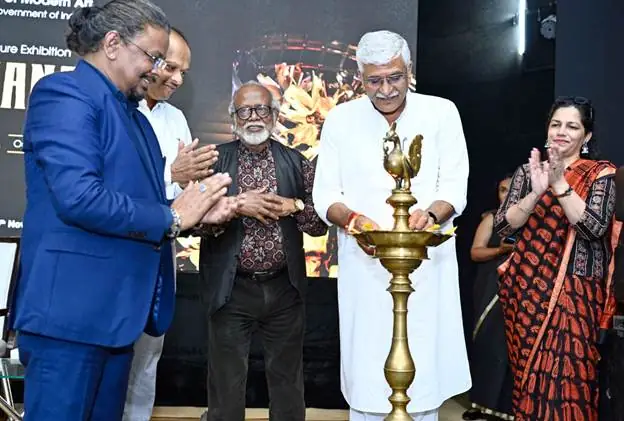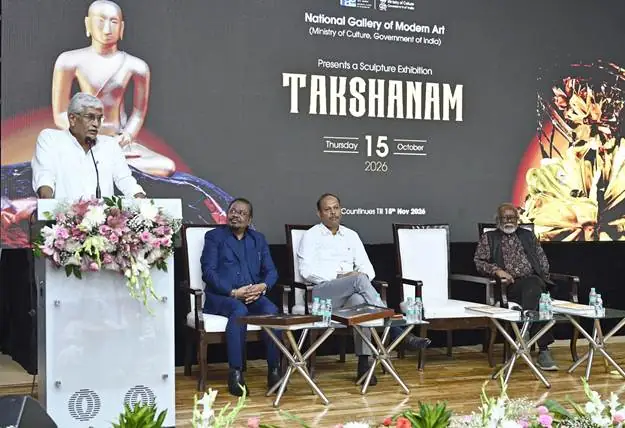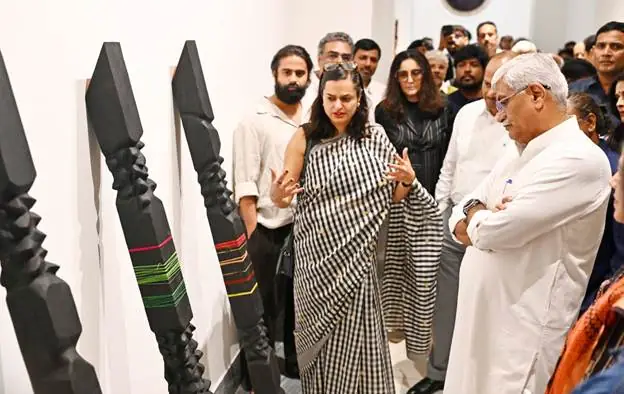
Union Culture and Tourism Minister Gajendra Singh Shekhawat on Friday inaugurated Takshanam at the National Gallery of Modern Art, marking the opening of a large-scale exhibition that assembles more than 250 artworks and sculptures by 150 artists under one roof. The event, held at one of India's most prominent state-run art institutions, reflects the government's effort to foreground cultural institutions as active public spaces rather than static repositories.
The exhibition's scale is notable not merely for the number of works on display, but for the breadth of artistic participation it represents. By bringing together 150 artists, Takshanam offers a wide cross-section of contemporary creative practice, spanning sculpture and visual art in a format that encourages comparison, dialogue and public engagement. In a country where the arts sector often operates within fragmented regional and institutional ecosystems, such a gathering serves as both a showcase and a statement of cultural intent.
Cultural Showcase
Takshanam arrives at a time when India's cultural policy is increasingly being framed through the lens of access, preservation and soft power. Public museums and galleries are being asked to do more than conserve heritage; they are also expected to create visibility for living artists and to connect wider audiences with evolving forms of expression. The inauguration at NGMA places the exhibition squarely within that broader policy context.
For the ministry, the event also signals an emphasis on institutional programming that can draw audiences beyond the traditional art-going public. Large exhibitions of this kind can help expand footfall, stimulate educational engagement and reinforce the role of national cultural institutions in shaping public taste. They also offer artists an important platform at a time when visibility remains uneven across India's art market and exhibition circuit.
The presence of the culture and tourism minister at the opening adds political weight to what might otherwise be seen as a purely curatorial event. It suggests that the government views the arts not only as a matter of heritage management, but also as a component of national identity and cultural diplomacy. In that sense, Takshanam is part of a larger narrative in which museums are increasingly expected to project India's creative depth to domestic and international audiences alike.
NGMA's Public Role
The National Gallery of Modern Art has long occupied a central place in India's cultural architecture. As a premier institution under the Union government, it carries the responsibility of preserving modern and contemporary art while also making it accessible to the public. Exhibitions such as Takshanam are important because they test that mandate in practical terms: they must balance curatorial seriousness with broad public appeal.
The exhibition's mix of artworks and sculptures suggests an attempt to create a multidimensional viewing experience rather than a narrowly themed display. That approach is significant in a museum environment where audiences increasingly expect immersive, interpretive and visually varied programming. It also reflects a wider trend in cultural institutions toward exhibitions that can speak to both specialists and general visitors.
The government's support for such programming may also be read as part of a larger effort to strengthen India's cultural infrastructure. As the country seeks to expand its global cultural footprint, exhibitions at institutions like NGMA serve as visible markers of artistic vitality. They help position India not only as a custodian of ancient heritage, but also as a contemporary creative power with a diverse and active artistic community.
Art And Policy
While the inauguration itself is a ceremonial moment, the underlying significance is policy-driven. Cultural events at national institutions increasingly function as instruments of public outreach, cultural democratization and national branding. In that framework, Takshanam is more than an exhibition title; it is a demonstration of how the state can facilitate access to art at scale.
The participation of 150 artists also points to the importance of inclusion in cultural programming. Large group exhibitions can help surface voices that might otherwise remain outside elite circuits, while also creating a shared platform for artistic exchange. For policymakers, such events can reinforce the message that culture is not peripheral to governance, but central to how a nation understands itself and presents itself to the world.
As visitors begin to engage with the exhibition, the real test will be whether Takshanam succeeds in converting institutional prestige into public participation. If it does, the show may stand as an example of how state-backed cultural programming can bridge the gap between policy ambition and lived artistic experience.