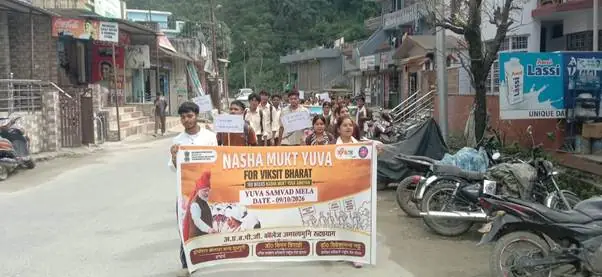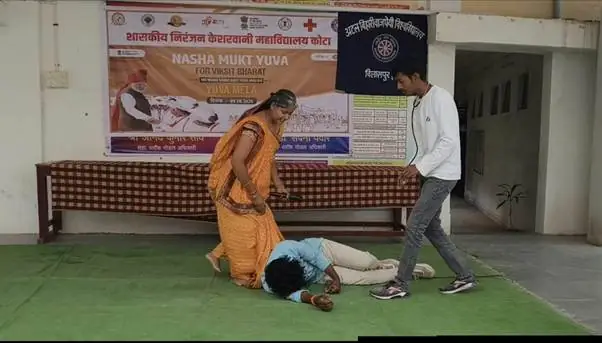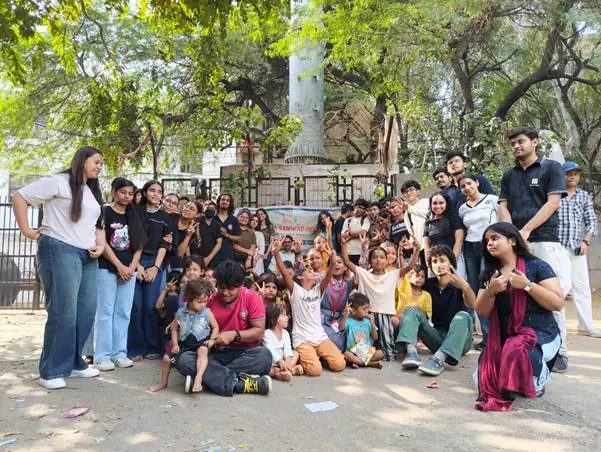
The first month of the Nasha Mukt Yuva Abhiyan has ended with a nationwide Youth Dialogue Mela that brought together more than 106,000 participants, underscoring the scale at which the government is attempting to mobilise young people against substance abuse. The campaign, led through My Bharat and the National Service Scheme, is being positioned not as a one-off awareness exercise but as a structured youth engagement effort aimed at building sustained social resistance to drug use.
The closing of the first month matters because it offers an early measure of how the campaign is being received on the ground. By anchoring the initiative in a dialogue-based format, the organisers appear to be moving beyond conventional slogan-driven messaging and toward peer-led conversation, local participation and institutional outreach. That approach is significant in a country where drug prevention campaigns often struggle to convert awareness into durable behavioural change.
Youth-Led Mobilisation
The reported participation figure, crossing 1.06 lakh, suggests that the campaign has achieved broad reach in its opening phase. For a national public outreach programme, especially one focused on youth, the number is more than symbolic. It indicates that schools, colleges, NSS units and community networks are being activated as delivery channels for a policy objective that sits at the intersection of health, education and social welfare.
My Bharat, the government's youth engagement platform, and NSS, one of India's largest volunteer-based service networks, are well suited to this task because they can translate central messaging into local action. Their involvement also reflects a wider governance strategy: using existing youth institutions rather than creating a parallel bureaucracy to spread the anti-drug message. That can improve reach, lower costs and create a stronger sense of ownership among participants.
The Youth Dialogue Mela format is especially notable. Dialogue-based events allow students, volunteers, educators and community leaders to discuss the causes of addiction, the pressures that make young people vulnerable, and the role of families and institutions in prevention. In policy terms, this is a more nuanced model than top-down awareness campaigns, because it treats drug abuse as a social issue requiring collective intervention rather than merely an individual failing.
Policy Meets Prevention
The campaign's first-month closure also reflects the government's effort to integrate anti-drug messaging into broader youth governance. By linking the initiative to My Bharat and NSS, the state is signalling that prevention is not only a law-and-order concern but also a civic responsibility. That framing matters in a country where the demographic weight of young people makes youth policy central to long-term social outcomes.
The challenge, however, lies in sustaining momentum after the initial mobilisation. Large participation numbers can demonstrate visibility, but the deeper test is whether the campaign produces measurable change in awareness, referral pathways, counselling access and community vigilance. Anti-drug efforts often falter when they remain event-centric. For this reason, the next phase will likely need follow-up mechanisms, local partnerships and regular monitoring to ensure that the campaign does not lose intensity after the first month.
The emphasis on youth dialogue also suggests an attempt to reduce stigma around addiction. In many communities, fear of shame prevents early intervention. If the campaign succeeds in normalising discussion, it could help families and institutions identify risk earlier and connect affected individuals to support systems. That would make the programme more than a symbolic observance; it would turn it into a practical public health intervention.
Scale And Next Steps
The first-month milestone gives the government an opportunity to present the campaign as both expansive and participatory. But scale alone will not determine success. The real test will be whether the network built through the Youth Dialogue Mela can be converted into a sustained national prevention architecture, with local volunteers, educational institutions and community groups continuing the work beyond the launch phase.
For now, the participation tally points to strong initial traction. It also shows that anti-drug policy is increasingly being framed through youth engagement rather than only enforcement. That shift is important because it recognises that the most effective response to substance abuse may come not just from policing supply, but from shaping attitudes, peer norms and community support systems before addiction takes hold.
As the campaign moves into its next phase, officials will likely seek to build on the momentum generated in the first month. The central question is whether the dialogue model can convert awareness into action at scale. If it can, the Nasha Mukt Yuva Abhiyan may emerge as a template for how India mobilises its youth institutions around a national social challenge.